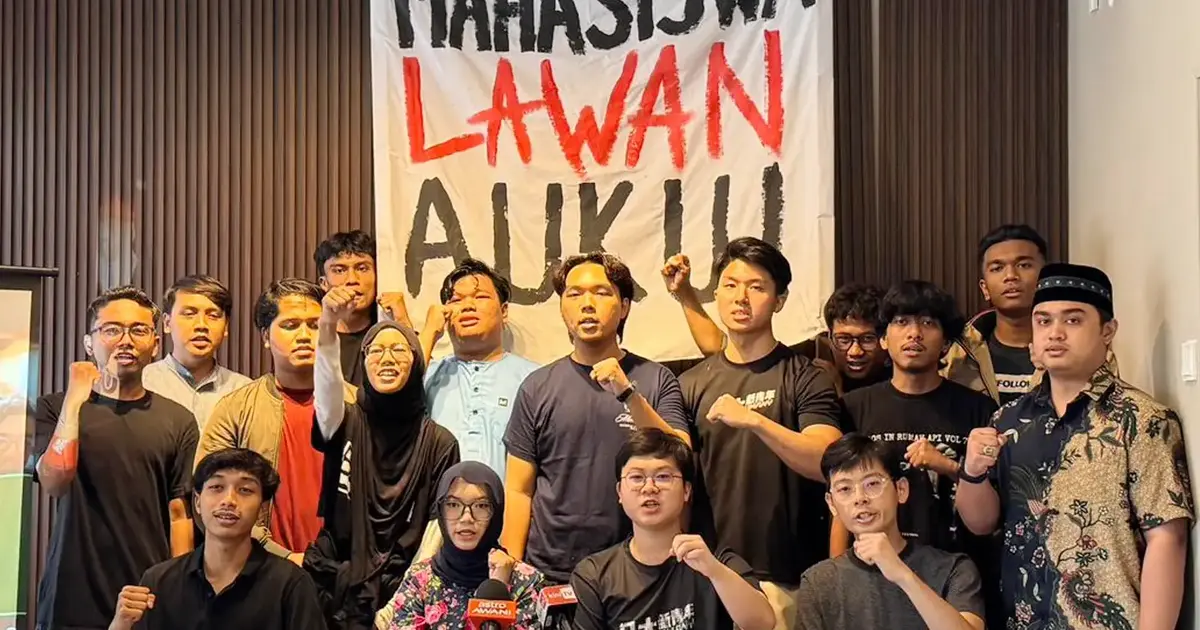
Prime Minister Anwar Ibrahim has reassured the public that his administration will not be drafting fresh legislation aimed at curtailing student activities and freedoms, despite the recent abolition of the Anti-Agitation (Students) Act, commonly known as AUKU. His statement comes at a sensitive moment in Malaysia's educational landscape, as the government navigates the complex balance between maintaining campus stability and protecting democratic rights for younger citizens.
The AUKU ordinance, which had governed student conduct on university campuses for decades, was formally repealed under Anwar's government, marking a significant departure from previous administration's approach to student activism and political engagement. This repeal represented a symbolic commitment to greater freedoms within higher education institutions, and the prime minister's latest assurance suggests the government intends to maintain that liberal trajectory rather than replace one restrictive framework with another.
Anwar's position reflects a broader ideological stance within his administration that favours trust and dialogue with students rather than top-down regulation. The move resonates with younger voters and civil society advocates who have long campaigned against restrictions they viewed as undemocratic and inconsistent with Malaysia's constitutional guarantees of freedom of assembly and expression. By ruling out new restrictive laws, the prime minister is signalling that the government believes universities can function effectively without explicit prohibitions on student conduct.
The decision carries significant implications for how Malaysian campuses will be governed in the coming years. Without AUKU's specific prohibitions—which had barred students from organising political activities, attending rallies, or joining political parties while enrolled—universities must now rely on general laws and institutional policies to manage campus life. This shift places responsibility on university administrations to establish clear, reasonable guidelines that maintain order while respecting student autonomy and democratic participation rights.
Educators and university leaders have expressed mixed reactions to this environment. Some welcome the removal of what they regarded as paternalistic restrictions, arguing that students mature through engagement with diverse ideas and through responsible participation in civic matters. Others express concern about potential disruptions to academic calendars or campus harmony if student political activity intensifies without the formal restraints that AUKU provided. University administrators across the country are now developing internal frameworks to address these concerns.
The prime minister's pronouncement also reflects international pressure and domestic expectations regarding academic freedom. Malaysia's universities, particularly those seeking to attract top talent and improve their global rankings, have faced criticism from international bodies and parent institutions overseas for restrictions that limit student freedoms in ways uncommon at peer institutions elsewhere. Anwar's commitment not to introduce alternative restrictive legislation positions Malaysia as moving toward international norms regarding student rights and democratic participation on campuses.
However, observers note that ruling out new legislation does not prevent the government from enforcing existing laws against students who may engage in activities deemed disruptive or unlawful. General provisions under the Penal Code, the Sedition Act, and other statutes remain available tools, though applying them to student conduct carries its own political and reputational risks. The government's challenge will be determining where the line falls between protecting legitimate student expression and maintaining public order.
For Malaysian university students, Anwar's statement represents a watershed moment in their relationship with state authority. Many campus leaders have argued that the previous restrictions prevented them from developing genuine engagement with policy matters affecting their generation, including education policy, employment prospects, climate change, and governance. Without AUKU, students now have the formal space to organise, debate, and advocate, though they remain subject to institutional discipline policies and general laws.
The repeal and the government's commitment not to replace AUKU with equivalent restrictions also signals to international observers and potential investors that Malaysia is moving toward greater freedoms and democratic participation. In Southeast Asia, where several governments maintain tight controls over student activism, Malaysia's approach stands out as more permissive, potentially affecting how the country is perceived in academic and development circles.
University management has begun revising student handbooks and conduct codes to establish clarity in the post-AUKU landscape. These new frameworks must articulate expectations about student behaviour without recreating the blanket prohibitions that characterised the old ordinance. Success will require balancing legitimate institutional interests in maintaining safe, inclusive campuses with recognition of students' rights to organise, protest, and engage in political discourse.
Anwar's assurance comes as broader questions persist about how different arms of government will approach student activism. While the prime minister has staked out a liberal position, individual universities, state governments, and law enforcement agencies may interpret their roles differently. This potential fragmentation means students across Malaysia may experience varying levels of freedom depending on their institution and location, creating a complex patchwork rather than a uniform national approach.
Looking ahead, the government's restraint in not imposing new restrictions will be tested as student activism inevitably surfaces on campuses nationwide. How authorities respond to specific incidents—whether through patient dialogue or aggressive enforcement of existing laws—will demonstrate whether the commitment to greater student freedoms represents genuine policy change or merely rhetorical positioning. For Malaysian universities and the students they serve, the promise of unrestricted engagement through non-restrictive legislation represents an opportunity to develop more mature, participatory approaches to campus governance.

