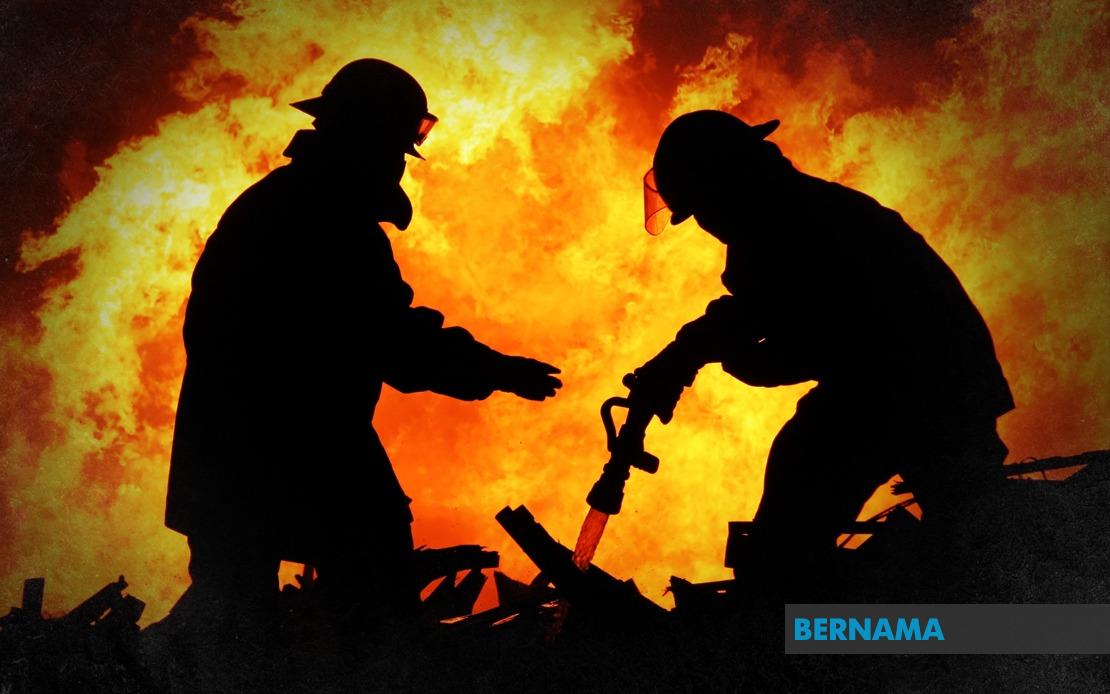
A devastating explosion tore through a firecracker manufacturing facility in Ahmedabad's Vastral area on Saturday, leaving nine workers dead and six others hospitalised with injuries. The blast at Talent Fireworks has once again brought into sharp focus the persistent safety failures plaguing India's fireworks industry, a sector that has repeatedly demonstrated its vulnerability to catastrophic accidents despite growing awareness of workplace hazards.
Investigations revealed that the Talent Fireworks factory had been operating without the necessary manufacturing licence, a violation that underscores a broader pattern of regulatory non-compliance across India's fireworks sector. The factory owner was apprehended by local police following the incident, though enforcement of safety standards remains a persistent challenge for authorities managing industrial operations across Gujarat and other Indian states. The absence of proper authorisation suggests that facility inspections, safety audits, and compliance mechanisms either failed or were circumvented entirely.
The scale of the tragedy prompted immediate responses from India's political establishment. Prime Minister Narendra Modi conveyed his sympathies to the bereaved families and announced that the Prime Minister's National Relief Fund would disburse 200,000 rupees (approximately RM8,490) to the next of kin of each deceased worker. This compensation, while substantial in many contexts, represents the standard relief measure deployed across numerous workplace disasters in India.
Gujarat Chief Minister Bhupendra Patel supplemented the central government's assistance with an additional commitment from the state administration. The Gujarat government pledged to provide 400,000 rupees (around RM16,980) per deceased worker's family, effectively doubling the compensation available through the national relief scheme. These financial interventions, though demonstrating governmental acknowledgment of responsibility, arrive only after lives have been lost and cannot address the systemic deficiencies that permitted such a dangerous facility to operate.
The incident reflects a troubling reality within India's fireworks manufacturing sector, where workplace disasters occur with disturbing regularity. Manufacturing units across the country frequently lack basic safety infrastructure, proper ventilation systems, fire suppression equipment, and emergency protocols. Workers, often drawn from economically disadvantaged communities with limited bargaining power, face daily exposure to explosive materials with minimal protective equipment or training. The combination of inadequate facilities, insufficient regulation, and cost-cutting by operators creates environments where catastrophic accidents become nearly inevitable rather than exceptional occurrences.
For Malaysia and other Southeast Asian nations, such incidents carry instructive lessons regarding industrial safety governance. While Malaysia has developed substantially more rigorous regulatory frameworks governing hazardous manufacturing, cross-border labour migration means that Malaysian citizens occasionally work in Indian industrial facilities, potentially exposing them to similar risks. Additionally, Malaysia's proximity to India's manufacturing hubs creates supply chain interdependencies that can be disrupted by such disasters.
The broader implications extend to regional approaches toward informal manufacturing and regulatory enforcement. Many Southeast Asian countries still grapple with similar challenges of unlicensed or inadequately supervised industrial operations, particularly in labour-intensive sectors. The Gujarat incident serves as a cautionary example of what transpires when licensing requirements, safety inspections, and enforcement mechanisms become suggestions rather than mandatory obligations.
India's fireworks industry, valued at several billion rupees annually, remains concentrated in specific geographic clusters where traditional manufacturing knowledge has been passed down through generations. However, this traditional character has not been accompanied by corresponding modernisation of safety practices. The tension between cultural manufacturing traditions and contemporary industrial safety standards continues to generate human costs that official compensation schemes cannot truly redress.
The arrested factory owner will likely face criminal charges ranging from operating without a licence to culpable negligence resulting in death. However, such prosecutions, even when pursued vigorously, typically result in outcomes that vary considerably based on legal representation and procedural complexities. The deterrent effect of criminal proceedings remains questionable given that similar accidents have continued despite previous convictions of factory operators and owners.
For Malaysian stakeholders monitoring regional industrial safety, this incident underscores the importance of sustained regulatory vigilance, routine inspections of hazardous manufacturing facilities, and uncompromising enforcement of licensing requirements. The case demonstrates that voluntary compliance mechanisms and industry self-regulation prove insufficient when economic pressures incentivise operators to cut corners on safety investments.
International attention to such disasters, while generating temporary policy discussions, has historically failed to produce sustained systemic reforms within India's fireworks sector. Worker advocacy organisations and safety experts have repeatedly called for stricter regulations, mandatory safety training programmes, and enhanced inspection frequencies, yet implementation remains inconsistent across different states and local authorities.
The Ahmedabad blast adds another tragic entry to the documented history of preventable industrial disasters in South Asia. For families of the deceased workers, compensation payments provide some financial relief but cannot restore lost livelihoods or undo the trauma experienced. For the broader industrial safety community across the region, it represents both a sobering reminder of persistent vulnerabilities and a call for renewed commitment to workplace safety standards that prioritise human life over operational convenience and cost savings.

