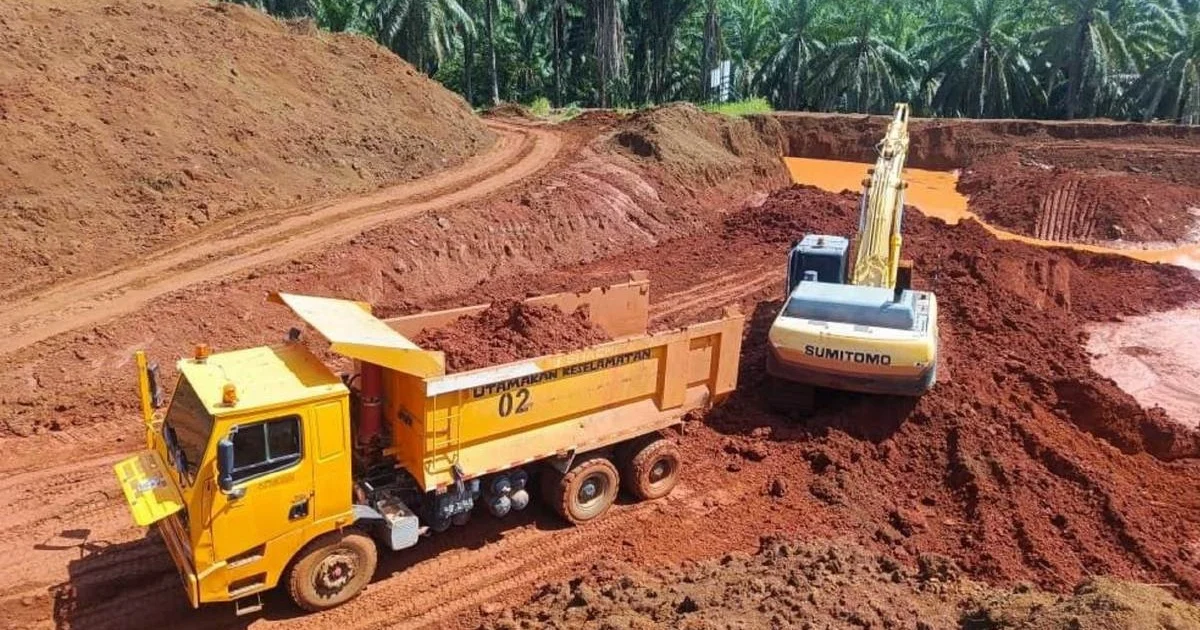
A significant enforcement operation in Kuantan has resulted in nine arrests and the seizure of assets totalling RM3.75 million in what appears to be a major blow against illegal mining operations in Pahang. The raid targeted an unauthorised bauxite extraction site operating within the boundaries of a Felda plantation in the Bukit Goh area, highlighting the persistent challenge posed by illicit mineral extraction across Malaysia's mineral-rich regions.
The scale of the haul underscores the sophisticated nature of illegal bauxite mining networks in the country. Authorities recovered approximately 10,000 tonnes of bauxite-bearing soil from the site, a volume that suggests the operation had been running for a considerable period and had amassed significant stockpiles. The presence of heavy machinery and multiple lorries indicates these were not opportunistic operators but rather an organised enterprise with the equipment and infrastructure necessary for sustained extraction and transportation of mineral materials.
Illegal bauxite mining has emerged as a critical environmental and security concern across Southeast Asia, particularly in Malaysia where Pahang and Johor have become hotspots for unlicensed extraction. The operation at Bukit Goh represents the type of unregulated activity that circumvents licensing requirements, tax obligations, and environmental protection standards. For Malaysian readers, such operations directly impact local communities through environmental degradation, damage to agricultural land, and the drain of national mineral resources without corresponding government revenue or oversight.
The choice of location—a Felda plantation—raises questions about security at these agricultural settlements and the vulnerability of state land to exploitation. Felda plantations, established as schemes to benefit smallholder farmers, depend on stable land use and environmental conditions. When illegal mining penetrates such areas, it not only threatens the viability of agricultural operations but also potentially displaces or harms the livelihoods of farmer-settlers who depend on these concessions for their income.
Enforcement agencies in Malaysia have intensified operations against illegal mining over recent years, recognising both the environmental toll and the illicit financial flows involved. These operations often generate substantial underground profits that fund other criminal activities and circumvent regulatory frameworks designed to protect natural resources. The arrest of nine individuals from a single operation indicates that authorities have developed intelligence networks capable of identifying major illegal extraction sites and executing coordinated raids.
The economic dimension cannot be overlooked. The RM3.75 million value attached to seized equipment reflects the substantial capital investment required to establish such operations. These economics explain why illegal mining persists despite enforcement risks—the profit margins are sufficiently attractive to justify the operational costs and legal risks. For local authorities and state governments, combating these networks requires sustained commitment and adequate resourcing.
From a regional perspective, illegal bauxite mining affects not just Malaysia but the broader Southeast Asian mining landscape. Bauxite is a critical raw material for aluminium production, and unlicensed extraction creates unfair competition for legitimate miners operating within regulatory frameworks. Countries in the region face similar challenges, and the success of operations like the one disrupted in Bukit Goh depends partly on the ability of criminal networks to operate across borders or exploit weaknesses in enforcement.
The environmental consequences of illegal bauxite mining are substantial. Extraction typically involves removing topsoil and vegetation, leading to land degradation that can persist for decades. Illegal operations often lack reclamation measures and environmental controls, meaning affected sites may never be restored to productive use. In plantation areas specifically, such damage can reduce agricultural productivity and compound the economic losses already suffered by those dependent on the land.
The coordination required to execute this raid suggests cooperation between federal and state-level enforcement agencies, including mineral and mining authorities, local police, and possibly environmental protection bodies. Such multi-agency operations have become increasingly common as the complexity and scale of illegal mining have grown. Success depends on intelligence sharing, coordinated planning, and the capacity to mobilise sufficient personnel and equipment to secure a site and process evidence.
Looking forward, the detention of nine suspects will likely result in investigations into the supply chain supporting the operation. These individuals may have connections to transportation networks, buyers of illegally extracted materials, and potentially financial facilitators. Disrupting these broader networks is essential to preventing the establishment of replacement operations, a challenge enforcement agencies face continuously.
For legitimate mining companies operating in Malaysia, such enforcement actions are important for maintaining market integrity and ensuring that unlicensed competitors do not undercut businesses that comply with regulations and contribute taxes. The removal of 10,000 tonnes from the illegal supply chain, although representing only one operation, demonstrates the material impact enforcement can achieve.
The incident in Bukit Goh reflects both the ongoing challenge posed by illegal mining in Malaysia and the commitment of authorities to address it through targeted enforcement. Sustaining these efforts, strengthening regulatory frameworks, and addressing the underlying economic incentives that make illegal extraction attractive will remain critical priorities for Malaysian authorities and regional partners seeking to protect mineral resources and the environment.

