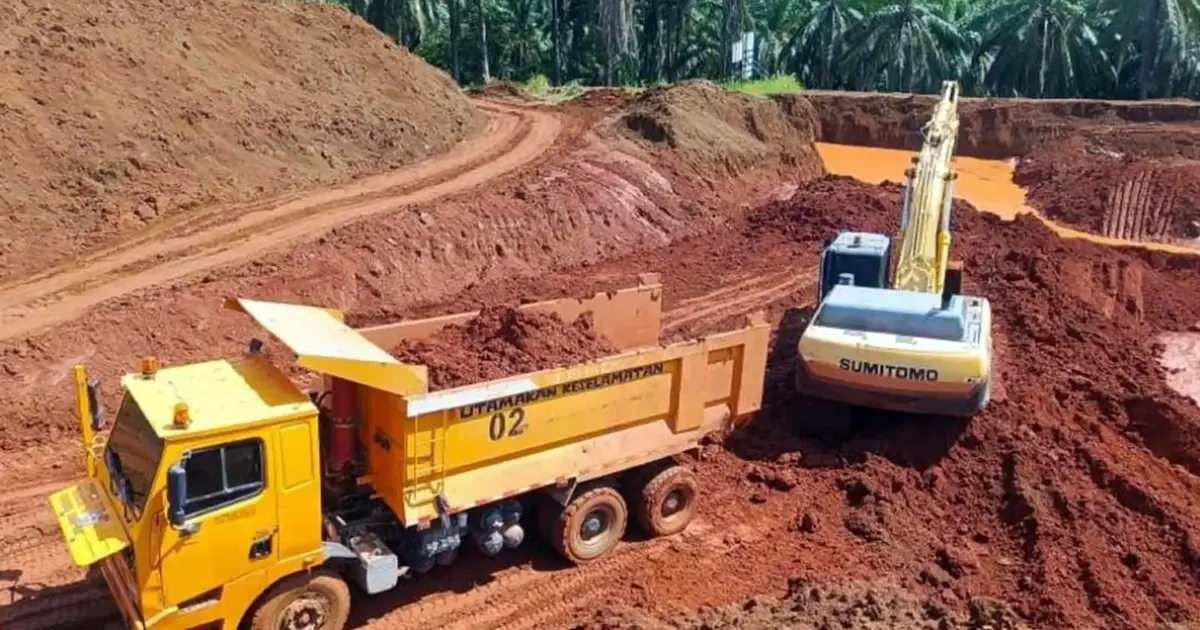
Malaysian law enforcement authorities have dismantled a significant illegal bauxite mining operation following a coordinated raid on a Felda plantation, resulting in the arrest of nine suspects and the seizure of assets worth RM3.75 million. The General Operations Force, responding to intelligence about unauthorized extraction activities at the site, conducted the operation after establishing sufficient evidence linking the group to systematic bauxite theft from the agricultural holding.
The nine individuals apprehended during the enforcement action were predominantly foreign nationals, according to statements from the General Operations Force. These arrests mark the culmination of an investigation into what authorities characterize as a sophisticated mining operation disguised within or operating adjacent to legitimate Felda activities. The composition of the suspect pool, heavily weighted toward foreign workers, underscores a recurring pattern in Malaysia's illegal mining sector where international labour networks coordinate extraction and smuggling activities across Southeast Asia.
Beyond the arrests, the raid yielded substantial quantities of bauxite ore, the primary aluminium-bearing mineral targeted by illegal mining syndicates throughout Malaysia and the broader region. The precise tonnage of seized material was not immediately disclosed, but the volume recovered was sufficiently significant to warrant prominent mention in official communications about the operation. Bauxite, increasingly valuable due to global demand for aluminium and related products, has become a focal point for organized resource theft across Malaysia's industrial and agricultural zones.
The RM3.75 million valuation of seized assets encompasses machinery, equipment, and materials directly employed in the mining and preparation processes. Such equipment—including excavators, processing machinery, and transport vehicles—represents substantial capital investment by the syndicate and indicates the scale and apparent permanence of the unauthorized operation. The forfeiture of this infrastructure substantially disrupts future mining activities and imposes significant financial consequences on the criminal network involved.
Illegal bauxite extraction has emerged as a major environmental and economic concern throughout Malaysia, particularly in states with substantial reserves or agricultural zones vulnerable to encroachment. Mining operations conducted outside regulatory frameworks cause extensive habitat destruction, contaminate water sources, and degrade land unsuitable for subsequent agricultural or residential use. The Felda plantation setting is particularly sensitive given the scheme's historical importance to Malaysian rural development and food security.
Felda holdings, scattered across peninsular Malaysia and Sabah, have increasingly become targets for illegal resource extraction due to their geographic isolation, size, and sometimes limited security infrastructure. Syndicates exploit this vulnerability to conduct operations that can persist undetected for extended periods. The plantation system's labor-intensive nature and reliance on seasonal workers can inadvertently provide cover for criminal networks embedding operatives within legitimate workforce structures.
The General Operations Force specializes in countering serious crimes including organized resource theft, and their involvement in this operation reflects the authorities' assessment that the bauxite mining scheme represented a significant organized crime enterprise rather than sporadic opportunistic theft. The force's capacity to mobilize resources for such raids depends on intelligence from community reporting, whistleblowers within industrial sectors, and coordinated surveillance operations.
Southeast Asia's bauxite sector has experienced intensifying criminal activity as aluminium refining becomes increasingly concentrated in the region, particularly in Indonesia and Malaysia. This concentration creates strong demand for raw ore, whether legally or illegally sourced. Smuggling networks efficiently move stolen bauxite to processing facilities that may not adequately verify supply chain legitimacy, creating profitable incentives for mining syndicates despite enforcement risks.
The environmental implications of illegal bauxite mining extend beyond immediate site damage to downstream effects including altered hydrology, heavy metal contamination in agricultural soil, and biodiversity loss. Recovery of degraded land requires substantial investment typically borne by governmental authorities and affected communities rather than offending syndicates. This cost externalization makes illegal mining economically attractive to criminals despite the criminal penalties involved.
Prosecution of the detained suspects will likely proceed under Malaysia's environmental and mining regulations, with sentencing guidelines reflecting both the commercial value of stolen material and the environmental damage caused. Foreign nationals may face additional complications regarding deportation following conviction and incarceration. The operation signals authorities' commitment to disrupting illegal mining networks, though enforcement remains challenging given the sector's profitability and the international dimensions of bauxite smuggling routes.
The seizure represents an important disruption to organized extraction activities, but experts note that dismantling such operations requires sustained enforcement pressure combined with supply-chain verification systems. Without efforts to trace bauxite at refining facilities and penalize buyers of suspicious ore, enforcement alone faces limitations in reducing the criminal incentives driving illegal mining. Regional cooperation among Southeast Asian governments on bauxite trafficking therefore remains essential to addressing the problem comprehensively.

