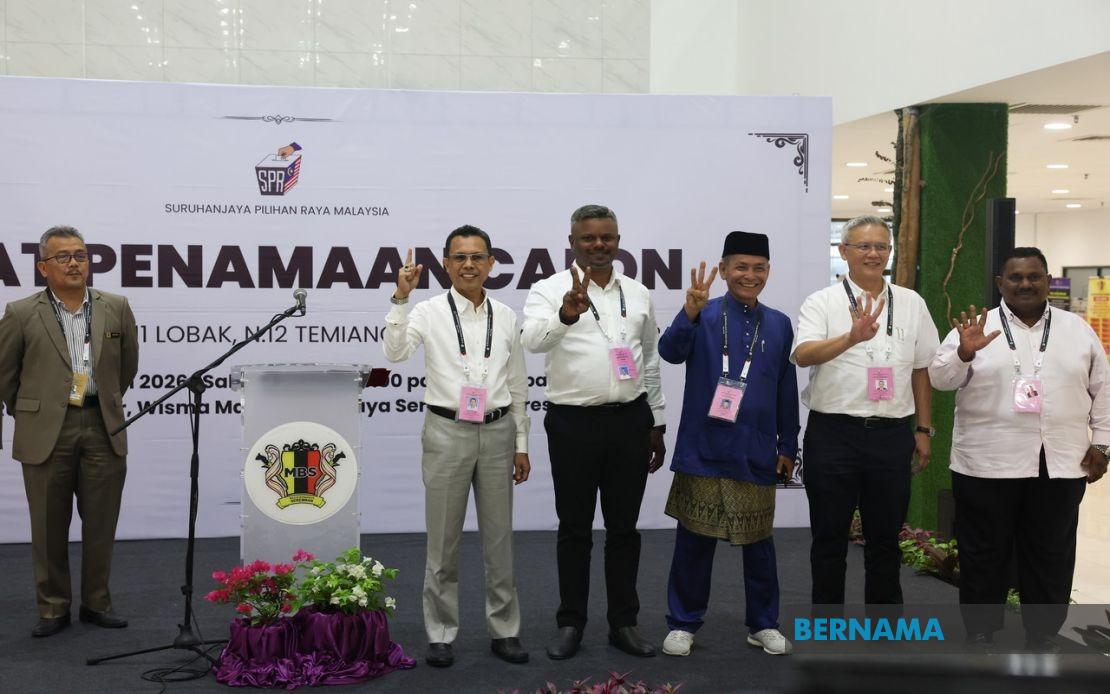
The Nilai state assembly seat is shaping up to be one of the most hotly contested races in the forthcoming 16th Negeri Sembilan election, presenting a formidable challenge for the incumbent assemblyman and DAP National vice chairman J. Arul Kumar. Representing Pakatan Harapan, Arul Kumar must navigate a congested political landscape where he faces competition from four other candidates spanning multiple coalitions and independent camps. The crowded field reflects the seat's pivotal importance and the intense jostling between competing political blocs vying for influence in the state assembly.
The nomination process, concluded on July 18 at the Wisma Bandaraya Seremban nomination centre, formally registered the final slate of contenders for the Nilai seat. Alongside Arul Kumar stand Zamani Ibrahim representing Berjasa, Datuk Lai Chien Kong fielded by Barisan Nasional, Datuk V. Saravana Kumar backed by Bersatu, and independent candidate Omar Mohd Isa. This five-way division of the vote presents strategic complexities for Arul Kumar, who must defend his position whilst managing the risk of opposition votes fragmenting across multiple challengers. The presence of an independent candidate further complicates traditional coalition dynamics and introduces an unpredictable element into what might otherwise be a clearer contest between established political alliances.
The election returning officer Datuk Masri Baharuddin announced the confirmed candidates following the 10 am nomination deadline, providing clarity on the final composition of contests across multiple constituencies. Beyond Nilai, the Sikamat seat will feature Nor Azman Mohamad, the Menteri Besar's political secretary, carrying PH's colours in a three-cornered clash against Datuk Razali Abu Samah from Perikatan Nasional and Datuk Tun Faisal Ismail Aziz from Bersatu. The Sikamat contest initially attracted an independent candidate, Bujang Abu, but he withdrew at the final moment, reducing the field to a more manageable three-way affair.
Across the 36-seat state assembly, contests are emerging with varying complexity and intensity. In Lenggeng, PH's Zarinna Abu Zarin will challenge the incumbent Datuk Mohd Asna Amin from BN, competing against Bersatu's Zool Amali Hussin in a three-cornered battle. The Lobak seat, by contrast, shapes as a direct bilateral encounter between the sitting assemblyman Chew Seh Yong from Pakatan Harapan and PN's Dr P. Kumar, offering a clearer choice for voters in what may prove one of the election's more straightforward contests.
Temiang presents another three-way competition featuring PH's Ho Weng Wah, who serves as political secretary to the Transport Minister, opposing Datuk Leaw Kok Chan of BN and Bersatu's Fazly Hamid. Similarly, the Ampangan seat involves a triangular battle between Yayasan Negeri Sembilan director Muhammad Nazri Kassim representing PH, PN's Datuk Dr Mohamad Rafie Malek, and Bersatu's Noor'azah Harun. These multi-cornered contests suggest that Negeri Sembilan's political landscape remains fractured, with no single coalition commanding overwhelming dominance across all constituencies.
The multiplicity of contested races underscores the shifting political dynamics in Malaysia's states, where Bersatu has emerged as a pivotal player capable of fielding candidates across numerous seats and complicating the traditional BN-opposition dichotomy. By placing candidates in multiple constituencies, Bersatu simultaneously advances its own political fortunes whilst potentially fragmenting votes against incumbent administrations. This strategy reflects the party's positioning as a potential kingmaker in several state assemblies, capable of influencing outcomes through strategic candidate placement and subsequent coalition formation.
For Malaysian observers monitoring the evolution of state-level politics, the Negeri Sembilan election carries broader significance beyond the state's borders. The results will provide indicators of voter sentiment in a crucial swing state and test the durability of Pakatan Harapan's appeal following the coalition's formation. Negeri Sembilan has historically demonstrated willingness to shift political allegiances, and the 2024 election will reveal whether recent trends towards PH consolidation persist or reverse.
The Negeri Sembilan state assembly was dissolved on June 5, following a period of political maneuvering that preceded the formal dissolution announcement. The Election Commission scheduled early voting for July 28, allowing registered voters unable to participate on the main polling date to cast ballots in advance. The main election will occur on August 1, providing Negeri Sembilan voters with their opportunity to reshape the state assembly's composition and determine the trajectory of state governance over the coming term.
For candidates like Arul Kumar in Nilai, the crowded contest requires sophisticated campaign strategies that move beyond traditional appeals to base supporters. In a five-way race, victory margins may compress, and the ability to consolidate particular demographic or geographical support becomes crucial. The presence of multiple non-traditional challengers, including both a Berjasa representative and an independent candidate, suggests that voters in Nilai may be receptive to alternative political voices, creating headwinds for any incumbent seeking to retain their seat through conventional means.
The broader pattern evident across multiple Negeri Sembilan constituencies—where three and four-way contests predominate—indicates that Malaysian voters will encounter unprecedented levels of choice and fragmentation in this election cycle. Rather than straightforward confrontations between BN and opposition forces, many constituencies now feature more complex electoral mathematics where vote efficiency, ballot distribution, and tactical voting assumptions carry heightened importance. This evolution reflects the maturing of Malaysia's democratic culture but simultaneously complicates prediction and outcome forecasting.

