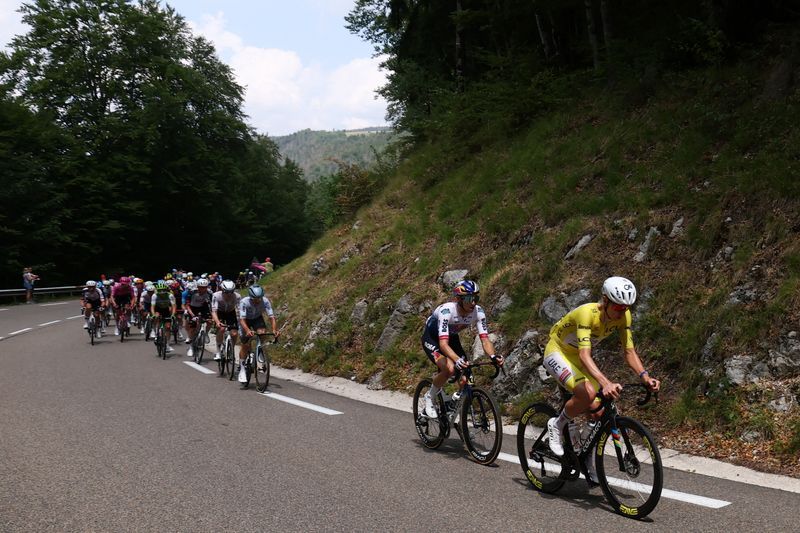
The debate over unconventional anti-doping practices at professional cycling's most prestigious event has intensified, with former Cannondale-EF team boss Jonathan Vaughters offering a perspective grounded in painful personal experience. His defence of pre-dawn testing comes as several elite riders have complained about being awakened in the dead of night for unannounced doping checks during this year's Tour de France, raising questions about athlete welfare and the lengths authorities are willing to go to maintain competition integrity.
On the morning of the race's 15th stage, top contenders including race leader Tadej Pogacar and defending champion Jonas Vingegaard were roused from sleep for surprise doping tests, with some checks occurring as early as 2 a.m. The disruption prompted immediate protests from the affected competitors, who argued that the loss of precious recovery time before a gruelling mountain stage created unfair conditions and posed safety risks. Vingegaard later suffered a crash that resulted in a broken collarbone, while Remco Evenepoel, who won that day's stage, branded the nocturnal testing "inhuman."
Vaughters, who competed as a professional through the late 1990s and into the early 2000s, brought credibility to the anti-doping argument by articulating why night-time testing matters from a scientific standpoint. In comments posted on social media, he explained that testing conducted at 2 a.m. represents one of the most effective mechanisms for detecting micro-dosing of performance-enhancing peptides, including erythropoietin (EPO), human growth hormone (hGH), and testosterone. These substances can leave a rider's system within hours, making them difficult to identify if authorities only conduct tests during predictable daytime windows. Vaughters suggested that had such rigorous testing protocols existed two decades earlier, the entire edifice of systematic doping that plagued cycling would have collapsed before it took root.
The former cyclist's intervention carries exceptional weight because he is not merely an observer of cycling's troubled doping history but an active participant in it. Vaughters was a teammate of Lance Armstrong during the U.S. Postal Service team era and subsequently admitted to his own use of EPO and other performance-enhancing drugs throughout his career. He later provided crucial testimony to the U.S. Anti-Doping Agency during its investigation into Armstrong, contributing to the damning conclusion that the American cyclist had orchestrated the most sophisticated doping programme ever seen in professional sport. Armstrong's seven Tour de France titles were stripped from him in 2012 as a result of that investigation.
Following his retirement from competition, Vaughters redirected his career toward anti-doping advocacy. He founded the team now known as Cannondale-EF with a deliberate positioning as a beacon of clean racing, attempting to pioneer a new culture within professional cycling. This transformation from participant in doping to proponent of rigorous testing gives his current statements particular resonance, though it also invites scrutiny about whether his perspective is shaped by his own history and his team's commercial interests in appearing ethically superior.
The International Testing Agency, which manages doping controls under the Union Cycliste Internationale (UCI), has publicly acknowledged the tension inherent in its testing strategy. The organisation recognised that nocturnal testing causes genuine disruption to riders' sleep patterns and recovery processes, which are crucial for performance and safety at the elite level. Nevertheless, it argued that effective anti-doping programmes must occasionally conduct checks outside conventional hours and in circumstances that serve legitimate anti-evasion purposes. This position reflects a fundamental conflict between two competing values: ensuring fair competition through rigorous testing and protecting athlete welfare through reasonable working conditions.
The specific cases of Pogacar and Vingegaard illustrate the practical implications of this conflict. Pogacar, tested at 5 a.m., reported managing only four hours of sleep that night, while Vingegaard was awakened at 2 a.m. for his test and lost approximately 40 minutes of sleep before competing in a mountain stage. For Vingegaard, the consequences were particularly severe, as the sleep deprivation may have contributed to the loss of concentration that led to his crash. These incidents raise legitimate questions about whether the anti-doping authorities are employing proportionate methods or whether they are allowing the pursuit of testing compliance to override reasonable consideration for athlete safety.
The science of micro-dosing explains why authorities have adopted this aggressive testing posture. Athletes seeking to enhance their endurance or recovery capacity can take small, carefully calibrated doses of EPO, hGH, or synthetic testosterone that remain within the body only briefly before being metabolised and excreted. If testing is conducted only during daylight hours on a predictable schedule, sophisticated medical teams can calculate windows of vulnerability and time their administrations accordingly. By contrast, random nocturnal testing eliminates the possibility of such calculation and forces athletes to risk taking doses without knowing when detection might occur.
For Malaysian and Southeast Asian sports fans, the debate reflects broader questions about anti-doping enforcement that extend beyond cycling. As the region develops elite training programmes and increasingly participates in international sporting competitions, these jurisdictions will eventually confront similar choices about testing protocols. The approaches adopted by world governing bodies in cycling will likely influence policies across multiple sports, making the outcome of this particular dispute relevant beyond the confines of professional road racing.
Vaughters' argument essentially contends that the discomfort caused by night-time testing is a reasonable price to pay for preventing the kind of systematic, industry-wide doping that devastated cycling's credibility for decades. He is suggesting, implicitly, that the athletes who complain about sleep disruption should accept it as a necessary condition of competing in a genuinely clean sport. Yet this perspective assumes that the current generation of riders shares responsibility for preventing a recurrence of past abuses, which is a morally complex proposition. It also presumes that nocturnal testing is the only effective mechanism for detecting micro-dosing, a claim that deserves scrutiny.
The fundamental tension remains unresolved. Professional cycling sits at a crossroads between acknowledging genuine athlete welfare concerns and implementing testing strategies robust enough to prevent sophisticated doping programmes. Vaughters' contribution to this debate, despite or perhaps because of his conflicted position, highlights the painful trade-offs that anti-doping authorities must navigate. Whether night-time testing represents a proportionate response to a genuine threat or an excessive intrusion into athlete privacy and recovery will likely shape anti-doping policy across global sport for years to come.

