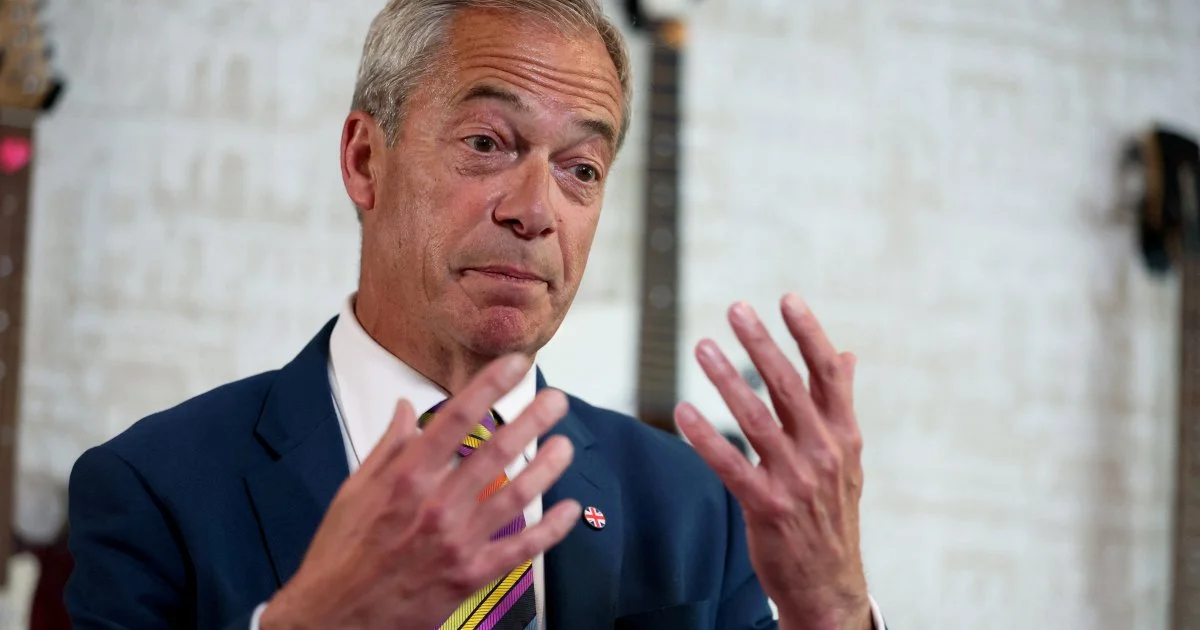
Nigel Farage, the prominent hard-right British politician, confronts yet another controversy centring on his failure to properly disclose gifts and financial benefits. According to reports emerging on Sunday, the firebrand politician received substantial support for his security arrangements and staff costs from an individual with a criminal conviction for fraud, raising serious questions about parliamentary accountability and the transparency standards expected of public figures in the United Kingdom.
The allegations represent a continuation of longstanding concerns regarding Farage's adherence to Westminster rules governing the declaration of pecuniary interests. Such regulations exist to prevent conflicts of interest and ensure voters understand the financial relationships that might influence or appear to influence a politician's decision-making. For Malaysian observers familiar with local governance debates, the situation illustrates how Western democracies also grapple with transparency issues at the highest levels, albeit through different mechanisms and enforcement bodies than those operating in Southeast Asia.
Farage's political trajectory has consistently invited controversy. From his leadership of the United Kingdom Independence Party through his prominent role in the Brexit campaign and his subsequent founding of the Reform UK party, he has cultivated a public persona as an outsider challenging establishment orthodoxy. However, his personal financial arrangements have repeatedly attracted scrutiny, suggesting that while his populist messaging resonates with certain voter segments, his actual conduct raises questions about whether he practices the accountability he demands from others.
The involvement of a convicted fraudster in funding his security and staff operations introduces an additional layer of concern. Security arrangements for political figures typically operate through transparent channels, with costs either borne publicly or clearly disclosed as private benefits. The opaque nature of these arrangements—particularly when involving someone with a criminal history related to financial dishonesty—creates the appearance of impropriety that damages public trust in political institutions. This is especially problematic in a system where parliamentary privilege and public confidence in elected representatives form the constitutional bedrock.
The non-disclosure of such gifts represents a potential violation of the Members' Interests Act and related parliamentary rules designed to maintain standards in public life. These regulations require MPs to declare in the Register of Members' Financial Interests any gifts exceeding a certain threshold, along with other financial relationships that might be perceived as creating obligations. By allegedly failing to do so, Farage may have breached fundamental expectations of transparency that serve to protect democracy itself from corruption and undue influence.
For the British political establishment, these allegations arrive at a particularly sensitive moment. Public trust in parliament has declined substantially in recent years, damaged by various scandals and perceptions of entitlement among elected members. The Boris Johnson era witnessed multiple controversies over parliamentary standards, including the partygate scandal and questions over financial propriety. Any new revelations about senior politicians circumventing disclosure rules reinforce the public narrative that Westminster operates according to different standards than those applied to ordinary citizens.
Farage's specific position as a figure critical of establishment politics adds ironic dimensions to these allegations. His political brand rests considerably on claims to authenticity and commitment to restoring power to ordinary people allegedly ignored by metropolitan elites. However, if he has accepted undisclosed benefits from wealthy donors—and particularly from individuals with fraud convictions—it suggests a disconnect between his populist messaging and his actual conduct. This contradiction becomes politically damaging precisely because his followers have invested faith in his claimed difference from traditional politicians.
The identity of the fraudster involved carries particular significance. While specific details require careful handling pending any formal investigation, the involvement of someone with a criminal record raises questions about judgment and vetting procedures. Why would a politician accept security arrangements from such a source? What assurances existed regarding the legitimacy of this support? Such questions naturally arise in any serious examination of the matter and will likely feature prominently in any parliamentary inquiry or media investigation.
For regional observers, these developments underscore that governance challenges transcend national boundaries. While Malaysia, Singapore, and other Southeast Asian nations have their own standards regimes and conduct expectations for public officials, the British experience demonstrates that even established democracies with long parliamentary traditions struggle with enforcing transparency rules effectively. The question of how to maintain public confidence in political institutions whilst holding leaders accountable remains unresolved across multiple jurisdictions.
The potential consequences for Farage extend beyond reputational damage. Depending on the severity of any violations, parliamentary authorities might launch formal investigations, potentially recommending sanctions including suspension from the House. Such outcomes would mark a significant development in British politics, given Farage's prominence and influence over recent years. The Reform UK party he leads has positioned itself as a potential significant force in British politics, particularly if it achieves parliamentary representation at the next general election.
This situation also raises broader questions about enforcement mechanisms for parliamentary standards. The UK Parliament's Commissioner for Standards investigates complaints about MPs' conduct, but questions persist about whether existing procedures and penalties prove sufficiently robust to deter violations or satisfy public demands for accountability. Comparisons with other Westminster systems—including Australian, Canadian, and New Zealand parliaments—suggest varying approaches to such questions, with some jurisdictions operating notably stricter regimes.
Looking ahead, the trajectory of these allegations will significantly influence perceptions of British democracy's health. If investigations substantiate reports and result in meaningful consequences, it demonstrates that even prominent politicians face accountability. Conversely, if proceedings prove inconclusive or penalties appear insufficient, it will further erode public confidence in parliamentary institutions already suffering reputational damage from recent scandals. For Farage specifically, the allegations present a test of whether his brand of populist politics can survive direct confrontation with questions about his personal integrity.

