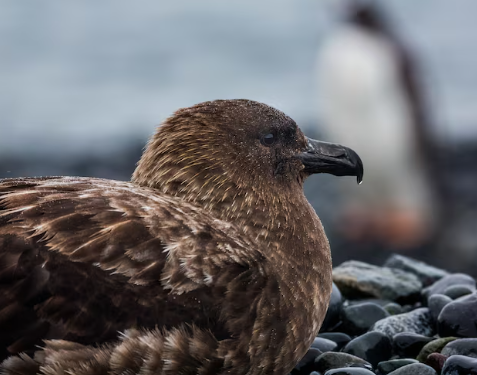
New Zealand has joined every other inhabited continent in detecting H5N1 bird flu after a brown skua seabird found washed up on a Wellington beach tested positive for the virus, Biosecurity Minister Andrew Hoggard announced on Wednesday, July 15. The discovery transforms New Zealand's long-standing freedom from the disease into an urgent biosecurity challenge, particularly for the nation's uniquely vulnerable wildlife population that has evolved in isolation for millions of years without exposure to such pathogens.
The pathogen's arrival in the South Pacific represents a critical juncture in the virus's global expansion. Australia detected its first H5 cases just weeks earlier, and by the time of New Zealand's confirmation, the Australian authorities had documented 14 confirmed or presumed positive detections across their territory. This regional clustering underscores how migratory bird routes connect distant ecosystems, creating natural corridors for disease transmission that no biosecurity fence can entirely contain. The H5N1 strain itself has proven devastating since its emergence in wild populations around 2021, systematically moving through waterfowl, seabirds, and terrestrial mammals while simultaneously penetrating commercial poultry operations and dairy farms across multiple continents.
What distinguishes New Zealand's situation from outbreak scenarios elsewhere is the extraordinary fragility of its native bird species. Over millions of years of geographic isolation, New Zealand's avifauna evolved without terrestrial predators, resulting in numerous flightless or poorly-flying species that nest on the ground and lack evolutionary adaptations for escape or defense. This evolutionary trajectory created ecological wonders—birds found nowhere else on Earth—but it simultaneously constructed a population biology that is dangerously susceptible to novel infectious threats. Species such as the takahe and kakapo, already pushed to the brink of extinction by habitat destruction and introduced predators like stoats, rats, and feral cats, now face potential annihilation from a pathogen their ancestors never encountered.
Biosecurity Minister Hoggard emphasized that current surveillance has detected no signs of widespread wildlife mortality or transmission between wild birds in the country, nor has the virus appeared in commercial poultry operations. However, this absence of immediate crisis does not diminish the underlying vulnerability. Brett Gartrell, a wildlife health specialist at Massey University, articulated the core anxiety gripping conservation officials: New Zealand's birds possess no evolutionary immunity to H5N1, and rapid spread could push multiple critically endangered species past the point of recovery. The vaccination programme targeting 300 core breeding individuals from five species represents a last-resort intervention—an acknowledgment that traditional disease containment may prove insufficient.
New Zealand's preparedness efforts, initiated well before any confirmed case emerged, had positioned the nation to respond with some sophistication. Government agencies and the poultry industry had collaboratively developed biosecurity protocols and resilience strategies, anticipating that the virus's eventual arrival was inevitable given its presence across the Northern Hemisphere and, latterly, in Australia. This forward planning has enabled rapid mobilisation of vaccination resources, though vaccination itself carries complications when the goal is protecting wild populations rather than contained flocks. Vaccinated birds must still be monitored; they may reduce symptoms without preventing infection or transmission entirely.
The epidemiological picture globally compounds New Zealand's anxiety. The H5 strain has demonstrated an unsettling capacity to jump between wild birds and commercial livestock, as exemplified by recent avian influenza outbreaks affecting dairy cattle in North America. Farmworkers in affected regions have contracted the virus, though human-to-human transmission remains rare. In New Zealand's context, the immediate risk to human health appears low, but the pathway for the virus to establish itself in the poultry industry—and potentially spread to dairy operations—remains open. The nation's small and geographically concentrated agricultural sector means that a significant farm outbreak could ripple through economic supply chains with considerable force.
Regional implications extend beyond New Zealand's borders. Australia, having already encountered the virus, will be closely monitoring New Zealand's trajectory to refine its own management strategies. The trans-Tasman collaboration on biosecurity issues has historically been robust, and both nations are now essentially conducting parallel experiments in H5N1 containment and mitigation. For other Pacific Island nations, New Zealand's experience provides a cautionary template: the virus is moving relentlessly eastward, and island communities lacking New Zealand's veterinary and research infrastructure face potentially catastrophic scenarios if H5N1 reaches their shores.
The vaccination programme itself represents a bold departure from traditional wildlife management, which has rarely employed mass immunisation strategies outside laboratory or captive-breeding contexts. Five core endangered species will receive the vaccine, with officials prioritising the most genetically valuable and demographically critical individuals from existing breeding populations. The strategy acknowledges a difficult calculus: complete protection of wild populations is likely impossible, so intervention must focus on preserving the genetic and demographic cores necessary for species survival. If vaccination succeeds in protecting these birds and containment measures limit broader transmission, the species might endure. If rapid spread outpaces vaccination efforts, several might not.
Looking forward, New Zealand faces a precarious balancing act. The nation must maintain strict biosecurity protocols to prevent poultry infection and human cases, while simultaneously implementing vaccination and monitoring programmes that respect the welfare and natural behaviour of wild birds. Scientific uncertainty pervades every decision: the vaccine's efficacy in wild conditions remains partially unknown, transmission rates in New Zealand's specific ecosystems cannot be precisely predicted, and the virus's evolution—it has mutated constantly since 2021—could yet surprise planners. For a country that has defined itself partly through conservation leadership, the next months will test whether innovation and preparation can overcome the fundamental ecological vulnerability that millions of years of isolation have created.

