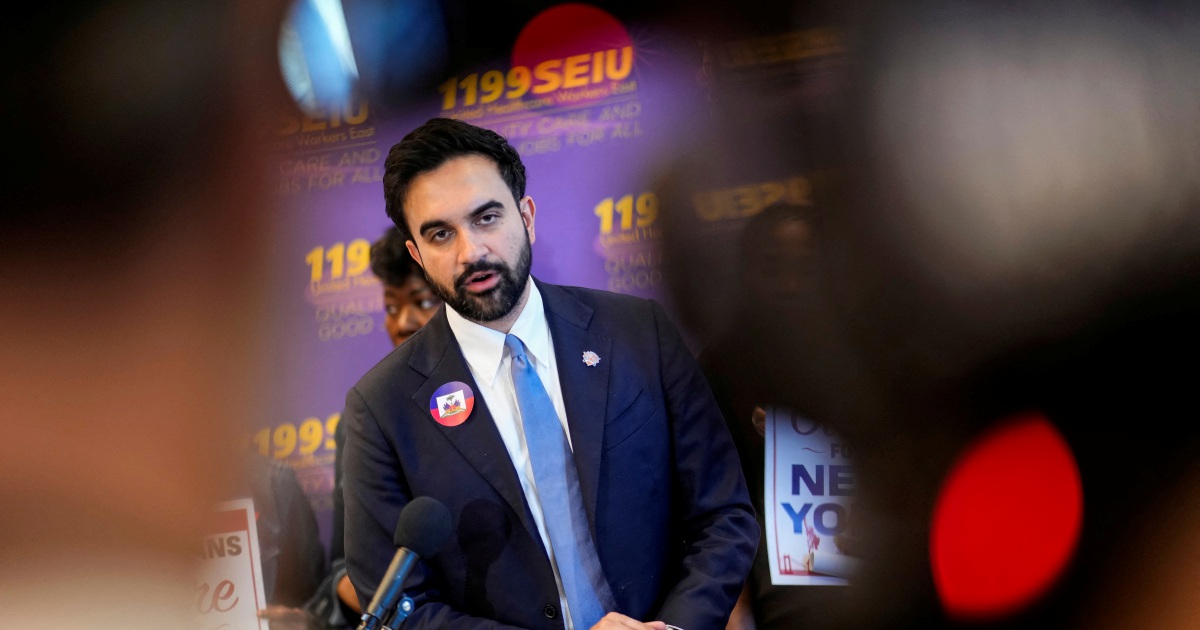
New York Mayor Zohran Mamdani has revealed that he is weighing legal possibilities regarding Israeli Prime Minister Benjamin Netanyahu's participation in an imminent United Nations summit. In remarks disclosed through a Saturday interview, Mamdani acknowledged that conversations are underway concerning the feasibility of taking action against Netanyahu during his visit to the United States. The statement has triggered an immediate and pointed criticism from Netanyahu's representatives, who have rejected the suggestion with characteristic defensiveness.
The prospect of such an arrest stems from longstanding international law concerns centred on Netanyahu's policies and military decisions, particularly regarding the ongoing Israeli military operations in Gaza. Multiple jurisdictions and international bodies have explored potential accountability mechanisms, though diplomatic immunity and practical enforcement challenges have repeatedly constrained such efforts. The question of whether a sitting head of government can be detained on foreign soil remains contentious, with precedent and international convention offering conflicting guidance.
Mamdani's public acknowledgment of internal deliberations reflects growing scrutiny of Netanyahu's record among segments of the American political establishment, particularly within progressive circles that dominate New York City politics. The Mayor's statement indicates that serious conversations are occurring between city officials and legal advisors regarding what steps, if any, could be taken within existing legal frameworks. This represents a notable shift from typical diplomatic restraint, where such discussions would ordinarily remain confidential or be deflected as hypothetical.
For Malaysian observers and the broader Southeast Asian context, this development illuminates deeper fractures within Western policy circles regarding Israel-Palestine matters. The region's own experience with international law, sovereignty disputes, and the tension between domestic accountability and diplomatic protocol makes this particularly relevant. Questions about when and how international figures can be held accountable for military decisions resonate across the Global South, where many nations have experienced foreign military interventions they viewed as unjustified.
The timing of such discussions carries additional weight given the current trajectory of the Gaza conflict and the substantial civilian casualties that have prompted investigations by multiple entities including the International Criminal Court. Netanyahu has consistently denied wrongdoing and characterised such inquiries as politically motivated. His government has maintained that Israeli military operations comply with international humanitarian law and that civilian casualties, while tragic, result from Hamas's use of civilian infrastructure for military purposes.
The diplomatic implications extend beyond bilateral US-Israel relations. United Nations protocols stipulate certain protections for leaders attending the General Assembly, creating legal ambiguity about what municipal authorities in New York City can actually enforce. The federal government's position on any such attempt would prove decisive, as the Secret Service typically maintains jurisdiction over visiting dignitaries and diplomatic security arrangements supersede local law enforcement authority in most circumstances.
Mamdani's comments also reflect evolving public sentiment within American urban centres regarding Israel's policies. Progressive constituencies in major cities have increasingly mobilised around Palestinian rights issues, creating political space for elected officials to take positions that would have been considered fringe merely a few years ago. This generational and ideological shift within the Democratic Party's base has manifested in various policy positions and rhetorical stances that differ markedly from Washington's traditional approach to the Israeli-American relationship.
The Netanyahu camp's sharp response underscores the sensitivity surrounding any suggestion of legal jeopardy for the Israeli Prime Minister. Israeli officials have characterised such efforts as antisemitic harassment and an attempt to weaponise international law against Israel. This defensive posture reflects broader Israeli anxieties about delegitimisation efforts and what their government perceives as a pattern of disproportionate scrutiny compared to other nations' military conduct.
For regional observers in Southeast Asia, the episode illustrates how international accountability mechanisms remain politically contested and practically limited by geopolitical considerations. Like several ASEAN member states that have faced criticism from international bodies, Israel's experience demonstrates that military powers with significant diplomatic backing can largely withstand accountability pressure if their allies provide sufficient protection. Conversely, smaller nations with fewer defenders face greater vulnerability to such mechanisms, highlighting persistent inequities in international justice systems.
The practical outcome remains uncertain, dependent on multiple variables including final legal assessment, the federal government's position, diplomatic negotiations occurring behind closed doors, and ultimately whether Netanyahu will attend the UN gathering. Mayors typically possess limited extraterritorial authority over foreign nationals enjoying diplomatic status, suggesting that any arrest attempt would face formidable legal and institutional obstacles. Nevertheless, Mamdani's willingness to publicly discuss such considerations signals the intensity of pro-Palestinian sentiment within segments of American civil society and electoral politics.
This developing situation also reflects the intersection of domestic American politics and international relations. The positioning of a New York City mayor on Israeli accountability matters carries symbolic weight beyond municipal jurisdiction, functioning as a barometer for progressive political sentiment and generational attitudes toward Middle Eastern conflicts. For observers across Southeast Asia monitoring how democracies handle controversial international figures and contentious foreign policy matters, the unfolding episode offers instructive lessons about the limits and possibilities of bottom-up accountability efforts within liberal political systems.
Ultimately, whether concrete action materialises or this remains primarily a rhetorical gesture, the public discussion itself represents a notable moment in how American civic institutions engage with sensitive international law questions. The matter underscores persistent tensions between diplomatic immunity protections and calls for individual accountability, between alliance relationships and principles of universal justice, and between local political initiative and federal foreign policy prerogatives.

