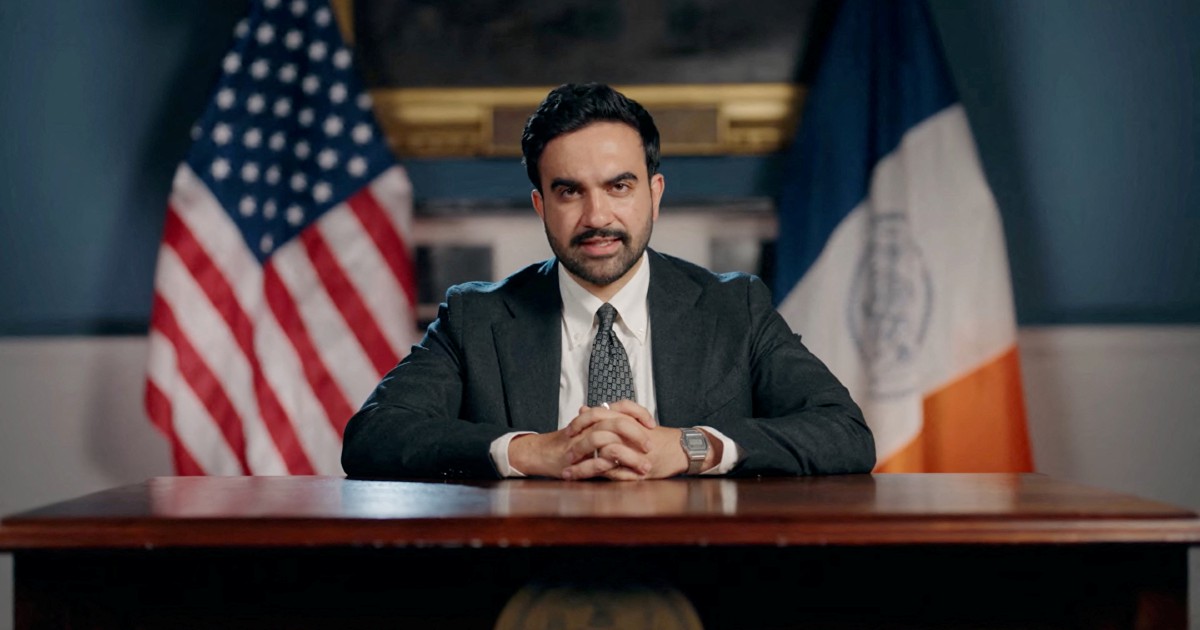
New York Mayor Zohran Mamdani declared on Tuesday that municipal authorities in the city possess no jurisdictional capacity to execute the International Criminal Court's arrest warrant targeting Israeli Prime Minister Benjamin Netanyahu. In making this statement, Mamdani positioned the responsibility squarely with American federal authorities, requesting they provide definitive guidance and take appropriate action concerning the warrant.
The mayor's comments illuminate a complex constitutional and diplomatic challenge facing the United States, which has not ratified the International Criminal Court statute and maintains no formal obligation to comply with its orders. The ICC, established by the Rome Statute in 1998 and headquartered in The Hague, operates independently of individual nations' law enforcement structures. When the court issues an arrest warrant, it becomes the responsibility of signatory nations to apprehend suspects within their borders—a mechanism that creates significant friction when non-signatory countries like the United States are involved.
Mamdani's statement reflects broader uncertainty across American municipal and state governments regarding how to navigate ICC warrants for foreign dignitaries and officials. Cities like New York, which host international forums and frequent visits from world leaders, face an unprecedented gray zone where diplomatic immunity, national sovereignty, and international criminal justice intersect in ways that domestic law has not comprehensively addressed. The mayor's explicit delegation of authority upward suggests that local governments have determined they lack both the legal foundation and practical mandate to independently enforce international court orders.
The Netanyahu warrant represents a watershed moment in international criminal justice enforcement, particularly as it concerns a leader of a close American ally. The ICC's decision to pursue arrest warrants for Israeli officials has proven deeply divisive globally, with significant geopolitical implications. For American officials navigating the issue, compliance could strain relations with Israel, while non-compliance raises questions about American commitment to international law and the rules-based global order that the US has historically championed.
Mamdani's call for federal intervention acknowledges that any enforcement action must occur at the national level, where the Biden administration can weigh competing interests and articulate a coherent position. Federal authorities possess the diplomatic infrastructure, intelligence capabilities, and constitutional authority to make determinations about whether and how to handle such warrants. A municipal response would create chaos, generate conflicting signals to international partners, and potentially expose individual cities to diplomatic complications beyond their appropriate purview.
For Malaysian observers and Southeast Asian policymakers, this moment carries instructive value regarding how larger democracies manage conflicts between domestic law, international obligations, and foreign policy interests. Malaysia, which has ratified the Rome Statute and technically obligated itself to enforce ICC warrants, faces parallel dilemmas when dealing with visits from leaders facing international charges. The American response will likely influence how other nations interpret and execute similar obligations, establishing precedents that regional governments will scrutinize carefully.
The warrant itself emerged from the ICC's ongoing investigations into the Israeli-Palestinian conflict, with prosecutors alleging that Netanyahu bears responsibility for crimes related to military operations in Gaza. The legal and factual questions underlying the investigation remain contested, with Israel and its supporters disputing both the court's jurisdiction and the substantive allegations. This disagreement frames the enforcement question not merely as a technical matter of law but as a fundamentally contested judgment about which institution possesses legitimate authority to investigate and prosecute high-level political actors.
The United States has historically maintained an ambivalent relationship with the International Criminal Court, supporting its creation in principle while refusing to join formally. This strategic distance has allowed American policymakers to preserve latitude in responding to ICC actions that intersect with American interests. The Netanyahu warrant tests whether this distance can be maintained or whether the court's expanding reach into situations involving American allies demands a more definitive American position, whether supportive or adversarial.
Mamdani's position also reflects practical realities of criminal law enforcement in federal systems. Arresting a foreign head of state within an American city would trigger immediate diplomatic incidents, require federal coordination across multiple agencies, and likely face legal challenges based on doctrines of sovereign immunity that remain influential in American jurisprudence. No mayor can unilaterally navigate such complexities; the decision must emerge from the presidency and the State Department working in concert.
Looking forward, the federal government faces pressure from multiple directions. International justice advocates argue that the United States cannot selectively enforce international law based on political convenience. Supporters of Israel contend that the ICC has overreached its legitimate mandate and that American cooperation would constitute unacceptable interference in Israeli sovereignty. Congress has threatened sanctions against the ICC should it proceed with investigations into American officials, further complicating the landscape.
Mamdani's statement ultimately reflects an appropriate deference to federal authority while simultaneously highlighting the ambiguity in American legal frameworks regarding international criminal justice. As the world becomes more interconnected and international courts increasingly assert jurisdiction over actions by political leaders, democratic governments must develop clearer institutional mechanisms for addressing these conflicts. The Netanyahu warrant serves as an urgent prompt for such clarification, with implications extending far beyond New York and far beyond the Israeli-Palestinian dispute.

