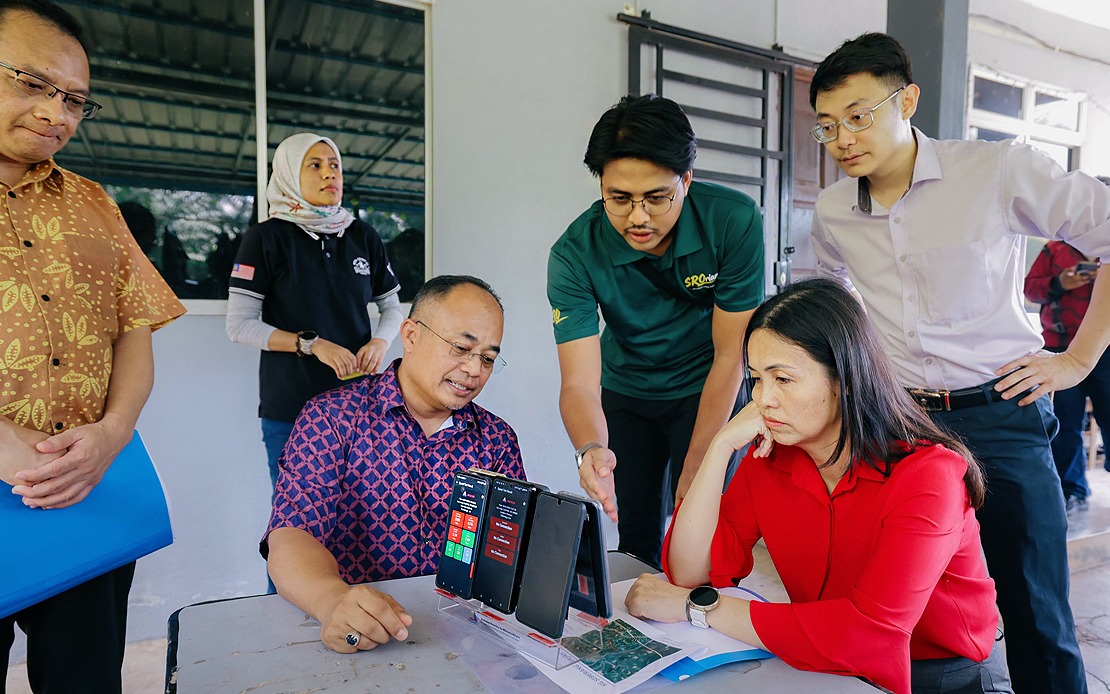
Rural communities across Malaysia continue to grapple with inadequate digital infrastructure, but residents of Kampung Seberang Gajah in Tangkak may finally see relief from persistent connectivity problems. Deputy Communications Minister Teo Nie Ching announced during a site visit on July 9 that a new telecommunications tower will be erected to address the longstanding service gaps affecting the village, marking a potential turning point for a locality long marginalised by unequal broadband access across the country.
The connectivity crisis in the area, despite the physical presence of two existing telecommunications towers in nearby locations, underscores a fundamental challenge in Malaysia's digital divide narrative. While tower infrastructure exists, proximity alone does not guarantee adequate coverage—a reality that reflects broader inefficiencies in how telecommunications companies allocate resources and optimise signal strength. The Malaysian Communications and Multimedia Commission (MCMC) recognised this mismatch and took direct action by instructing service providers to construct dedicated infrastructure specifically designed to serve Kampung Seberang Gajah's demographic, rather than relying on spillover coverage from neighbouring facilities that were originally designed with different service areas in mind.
According to Teo, the planning phase for the new tower has reached completion, with technical specifications and site selection concluded. The project now enters the administrative stage, where local authority approval becomes the critical bottleneck determining when construction crews can mobilise. This approval process, though necessary for proper land management and regulatory compliance, represents exactly the type of bureaucratic checkpoint that frequently delays rural infrastructure projects across Southeast Asia. The minister's public emphasis on expediting both permits and subsequent construction works signals political awareness that delays in this phase risk further eroding public confidence in the government's commitment to closing the digital gap.
The survey conducted by Teo alongside MCMC officials and telecommunications company representatives served a dual diagnostic purpose. Beyond confirming coverage deficiencies, the on-site assessment provided telecommunications providers with detailed performance metrics and geographical data needed to justify the capital expenditure required for tower construction. For residents, the presence of high-level government officials conducting such surveys carries symbolic value—tangible evidence that their connectivity struggles have reached ministerial attention rather than languishing in bureaucratic reports.
Malaysia's telecommunications infrastructure challenges reflect a tension inherent to developing economies with dispersed populations. Urban centres and commercial districts attract competitive investment from multiple service providers, naturally resulting in superior coverage and service quality. Rural areas, conversely, present lower revenue density and higher operational costs, creating economic disincentives for companies to build redundant or densely-spaced tower networks. Government intervention through regulatory bodies like MCMC becomes essential to correct this market failure, mandating infrastructure investments that pure profit motives would not justify.
The Kampung Seberang Gajah situation, while geographically specific, reflects patterns evident throughout Malaysian rural zones. Secondary towns and village clusters frequently experience surprising connectivity gaps despite proximity to urban centres, resulting from legacy tower placement decisions made a decade or more ago when network architectures differed significantly. As data consumption patterns and work-from-home arrangements have fundamentally transformed internet requirements, older infrastructure proves systematically inadequate.
The involvement of State Affairs Sector representative Bukhari Yahya alongside Rizal Abd Malek from MCMC's Southern Region Office demonstrates the multi-layered governance structure required to address rural infrastructure deficits. State-level coordination proves essential for securing land approvals and navigating local property regulations, while federal agencies like MCMC provide regulatory authority and industry oversight. This collaborative framework, when functioning effectively, can accelerate project implementation beyond what isolated agencies could achieve independently.
For telecommunications service providers participating in the survey, the regulatory directive to construct this tower represents a mandatory capital commitment with uncertain return-on-investment timelines. However, it also establishes regulatory compliance records and demonstrates corporate social responsibility initiatives increasingly scrutinised by customers and investors. Companies that cooperate proactively with such directives build reputational capital valuable for future licensing considerations and public perception.
The broader implications for Southeast Asian telecommunications policy extend beyond this single village. Malaysia's approach—using regulatory bodies to mandate specific infrastructure investments in underserved areas—contrasts with purely market-driven models that have produced acute rural-urban digital divides elsewhere in the region. As digital economic participation becomes increasingly central to poverty alleviation and economic mobility, governments that fail to intervene systematically in infrastructure provision risk entrenching socioeconomic disparities.
Residents of Kampung Seberang Gajah can reasonably anticipate improved connectivity within coming months, assuming the local authority processes permit applications without unusual delays. Stable, high-capacity internet access will enable participation in e-commerce, distance education, and remote employment opportunities previously constrained by unstable connections. For students, entrepreneurs, and remote workers in the area, the tower represents concrete infrastructure that transforms abstract digital policy into tangible economic opportunity.
The timeline for tower completion remains unspecified, but Teo's public call for expedited processes suggests completion within 2024 is envisioned. However, construction in rural areas frequently encounters unforeseen logistical challenges—site access difficulties, weather complications, supply chain delays—that compress optimistic official timelines. Residents should temper expectations while maintaining appropriate pressure on both local authorities and telecommunications companies to maintain momentum.

