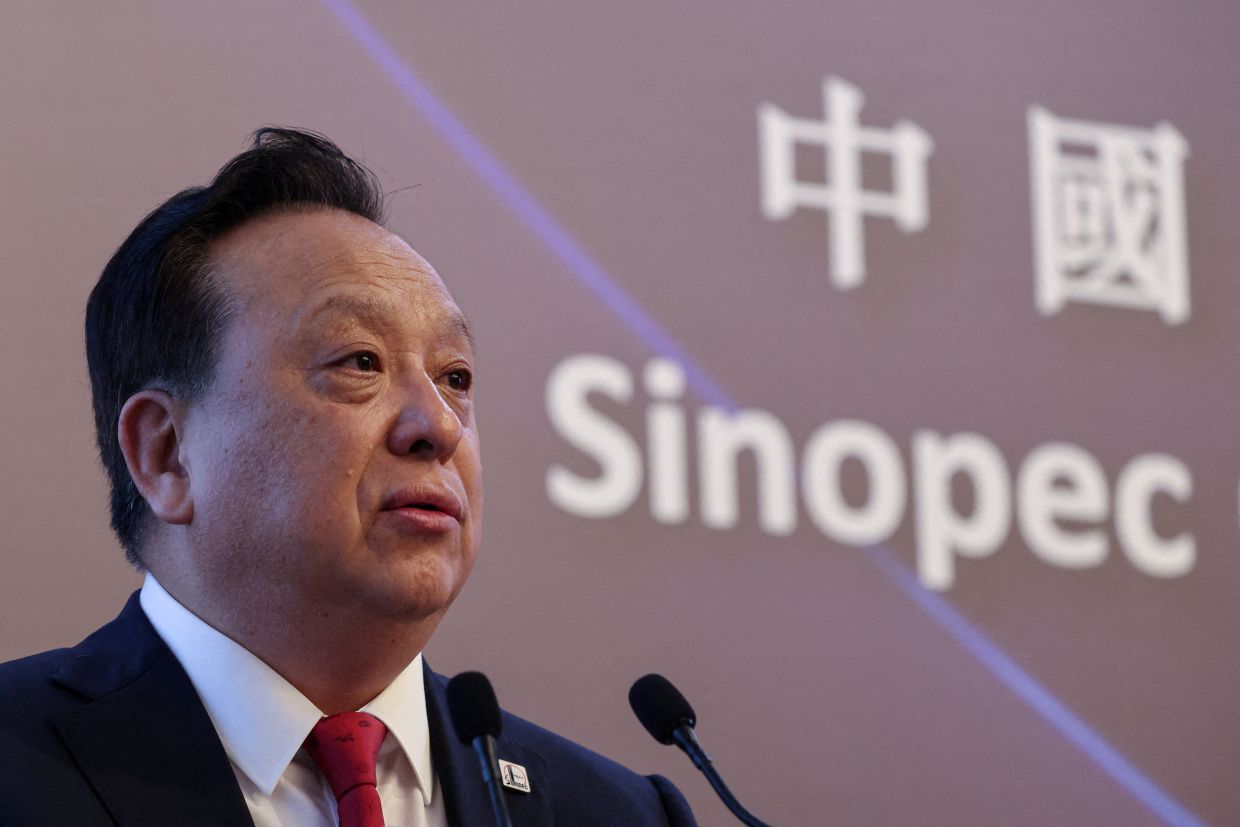
Hou Qijun, who assumed the chairmanship of Sinopec one year ago, is pursuing an unusually confrontational transformation of the world's largest oil refiner, rejecting the comfortable path toward retirement that typically awaits Chinese state enterprise executives at his career stage. Rather than consolidate his position at the 60-year-old executive level, Hou is orchestrating a comprehensive restructuring designed to position Sinopec for an energy landscape fundamentally reshaped by electrification, overcapacity, and geopolitical disruptions that have strained the company's traditional business model.
The restructuring has reorganized Sinopec's sprawling operations into four distinct profit centers, each granted substantially increased operational autonomy. These divisions encompass oil, gas and new energy alongside refining and chemicals operations; a finance and strategic new business unit; and a segment merging global trading functions with Sinopec's substantial marketing infrastructure serving fuel, natural gas, and chemical customers. This structural reconfiguration represents a departure from the centralized decision-making that has historically characterized Chinese state-owned enterprises, reflecting Hou's assessment that bureaucratic inertia rather than technological deficiency represents the primary constraint on performance.
In remarkably forthright remarks published by China's State-owned Assets Supervision and Administration Commission in July, Hou articulated the philosophical foundation for his approach. He identified systemic constraints and institutional resistance as greater obstacles than technological limitations or resource constraints, implicitly criticizing the organizational lethargy that has accumulated as Sinopec expanded in scale. His acknowledgment that the company's responsiveness to market dynamics has deteriorated alongside its growing size speaks to a recognition that Sinopec's past success has become a liability, creating organizational reflexes optimized for a world of rising fuel consumption that no longer exists in developed markets.
Sinopec's operational trajectory illustrates the urgency underlying this restructuring. The company's fuel sales have retreated to 2017 levels, a development that occurred despite global economic expansion and reflects the accelerating shift toward electric vehicles in major markets. With approximately 3.6 million barrels daily of gasoline and diesel flowing primarily through domestic channels, Sinopec confronts the paradox of scale without resilience. This production capacity, once representing competitive advantage, has become a structural vulnerability as vehicle electrification proceeds faster than anticipated. Hou's observation that roughly half of newly manufactured automobiles no longer require petroleum fuel encapsulates the existential challenge: traditional refining capacity increasingly serves a shrinking addressable market.
The company's half-year 2026 financial results, showing 19 percent net profit growth despite substantial headwinds, mask underlying vulnerabilities. Sinopec's heavy exposure to oil supply disruptions stemming from the Iran conflict and government restrictions on fuel price transmission to consumers have compressed margins and constrained flexibility. These constraints underscore how macroeconomic forces and state policy operate alongside technological disruption to squeeze traditional refining economics, particularly for a state-owned company unable to rationalize capacity through competitive market mechanisms available to private competitors.
Hou's strategic response hinges on pivoting toward higher-value petrochemical production and accelerating new energy investments. Sinopec intends to dedicate approximately 20 percent of capital expenditure, exceeding 30 billion yuan annually between 2026 and 2030, toward new energy and advanced materials development. This allocation reflects a strategic bet that petrochemicals rather than refined fuels represent Sinopec's defensible position within the energy transition. However, this transition confronts formidable competitive obstacles. Wanhua Chemical, backed by regional government resources, and Satellite Chemical, operating with private sector flexibility, have already established dominant positions in key segments. The broader ethylene market exhibits persistent overcapacity, suggesting that Sinopec's shift toward this sector may arrive amid an industrywide downturn rather than into an expanding opportunity.
Sinopec's upstream strategy prioritizes shale oil development at the Jiyang trough within the Shengli oilfield, where conventional reserves face depletion. Hou personally assumed responsibility for this initiative, positioning it as a flagship project reflecting his personal commitment. The commercial viability of shale development in China remains contentious, with geological complexity and high extraction costs creating substantial financial risks even before considering the strategic question of whether expanding fossil fuel production aligns with China's stated energy transition objectives. Hou's personal engagement suggests confidence in the project's technical feasibility, though success remains contingent on geological outcomes and sustained government support for commercially challenging ventures.
The chairman's biographical trajectory illuminates his appointment to this challenging role. Trained as a geologist with an extended career at Daqing oilfield and service as general manager at China National Petroleum Corp before his 2025 transfer to Sinopec, Hou possesses deep technical knowledge of China's upstream oil and gas sector. His previous assignment consolidating pipeline assets from China's three oil majors into PipeChina between 2019 and 2021 established his credentials as a structural reformer capable of executing organizational transformation amid politically sensitive consolidation challenges. This experience suggests familiarity with navigating government relationships and managing complex stakeholder dynamics inherent in major state enterprise restructuring.
Oxford Institute for Energy Studies analyst Michal Maiden identifies Hou's comprehensive understanding of integrated energy value chains as a significant asset, while emphasizing his access to government backing for commercially marginal initiatives including hydrogen production and carbon capture technology. However, she raises a critical question regarding Sinopec's competitive position within the emerging energy sector. State-owned enterprises historically enjoy advantages in capital access and long-term patient investment, yet new energy markets increasingly feature private competitors, domestic start-ups, and international companies operating with different cost structures and decision-making frameworks. Sinopec's transformation must not only overcome internal structural inertia but also establish competitive viability against non-state actors playing by fundamentally different rules.
For Southeast Asian energy markets and regional petroleum importers, Sinopec's restructuring carries significant implications. Chinese refineries typically export substantial volumes of petroleum products throughout the region, and any contraction in Chinese refining capacity or shift toward petrochemicals could alter regional product availability and pricing dynamics. Furthermore, Sinopec's new energy investments, particularly in sustainable aviation fuel and advanced chemicals, may establish alternative sources of supply for regional customers currently dependent on imported products. The company's success or failure in executing this transformation will influence not merely Sinopec's competitive position but broader patterns of energy supply throughout East and Southeast Asia during the critical decade of the energy transition.
Hou's appointment and mandate ultimately represent a test of whether Chinese state enterprise governance can adapt sufficiently to sustain competitiveness amid technological disruption. His explicit acknowledgment of "big company syndrome" and institutional inertia, unprecedented in candor for senior state enterprise leadership, signals recognition that organizational culture and decision-making processes require fundamental reformation. Whether this recognition translates into effective implementation remains uncertain, particularly given the political constraints inherent in state enterprise management and the substantial capital commitments required across multiple potentially unremunerative initiatives. The coming years will demonstrate whether Hou's combination of technical expertise, previous restructuring experience, and apparent willingness to challenge organizational conventions can generate sufficient organizational agility to position Sinopec for a radically different energy environment.

