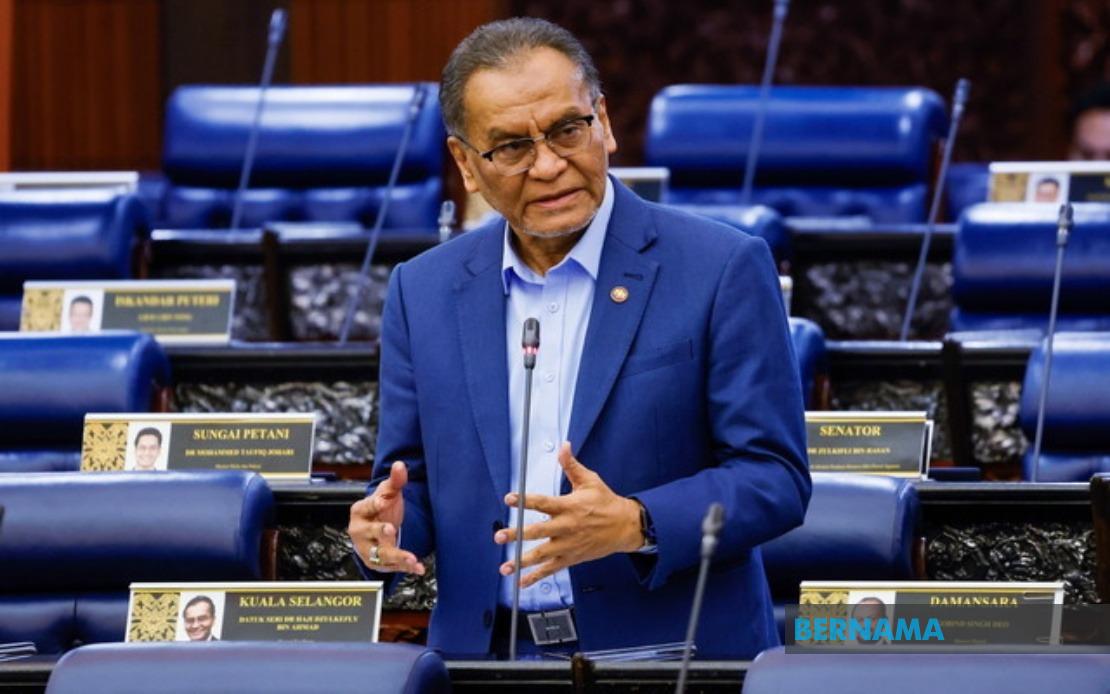
Health Minister Datuk Seri Dr Dzulkefly Ahmad has announced plans to construct a new hospital in Bandar Enstek, Nilai, Negeri Sembilan, as part of a wider strategy to enhance medical facilities in the Seremban district. The facility will specifically address mounting pressure on Tuanku Ja'afar Hospital (HTJ), which has experienced significant congestion as the region's population has expanded rapidly alongside infrastructure development in northern Seremban.
The decision to pursue this new healthcare facility represents a shift in approach from an earlier concept. The Health Ministry (MOH) had previously reviewed a separate proposal for a second Tuanku Ja'afar facility (HTJ2) to be located in Rasah. After evaluating that option and consulting with Negeri Sembilan Menteri Besar Datuk Seri Aminuddin Harun on June 16, the ministry determined that the Bandar Enstek location offered superior strategic advantages for serving the district's evolving demographics and geographic spread.
The expansion of healthcare infrastructure in Negeri Sembilan reflects a broader challenge facing Malaysian healthcare administrators: ensuring that public hospital networks keep pace with population growth and urbanisation. The Seremban district's rapid development has created urgency around this matter, as residents increasingly require accessible, quality medical services. By establishing a new independent facility rather than merely expanding HTJ, the government hopes to distribute patient load more effectively and improve response times across the corridor.
The state government has already identified two potential sites for development, each comprising 50 acres (20 hectares) of land held by the Federal Lands Commissioner. The Health Ministry intends to conduct detailed site inspections in coming months to assess which location offers optimal operational and logistical benefits. Once a decision is reached, MOH will formally apply to the Department of the Director General of Lands and Mines for land-use conversion, a necessary administrative step before construction can commence.
Following approval of the land conversion, preliminary project work will proceed swiftly. This initial phase encompasses comprehensive site surveying, soil investigations, and the development of a detailed conceptual design. Project planners will also conduct cost estimations and undertake a Value Assessment exercise—evaluations essential for securing budgetary approvals and ensuring the facility meets government standards for healthcare infrastructure investment. These preparatory activities typically require several months to complete before physical construction begins.
The collaboration between the federal Health Ministry and Negeri Sembilan's state administration extends beyond the Bandar Enstek hospital. Menteri Besar Aminuddin has also consented to alienate approximately 36.748 acres (roughly 14 hectares) of Federal Reserve land in Bandar Seremban for future healthcare development. This reserved land will accommodate additional resources for the existing Tuanku Ja'afar Hospital, including a new clinical block, and establishment of a Centre of Excellence (COE)—a specialised research and training facility designed to elevate standards across specific medical disciplines.
Dr Dzulkefly also addressed the challenge of retaining Malaysian healthcare talent, a concern that extends beyond Negeri Sembilan to national workforce planning. The government operates the Returning Expert Programme (REP) through TalentCorp, designed to encourage Malaysian medical and healthcare professionals working internationally to return home. The programme offers compelling incentives including complete income tax exemptions and excise duty relief on locally manufactured vehicle purchases—financial benefits aimed at offsetting the professional opportunities overseas workers might forgo.
Data from the REP demonstrates that healthcare professionals represent a significant proportion of Malaysians seeking to return, with the largest concentration coming from the United Kingdom, Singapore, and Australia. Medical specialists and practising doctors constitute the majority of applicants, indicating that MOH recruitment strategies resonate most effectively with senior clinicians seeking to maintain professional standards whilst contributing to home healthcare systems. This pattern suggests that career security and institutional prestige matter substantially to this demographic.
Regarding foreign healthcare recruitment, Malaysia has long permitted overseas-trained doctors and nurses to work within the country, subject to stringent oversight by the Malaysian Medical Council and Malaysian Nursing Board. These regulatory bodies maintain professional standards by ensuring that imported clinical expertise meets local benchmarks. The Health Ministry currently appoints non-citizen medical specialists in critical disciplines and geographically challenging locations where local supply falls short, while also engaging foreign graduate medical officers who hold permanent resident status or are married to Malaysian citizens, allowing them to complete housemanship training at MOH institutions.
The recruitment of foreign nursing staff remains under active consideration, with MOH currently evaluating feasibility in consultation with relevant government ministries and agencies. This cautious approach reflects the complexity of integrating foreign healthcare workers into Malaysia's regulatory framework and labour market, which differ substantially from overseas healthcare systems. Any expansion of foreign nurse recruitment would require coordinated policy development across multiple government bodies to address training standards, licensing reciprocity, and integration with existing workforce development strategies.
The Bandar Enstek hospital initiative represents Malaysian healthcare policymaking responding to real population dynamics and geographic service gaps. For residents in the broader Seremban region and similar rapidly urbanising areas across Southeast Asia, such infrastructure planning demonstrates official recognition that healthcare systems must evolve alongside demographic shifts. The project timeline and budgeting remain subject to land conversion approvals and government funding allocations, but the commitment signals long-term investment in public health capacity for Negeri Sembilan's growing population.

