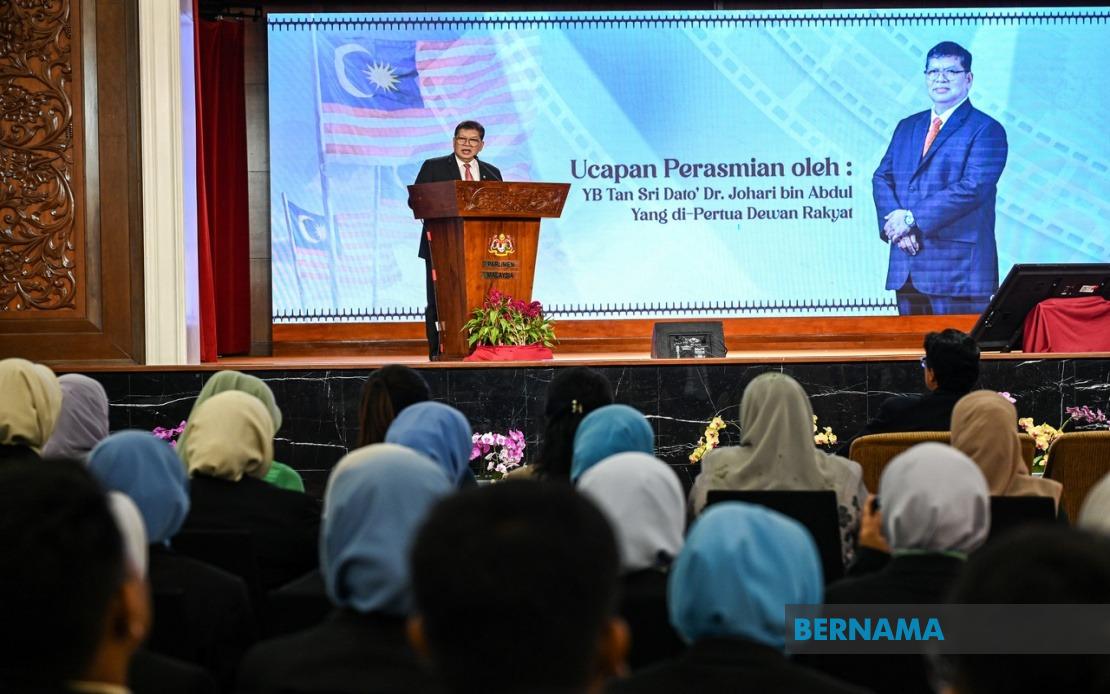
Parliament has unveiled a short film called "Arkitek Bangsa" designed to cultivate leadership qualities and strengthen patriotic sentiment among Malaysia's younger generation. The production was presented during a special screening at the Parliament Building in Kuala Lumpur, marking an effort to address the need for youth to view themselves not merely as followers but as potential architects of the nation's future. According to officials behind the initiative, the film serves as a cultural and educational tool aimed at reshaping how young Malaysians perceive their role and responsibility within society.
The motivation behind the project reflects concerns about developing a pipeline of responsible leaders who understand the nation's trajectory and are invested in its continued progress. Parliament officials emphasise that leadership is not an innate quality but rather something that emerges through deliberate cultivation. Young Malaysians must be systematically exposed to mentoring, structured learning experiences, and guidance that allows them to develop the competencies required to lead effectively. This approach underpins a broader shift in how government institutions are thinking about youth engagement—moving away from passive citizenship towards active participation in nation-building.
The film complements an expanding suite of parliamentary initiatives directed at younger audiences. The Parliament School Programme has already facilitated visits by representatives from 1,057 schools, allowing students to witness democratic processes firsthand and gain a deeper understanding of how legislation is crafted and debated. These immersive experiences are intended to demystify governance and show young people that the systems shaping their lives are not distant abstractions but tangible institutions where engaged citizens can make a difference. By bringing classroom learning into the actual chambers and corridors of power, Parliament aims to create memorable touchpoints that inspire civic participation.
Beyond the Parliament campus itself, the government has strengthened its engagement with youth through the Youth Parliament, which is undergoing significant expansion and institutional refinement. Membership is being doubled from the previous cap of 100 to 222 participants, creating opportunities for a more diverse cohort of young people to experience legislative work firsthand. More significantly, the adoption of a proportional representation electoral system for selecting Youth Parliament members signals a commitment to ensuring that the programme reflects the demographic and ideological diversity of the broader youth population. This structural change acknowledges that effective leadership development requires exposure to different perspectives and constituencies.
Parliament's involvement in the National Service Training Programme (PLKN) through a dedicated select committee represents another avenue for instilling leadership values and civic awareness. The PLKN historically has served as a formative experience for young Malaysians, and by having Parliament contribute to its design and oversight, officials hope to ensure that the programme includes robust components addressing democratic participation and leadership development. This integration across multiple platforms—Parliament visits, Youth Parliament, PLKN, and now the "Arkitek Bangsa" film—suggests a coordinated strategy to saturate the youth experience with messages about leadership responsibility.
The symbolic resonance of the film's title and messaging cannot be overlooked. An architect is someone who designs structures with foresight, understanding that a building's integrity depends on solid planning and execution. The metaphor extends naturally to nation-building, where foundational decisions made by one generation shape the possibilities available to the next. Officials argue that young Malaysians must internalize this metaphor—understanding that their choices today, whether in education, career, civic participation, or community service, contribute to the nation's structural integrity. Conversely, the film warns that the damage caused by negligence or short-term thinking can be catastrophic and swift.
The broader distribution strategy for "Arkitek Bangsa" is designed to maximize reach across government ministries and agencies. By positioning the film as a resource for youth-focused programmes within the civil service, officials hope to ensure that young people encounter its message across multiple contexts—not only in schools and Parliament-sponsored initiatives but also in community centres, local government offices, and vocational training institutions. This ubiquity is intentional; the goal is to create a cultural moment around the concept of youth leadership that permeates institutional life across Malaysia.
The historical context embedded in the film's messaging deserves particular attention. Officials emphasize that young Malaysians should "appreciate the sacrifices and contributions of earlier generations," suggesting the film addresses a perceived generational knowledge gap. Many young Malaysians today were born well after independence and major constitutional moments, making them potentially disconnected from the historical narratives that shaped their nation. By fostering gratitude and awareness for past struggles and achievements, the film aims to ground contemporary leadership aspirations in historical consciousness. This approach acknowledges that sustainable patriotism is not manufactured through propaganda but earned through understanding.
The film's emphasis on confidence and gratitude—particularly the phrase "Thank God I was born here. I am Malaysian"—targets affective dimensions of citizenship alongside intellectual ones. Officials recognize that leadership development requires not only knowledge and skills but also emotional attachment to place and community. A young person who takes pride in their Malaysian identity and feels fortunate to be Malaysian is more likely to invest effort in improving their communities and country. The film thus operates simultaneously as an educational tool, a motivational message, and a statement of belonging.
For Malaysian policymakers and educators, the "Arkitek Bangsa" initiative represents an important acknowledgment that the nation's future depends on cultivating a new generation of engaged, informed, and confident leaders. The film does not exist in isolation but rather anchors a broader ecosystem of youth engagement programmes. Its success will depend partly on the quality of its production and messaging, but also on the consistency with which its themes are reinforced through Parliament School visits, Youth Parliament activities, and other touchpoints with young Malaysians. The integration of these initiatives suggests a systematic approach to addressing what officials clearly view as a critical challenge: ensuring that Malaysia's next generation possesses both the capability and the will to lead responsibly.

