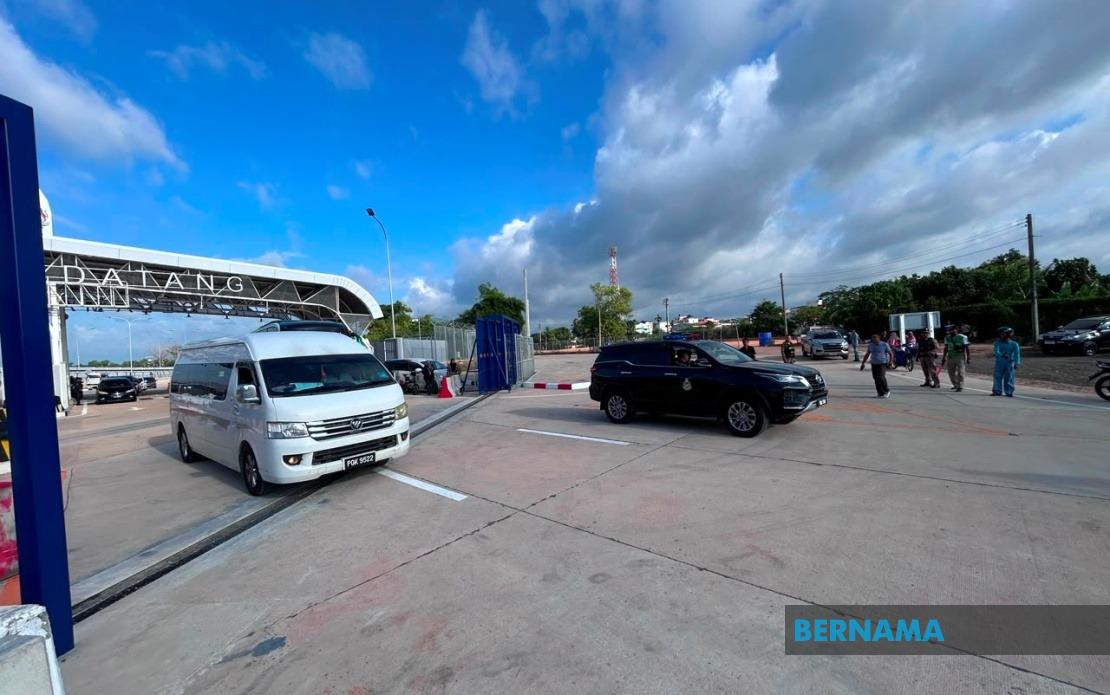
A newly constructed road corridor linking Malaysia's Bukit Kayu Hitam Immigration, Customs, Quarantine and Security Complex with Thailand's Sadao Customs, Immigration and Quarantine Complex commenced operations on July 11, marking a significant step toward streamlining cross-border movement between the two neighbouring countries. The route, which began handling traffic at 6 am, represents a shared infrastructure initiative designed to address longstanding congestion challenges at one of Southeast Asia's busiest land borders. Prime Minister Datuk Seri Anwar Ibrahim and Thai counterpart Anutin Charnvirakul jointly inaugurated the facility, underscoring the bilateral commitment to enhancing regional connectivity and facilitating both tourism and commercial traffic.
The infrastructure development addresses a persistent challenge that has plagued the Bukit Kayu Hitam-Danok corridor for years. During holiday periods and weekends, the main entry point between the two countries frequently experiences significant delays, with vehicles queuing for extended periods across the border checkpoints. The new route introduces alternative pathways that distribute traffic more effectively, preventing bottlenecks that previously formed when different vehicle categories competed for limited space at the crossing. By creating dedicated lanes and improved separation between heavy and light vehicles, the infrastructure fundamentally reorganises how cross-border traffic flows through the checkpoint systems.
Early user feedback on the opening day proved overwhelmingly positive, with both Malaysian and Thai travellers noting tangible improvements in their journey experiences. Mohd Faizal Ahmad, a 42-year-old motorist from Penang, highlighted how the new route delivers enhanced organisation and greater convenience for Malaysian travellers heading into Thailand. He specifically referenced the challenges posed by school holidays, when congestion historically becomes acute, suggesting that the new corridor should substantially compress travel times during these traditionally problematic periods. Such observations reflect the real-world frustrations that commuters and holiday travellers have endured across this heavily trafficked border zone.
Commercial transport operators, who constitute a significant portion of cross-border traffic, have identified particular advantages in the new infrastructure's design. Wan Muhammad Shahid Wan Mohd Desa, a 28-year-old lorry driver, emphasised how the expanded width and systematic separation of vehicle categories streamlines the entry process into Sadao's customs facility. Previously, heavy vehicles departing the Bukit Kayu Hitam complex shared congested routes with private automobiles destined for Danok, creating compounded delays throughout the system. The new arrangement allows freight transporters to maintain momentum through the checkpoint procedures, reducing dwell times and ultimately supporting more efficient regional supply chain operations. For logistics operators moving goods between Malaysia and Thailand, such efficiency gains directly impact operational costs and delivery schedules.
The Sadao CIQ Complex itself has undergone substantial expansion and modernisation as part of this broader infrastructure upgrade. Thai nationals familiar with the previous facility noted marked improvements in spaciousness and comfort levels at the new checkpoint. Mat Li Daman, a 59-year-old Thai national who frequently crosses into Malaysia, observed that the expanded building eliminates previous spatial constraints while introducing enhanced documentation procedures and vehicle entry declaration systems. These administrative improvements complement the physical infrastructure upgrades, reducing paperwork bottlenecks that previously added to processing times. The combined effect of wider checkpoints and streamlined procedures promises meaningful reductions in overall crossing duration.
From a regional economic perspective, this infrastructure initiative carries implications extending well beyond simple convenience. The Bukit Kayu Hitam-Sadao crossing represents a critical artery in the broader Malaysia-Thailand bilateral trade network, with goods and services flowing continuously in both directions. Improved border efficiency directly supports cross-border commerce, enabling businesses to operate with greater predictability regarding transit times. Tourism flows similarly benefit from reduced friction at the border, as travellers encounter faster processing and smoother movements through customs and immigration procedures. Both nations maintain strong incentives to facilitate legitimate cross-border movement while maintaining appropriate security and regulatory oversight.
The project reflects broader strategic positioning within Southeast Asia's connectivity ambitions. Malaysia and Thailand have prioritised deepening economic integration and people-to-people exchanges, with infrastructure investment serving as a tangible expression of these commitments. The Northern Corridor Economic Region and similar bilateral initiatives have emphasised transport connectivity as foundational to broader economic cooperation. This road link demonstrates how physical infrastructure investments translate bilateral diplomatic intentions into concrete improvements affecting daily cross-border experiences for thousands of regular commuters, traders, and tourists.
Peak-period congestion management remains a primary concern motivating this expansion. School holidays and public holidays generate predictable surges in cross-border traffic as families undertake regional travel and shopping excursions. The previous single-corridor system frequently became overwhelmed during these periods, with wait times extending across multiple hours during particularly busy intervals. The new road network distributes this demand more evenly, preventing any single bottleneck from creating system-wide gridlock. Weekend leisure travel represents another significant traffic category that previously suffered from compression effects; the enhanced capacity should noticeably improve experiences for these recreational journeys.
Administrative coordination between Malaysian and Thai authorities played a crucial role in designing the new infrastructure to accommodate both nations' regulatory requirements. The ICQS Complex on the Malaysian side and the CIQ Complex on the Thai side maintain distinct operational procedures and security protocols, yet the infrastructure must facilitate seamless transitions between these systems. Joint planning ensured that the physical design accommodates both countries' customs operations, immigration procedures, and quarantine requirements without creating new friction points. This coordinated approach demonstrates how neighbouring nations can collaborate on shared infrastructure challenges while respecting each jurisdiction's independent operational requirements.
Long-term implications for the bilateral relationship extend beyond immediate traffic relief. Successful infrastructure cooperation establishes precedents for addressing other shared challenges and opportunities. The Bukit Kayu Hitam-Sadao project may serve as a model for additional border improvements, encouraging continued investment in connectivity infrastructure. Malaysia and Thailand's ability to jointly deliver tangible improvements to cross-border experiences strengthens mutual confidence in bilateral cooperation mechanisms and demonstrates capacity to implement complex joint initiatives. Such successful collaborations build institutional momentum supporting broader regional integration efforts across Southeast Asia.

