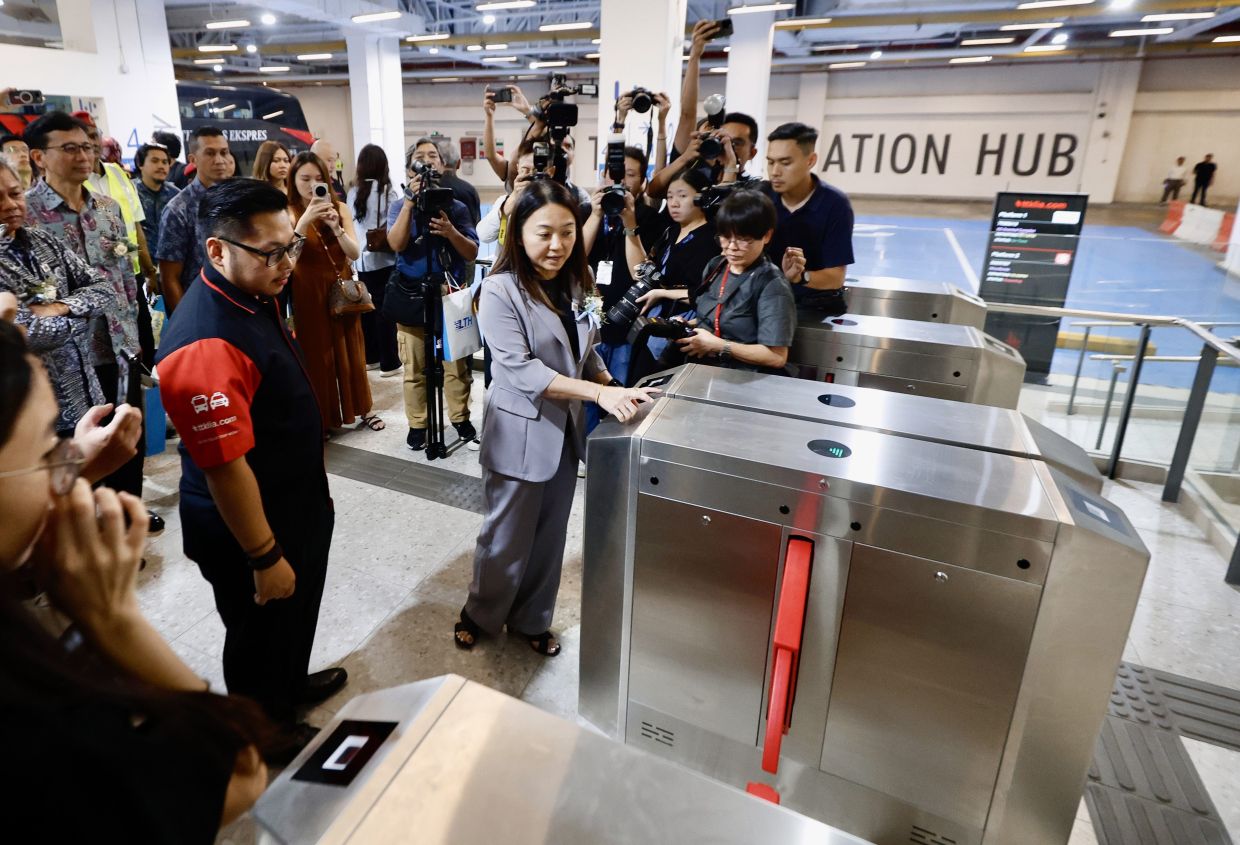
Kuala Lumpur's urban transportation landscape has gained a significant new hub with the launch of the LaLaport Transportation Hub at Bukit Bintang City Centre, which brings together approximately 30 bus operators under one roof. The facility, officially inaugurated on Thursday (July 16) by Minister in the Prime Minister's Department (Federal Territories) Hannah Yeoh, marks a concerted effort to streamline intercity and intra-city bus services in Malaysia's capital. Expected to process about 3,000 passengers daily in its initial phase, the hub has been architected with the capacity to eventually accommodate up to 10,000 daily travellers, reflecting ambitious growth targets as it establishes itself as a key mobility node in the Klang Valley.
The hub's operational foundation demonstrates the scale of movement that characterises modern Kuala Lumpur. According to data from Kuala Lumpur City Hall, the capital experiences an influx of 1.2 million vehicles entering the city on any given day, whilst facilitating approximately 5.5 million journeys either into or out of the metropolitan area. These figures underscore the logistical complexity of urban mobility and justify the government's investment in consolidating transport infrastructure. Minister Yeoh's remarks at the launch event explicitly framed the project within this broader context, stating that these statistics illustrate why maintaining urban mobility as a governmental priority remains imperative for the city's development.
The physical infrastructure of the transportation hub reflects careful planning aimed at passenger convenience and operational efficiency. Situated on Level LG1 of LaLaport BBCC's East Atrium, the facility encompasses 11 dedicated bus bays serving as departure and arrival points for intercity and express services. Beyond the basic boarding infrastructure, the hub incorporates comprehensive passenger amenities including a climate-controlled waiting lounge, multiple ticketing counters, self-service ticket machines, and real-time information displays that communicate current bus schedules. This combination of service elements addresses traditional pain points in Malaysian bus transportation, where waiting areas and ticket purchase options have historically been fragmented or uncomfortable.
Licensed and regulated by the Land Public Transport Agency, the hub initiated phased operations beginning in February, allowing for iterative improvements and operator integration before full public launch. The strategic decision to phase operations rather than rushing to complete opening has permitted stakeholders to identify operational bottlenecks and refine procedures before confronting peak passenger demand.
A distinctive advantage of the hub's location lies in its integration with existing rapid transit networks. Positioned immediately adjacent to the Hang Tuah interchange, the facility enables seamless passenger transfers to the Light Rail Transit and Monorail systems through a sheltered pedestrian walkway. This connectivity proves crucial for passengers transitioning between different transport modes, particularly during inclement weather, and establishes the hub as a genuine interchange rather than merely a bus terminal. For Malaysian commuters accustomed to navigating disparate transport hubs across the Klang Valley, such integrated design represents a meaningful improvement in user experience.
Beyond conventional bus services, the hub functions as a comprehensive mobility centre serving multiple transportation needs. Shuttle van connections to Kuala Lumpur International Airport's Terminals 1 and 2 cater to travellers requiring seamless airport connectivity. Demand-responsive transport services, a newer modal option gaining traction across Malaysian cities, complement fixed-route offerings by accommodating passengers with variable travel patterns. Furthermore, designated zones for taxi and e-hailing vehicle pick-ups and drop-offs acknowledge the reality of modern Malaysian transportation, where ride-sharing services have become integral to urban mobility ecosystems. This omnichannel approach recognises that contemporary passengers frequently combine multiple transport modes within single journeys.
The hub's establishment carries implications extending beyond Kuala Lumpur's immediate transportation challenges. As Malaysia pursues economic competitiveness and positioning within regional and global supply chains, efficient urban mobility becomes increasingly significant. Congestion imposes measurable costs on productivity, whilst unreliable public transport systems discourage modal shift away from private vehicles. By consolidating bus services into a modern facility with convenient access to rail networks, the hub contributes incrementally to making public transport a more attractive option relative to personal vehicles.
The 30 bus operators utilising the facility represent a substantial portion of Malaysia's intercity and express bus sector. By concentrating these services at a single location with modern infrastructure, the hub facilitates passenger choice whilst creating opportunities for operational standardisation and service coordination. Individual operators maintain their distinct identities and routes, but benefit from shared facilities and customer bases that the hub generates through its centrality and accessibility.
For Kuala Lumpur residents and visitors, the hub's impact will likely manifest gradually. Immediate beneficiaries include passengers previously navigating to scattered bus terminals across the metropolitan area or travelling to Puduraya and other traditional interchange points in less convenient locations. As awareness spreads and operator networks stabilise, passenger volumes should approach and eventually potentially exceed current projections.
The LaLaport Transportation Hub ultimately exemplifies how infrastructure investment in Malaysian cities can address congestion and improve livability when designed with integrated thinking. Rather than treating bus services, rail connectivity, and alternative transport modes as separate systems, this facility deliberately bridges them, creating genuine interchange opportunities. Whether it successfully attracts the projected passenger numbers and contributes meaningfully to reducing private vehicle dependency in Kuala Lumpur will become evident through operational data in coming months, but the fundamental approach represents progressive thinking in Malaysian urban transport planning.

