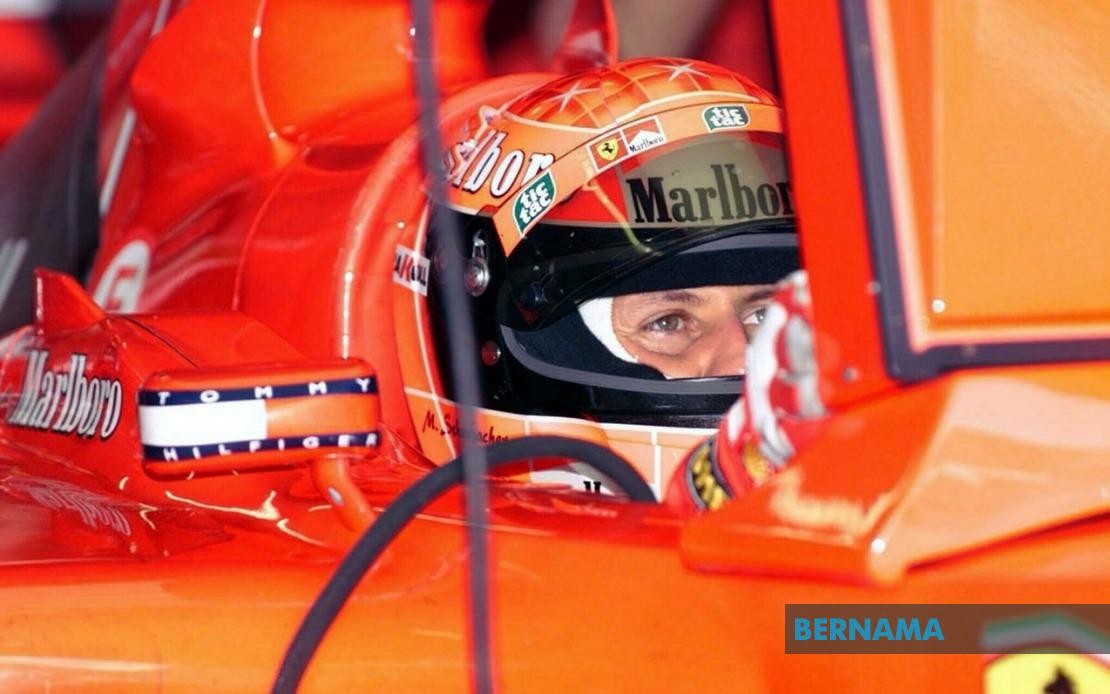
Streaming platform Netflix has announced plans to release a comprehensive documentary exploring the life and career of German motorsport icon Michael Schumacher, with the premiere scheduled for October 2. The production has been developed in close collaboration with Schumacher's wife, Corinna, and offers an in-depth examination of one of Formula One's most pivotal and contentious seasons in motorsport history. The decision to focus on 1994 reflects the significance of that year in both Schumacher's personal trajectory and the broader narrative of modern racing.
The documentary zeroes in on the 1994 season specifically, when the then 25-year-old Schumacher achieved what would become one of his most memorable feats: capturing the first of his record-tying seven world championships. This particular season represents more than just a statistical milestone in Schumacher's resume. It marks a transformative moment when he transitioned from being viewed as a talented but unproven newcomer to establishing himself as a formidable champion capable of handling extraordinary pressure and controversy. The narrative arc of his ascent during this tumultuous year provides compelling material for documentary exploration, particularly for audiences keen to understand how champions are forged under intense scrutiny.
The 1994 Formula One season stands out in racing annals as exceptionally turbulent, marked by multiple concurrent controversies that captured global media attention. Beyond Schumacher's sporting achievements, the campaign was shadowed by serious allegations of technical impropriety directed at his Benetton team, with critics arguing that the squad had breached technical regulations. These claims generated heated debate within the paddock and among fans, creating an undercurrent of dispute that followed Schumacher throughout his championship run. The documentary's willingness to confront these allegations head-on suggests a measured, multifaceted approach to storytelling rather than simple hagiography.
Yet the 1994 season carried darkness beyond sporting controversy. The racing calendar was punctuated by catastrophic accidents that fundamentally altered perceptions of driver safety in Formula One. Most notably, the season witnessed the deaths of Roland Ratzenberger and Ayrton Senna, three-time world champion, whose fatal crash at Imola shocked the motorsport world and prompted significant reassessment of safety protocols. For many observers, these tragedies overshadowed Schumacher's championship achievement, and their inclusion in the documentary provides essential historical context while acknowledging the human cost embedded within competitive motorsport at the highest levels.
The production has assembled a compelling roster of contributors who experienced the 1994 season firsthand from various vantage points. Flavio Briatore, who served as Benetton's team principal during that era, offers perspective from the team leadership angle. Bernie Ecclestone, the former Formula One commercial supremo who wielded enormous influence over the sport's direction and politics, contributes his viewpoint on how the season unfolded at the administrative level. David Coulthard, an accomplished driver who competed against Schumacher during this period, can speak to the competitive dynamics and what it felt like to race alongside the emerging champion. Willi Weber, Schumacher's manager at the time, provides insights into the personal and professional dimensions of Schumacher's journey during this transformative year.
Beyond the immediate sporting context, the documentary also explores the emergence of "Schumi-mania" across Germany, a phenomenon that transcended motorsport fandom. Schumacher's success triggered unprecedented enthusiasm within his home country, where Formula One had historically attracted interest but never generated the kind of fervent, nationwide following that coalesced around the young German driver. This cultural shift had implications for how motorsport was perceived in Central Europe and reflected broader currents within German society regarding national pride and sporting achievement. The documentary's decision to incorporate this sociological dimension suggests ambitions to examine Schumacher not merely as an athlete but as a cultural figure whose impact extended well beyond circuit boundaries.
The climactic moment of that championship campaign arrived at Adelaide, Australia, where Schumacher secured the title in a controversial season-ending confrontation with Damon Hill, the British driver. Schumacher's one-point victory margin meant that the championship was decided through a collision that bore all the hallmarks of deliberate tactical maneuvering, further fueling debate about the ethical dimensions of his driving style and the question of whether the ends justified the means. This Adelaide encounter remains one of motorsport's most debated moments, and its examination within the documentary framework provides opportunity for nuanced analysis of competitive decision-making under extreme pressure.
For international audiences, particularly those in Southeast Asia where Netflix maintains a substantial subscriber base, this documentary arrives at a moment when interest in Formula One continues to expand significantly. The sport has experienced remarkable growth in viewership and commercial investment across the Asia-Pacific region over the past decade. Understanding Schumacher's legacy and the historical controversies that shaped modern F1 offers valuable context for contemporary fans seeking to comprehend how today's championship battles stand within the sport's broader trajectory. Schumacher's record-setting achievements established benchmarks against which contemporary drivers continue to be measured, making historical examination of his career particularly relevant.
The documentary's timing also reflects Netflix's sustained commitment to motorsport content, following the success of its "Drive to Survive" series, which has cultivated new audiences for Formula One globally. By producing an authoritative, in-depth examination of one of racing's most significant figures, Netflix reinforces its position as a major cultural platform for motorsport storytelling. The involvement of Corinna Schumacher in the production lends it authenticity and insider perspective unavailable to external production teams, suggesting viewers will gain access to previously restricted narratives and materials.
A poignant element underscoring this documentary's emergence is the personal trajectory of Schumacher himself since the pinnacle of his racing career. The now 57-year-old former champion has maintained virtual privacy following a catastrophic skiing accident in 2013 that resulted in severe head trauma. He has not appeared in public since that incident, rendering him a figure largely absent from contemporary motorsport discourse despite the continued reverence in which he is held. The documentary thus serves as a bridge between the celebrated racer of yesterday and the private individual of today, allowing audiences to engage with his legacy through retrospective examination rather than current public presence.
The film's October release also positions it strategically within the Formula One calendar, arriving during the closing stages of the current season when global interest in racing typically peaks. This timing likely reflects deliberate scheduling by Netflix to maximize viewer engagement during a period when motorsport enthusiasm reaches seasonal crescendos. For Malaysian audiences with growing interest in Formula One, particularly given the region's increasing prominence in global motorsport development, the documentary offers substantial educational value regarding how modern championship campaigns evolved and how controversies, tragedies, and triumph interweave within elite racing narratives.

