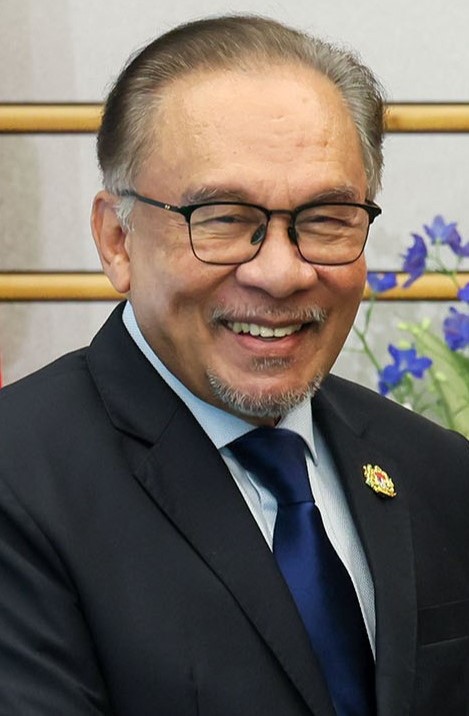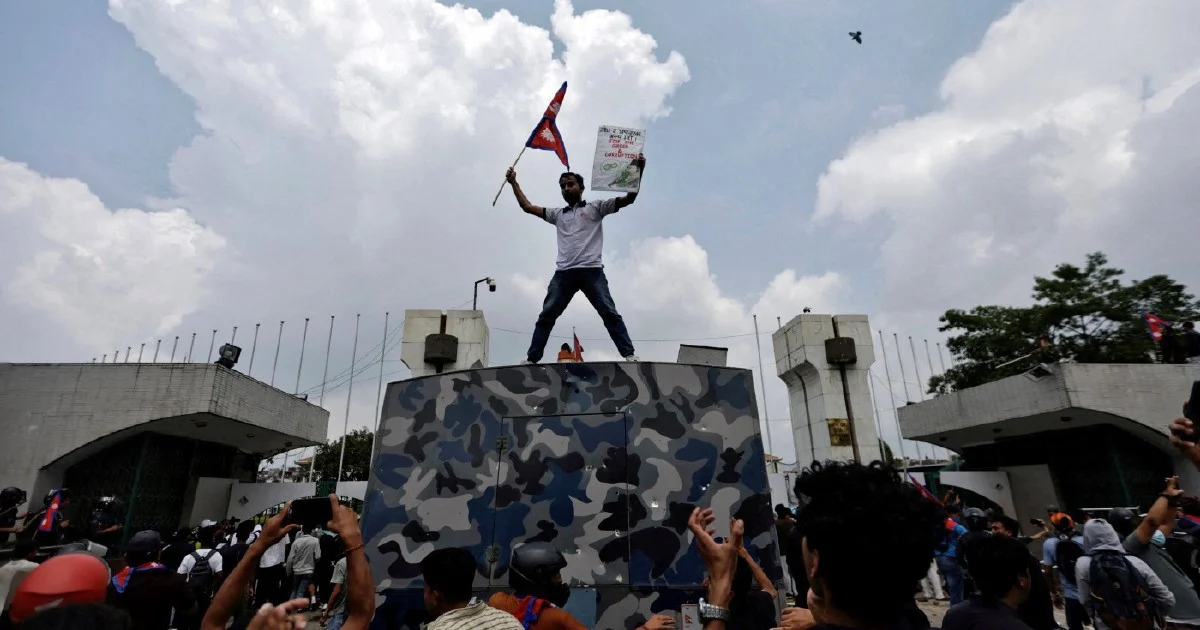
Kathmandu authorities detained Bishnu Prasad Paudel, who previously served as Nepal's finance minister, late Monday evening on allegations of money laundering. The arrest represents a significant moment in the country's ongoing accountability efforts, coming as the nation's relatively youthful governing administration pursues an increasingly assertive investigative agenda against suspected financial wrongdoing within the state apparatus.
The detention of Paudel underscores a broader shift in Nepal's political environment following the rise of a generationally distinct leadership cohort. This newer government, characterised by its Gen Z-influenced base and messaging, has positioned anti-corruption enforcement as a central policy pillar, distinguishing its tenure from prior administrations accused of selective prosecution and institutional capture. The move against a prominent figure from the previous establishment signals the government's willingness to pursue high-profile cases that might once have been politically untouchable.
Money laundering investigations in Nepal have historically faced obstacles rooted in weak institutional capacity, competing political pressures, and the infiltration of organised crime networks within bureaucratic structures. The financial crimes unit's ability to construct viable cases against former ministers reflects either genuine investigative progress or, as some analysts suggest, the concentration of political will directed toward predecessors rather than incumbent figures. International observers have noted that Nepal's track record on financial crime prosecution remains inconsistent, with high-profile arrests sometimes preceded by extended periods of apparent inaction.
Paudel's career trajectory placed him within Nepal's established political machinery across multiple regimes. As finance minister, he would have exercised considerable influence over state revenue allocation, procurement processes, and regulatory oversight of the banking sector. Former finance ministers in developing economies occupy uniquely vulnerable positions during transitions of power, as they retain detailed institutional knowledge of potentially questionable transactions while lacking the protective authority their office once conveyed.
The crackdown targeting predecessors reflects a global pattern observable across South and Southeast Asia, where newly ascendant governments frequently investigate their predecessors as a means of legitimising power transfers and consolidating political support. Nepal's specific context involves the complex interplay between communist parties, ethnic federalism provisions, and perennial power-sharing tensions that have fractured its post-2006 democratic settlement. Each transition of government triggers fresh accusations against outgoing factions, though sustained prosecution through conviction remains comparatively rare.
Money laundering statutes in Nepal, strengthened through anti-terrorism financing frameworks and international compliance obligations under Financial Action Task Force protocols, criminalise the concealment and movement of illicitly obtained funds through financial systems. Proving such allegations typically requires documentary evidence, banking records, and testimony from intermediaries—evidentiary burdens that are often arduous to satisfy in environments where financial record-keeping standards remain inconsistent and witness intimidation presents tangible risks.
For Malaysia and other Southeast Asian jurisdictions with comparable development profiles and governance challenges, Nepal's enforcement trajectory carries instructive implications. The region faces recurring difficulties in translating anti-corruption rhetoric into durable institutional capacity. Selective prosecution of political opponents, while satisfying immediate electoral constituencies, ultimately weakens the independence of judicial and investigative agencies that advanced economies rely upon for genuine financial crime prevention. Malaysia's own experiences with high-profile corruption cases—from ministerial scandals to state fund misappropriations—demonstrate that genuine accountability requires institutions insulated from political manipulation, alongside consistent application of legal standards regardless of suspects' political affiliation or temporal distance from office.
The geographic and structural dynamics of money laundering in South Asia extend across borders, implicating regional financial hubs and offshore jurisdictions where Nepalese officials have historically parked questionable assets. This transnational character means that credible investigations require coordination with foreign authorities and the capacity to penetrate financial secrecy arrangements that typically withstand domestic pressure. Whether Nepal's government possesses the technical sophistication, sustained political commitment, and international cooperation mechanisms necessary for such complex casework remains an open question.
Paudel's arrest also occurs within Nepal's broader framework of attempted institutional reform following decades of political instability. The 2015 Constitution established mechanisms for investigating ministerial conduct, though these remain underutilised and politically fraught. Each new government's selective invocation of these provisions perpetuates cycles of accusation and counter-accusation rather than establishing enduring standards of accountability. Genuine anti-corruption progress, by contrast, requires depoliticised institutions that treat all suspected financial crimes with equivalent investigative rigour regardless of suspects' contemporary political utility or historical timing.
The investigation will now proceed through Nepal's court system, where bureaucratic delays and political pressure constitute persistent obstacles to timely resolution. International observers will monitor whether charges advance to conviction or gradually dissipate as political calculations shift, a pattern depressingly familiar across the region. For Nepal's development prospects and for regional financial stability, the underlying institutional capacity to sustain impartial anti-corruption work matters far more than any individual arrest, however prominent the detainee.