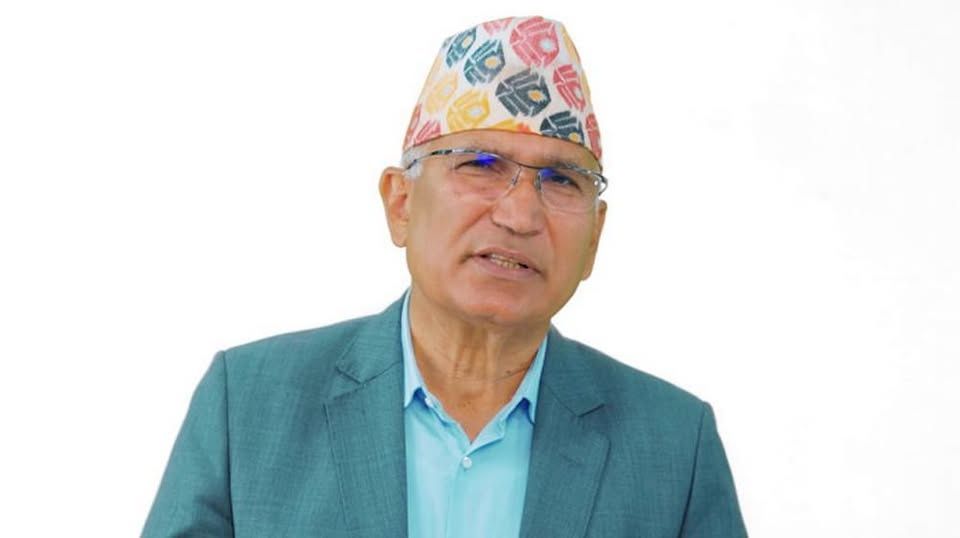
Nepal's police have arrested Bishnu Paudel, a former finance minister and senior figure within the opposition Communist CPN-UML party, as part of an ongoing money-laundering investigation. The arrest, made on Monday and announced by authorities on Tuesday, represents the latest high-profile case targeting ex-officials since anti-corruption protests swept Prime Minister Balendra Shah to power earlier this year. Paudel, who also serves as vice-chair of the CPN-UML, was a minister under ex-premier KP Sharma Oli, whose administration was toppled during the political upheaval that gripped the country.
Nepal Police spokesman Abhi Narayan Kafle confirmed that investigators will examine Paudel's alleged involvement in money-laundering activities, though specific details of the charges remain limited. The arrest comes as Shah, a former rapper-turned-politician who was elected in March on a platform promising stricter enforcement against corrupt officials, continues to pursue cases against members of the previous government. This investigation represents a significant test of whether the new administration can maintain impartial enforcement of anti-graft laws or whether, as opponents claim, it is weaponising the justice system against political rivals.
The CPN-UML has strongly contested the arrest, with former premier KP Sharma Oli characterising Paudel's detention as a "political stunt" and levelling accusations of authoritarian behaviour against Shah's government. Oli, who lost his parliamentary seat to Shah during the March elections, has become an increasingly vocal critic of the current administration's approach to governance and justice. His party's publicity head, Niraj Acharya, struck a more measured tone while simultaneously expressing deep concerns, stating that the party respects the rule of law and its members will cooperate with any legitimate legal process, yet arguing that the government is demonstrating discriminatory behaviour in its enforcement choices.
The arrest of Paudel follows a tumultuous period in Nepal's recent political history. In March, just one day after Shah assumed office, police arrested both Oli and his former interior minister Ramesh Lekhak on suspicion of involvement in the deadly crackdown on protesters that occurred in 2025. Both men were detained for approximately two weeks and subjected to questioning regarding their alleged roles in coordinating the violent government response. However, neither was formally charged, and both have consistently denied any responsibility for the violence that claimed lives and injured thousands.
The 2025 protests that triggered this chain of events began ostensibly as demonstrations against a brief social media ban imposed by the then-government. However, the movement rapidly evolved into a broader expression of public discontent regarding systemic corruption and the country's struggling economy. The government's violent response to these peaceful demonstrations resulted in at least 76 deaths and more than 2,500 injured over just two days, creating a deep wound in the national consciousness and strengthening public demands for accountability and reform. Shah's electoral victory was fundamentally shaped by promises to address both the violence and the underlying corruption that fuelled public anger.
Beyond the Paudel case, Nepal's anti-corruption mechanisms are pursuing multiple simultaneous investigations that underscore the scale of graft allegations facing the nation. The Commission for Investigation of Abuse of Authority has filed formal charges against 16 individuals in connection with what officials characterise as a $66 million procurement scam centred on e-passport systems. The alleged embezzlement scheme is significant not merely for its financial magnitude but for the involvement of the passport department chief, indicating that corruption may reach into the operational structures of government service delivery systems that ordinary citizens interact with regularly.
For Malaysian and Southeast Asian observers, Nepal's current trajectory offers instructive lessons about both the necessity and the risks inherent in anti-corruption campaigns. The region has witnessed similar waves of public mobilisation against graft, from the 1MDB scandal in Malaysia to various corruption probes across other ASEAN nations. What distinguishes Nepal's situation is the tension between pursuing genuine accountability and the potential for using anti-corruption mechanisms as political weapons. The pattern of arresting senior opposition figures immediately after taking power, while understandable given their alleged roles in the 2025 violence, raises legitimate questions about whether Nepal's institutions can maintain sufficient independence and impartiality.
The credibility of any anti-corruption campaign depends fundamentally on whether it applies consistent standards across political lines. Shah's government faces scrutiny precisely because of the timing and targeting of its investigations. If enforcement appears selective, with opposition figures facing aggressive prosecution while potentially corrupt allies escape serious investigation, public confidence in the process will erode regardless of the merits of individual cases. Nepal's experience suggests that anti-corruption efforts are most sustainable when pursued through genuinely independent institutions insulated from electoral pressures, rather than through mechanisms controlled by the party in power.
The international dimension of Nepal's anti-corruption efforts also warrants attention. Money-laundering cases like Paudel's typically involve cross-border financial flows and international banking systems. The success of such investigations depends on cooperation from international financial institutions and potentially other governments. Nepal's ability to recover stolen assets and build credible cases hinges on demonstrating professional investigative standards that foreign partners will respect and support. Conversely, if investigations appear politically motivated, international agencies may become reluctant partners in pursuing financial crimes.
For Nepal's economy and investor confidence, sustained uncertainty about the rule of law and the political use of legal mechanisms creates additional headwinds. The country already faces significant challenges in attracting foreign investment and managing capital flows. Political instability combined with concerns about arbitrary application of the law compounds these difficulties. Investors require assurance that contracts will be enforced fairly and that property rights are protected regardless of political affiliation. The current climate of aggressive prosecutions, while potentially popular domestically, may discourage the kind of stable business environment necessary for economic development.
Looking forward, Nepal's anti-corruption trajectory will depend on institutional capacity, political will, and international engagement. The country's independent judiciary, if adequately resourced and protected from political interference, could gradually establish norms of impartial enforcement. However, this requires sustained commitment beyond the current electoral cycle. Building trust in anti-corruption institutions typically requires years of consistent, demonstrably fair behaviour. Nepal appears at a critical juncture where the actions taken in these early months of Shah's government will substantially influence whether anti-corruption becomes a genuine institutional priority or a temporary political tactic.