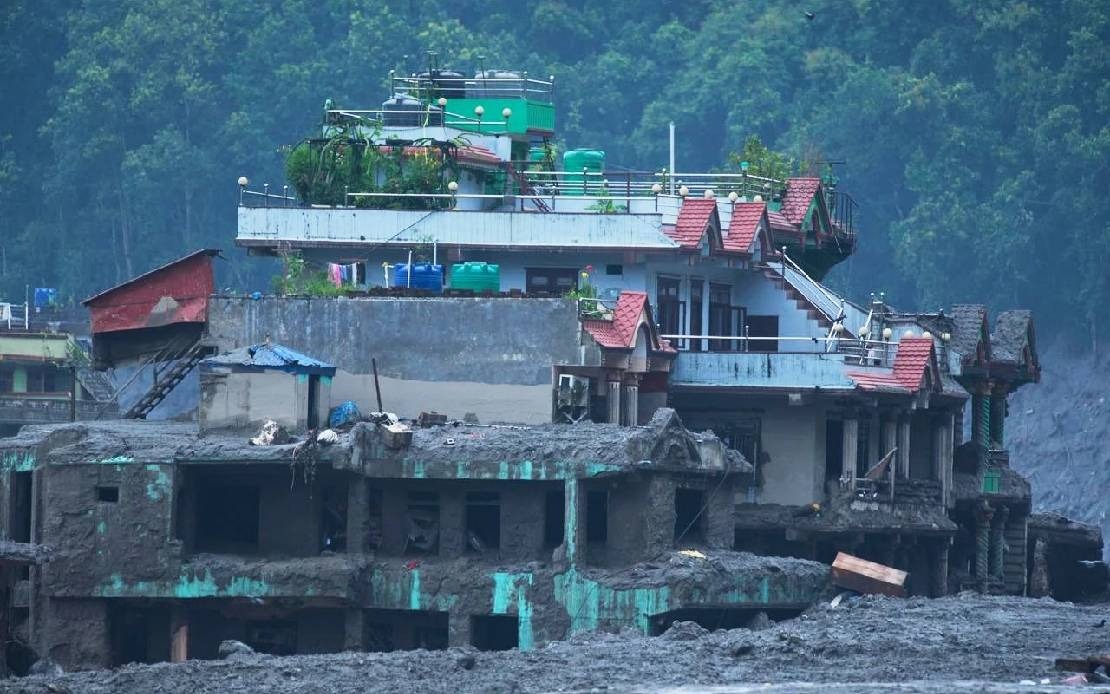
A catastrophic flood that originated from a glacier collapse in the Himalayan region has left Nepal facing an unprecedented humanitarian and reconstruction crisis, with authorities now appealing for both technical expertise and substantial financial support from the international community. The disaster, which swept through the Nepal-Tibet border region on Wednesday, has claimed at least 626 lives in Nepal alone, with another seven fatalities reported in China's Tibet region, and nearly 3,000 people still unaccounted for, creating one of the region's most severe natural disasters in recent memory.
The scale of destruction reflects the sheer force of the deluge, which combined rock, ice, mud and debris into a torrent that obliterated critical infrastructure across its path. Entire buildings, bridges and power stations were consumed by the advancing wall of material, effectively isolating communities and hampering rescue efforts. The debris field has rendered several districts virtually inaccessible, with traditional transport routes severed and communication networks destroyed. Among those unaccounted for are approximately 540 foreigners, predominantly Hindu pilgrims from India who had been visiting sacred sites in the region when the disaster struck, adding an international dimension to Nepal's plea for assistance.
Saturday's temporary suspension of search and rescue operations underscores the ongoing environmental challenges confronting rescue teams. Persistent rainfall and dense fog have forced authorities to pause systematic searches, redirecting immediate efforts toward organizing land-based transport to evacuate rescued survivors to Kathmandu. The meteorological conditions that impeded rescue work also present secondary risks, as two glacier-fed lakes formed by the flood's damming effect continue to pose overflow threats to downstream communities. While Chinese authorities indicated that one such lake has begun draining naturally, officials have warned that flood-related hazards will persist until both reservoirs are completely emptied, necessitating continued vigilance from both Nepali and Chinese disaster management agencies.
The identification and burial process presents enormous logistical and humanitarian challenges. With deaths occurring three days prior to body recovery efforts, decomposition has rendered many victims unrecognizable through conventional visual means. Acknowledging the mounting health risks and potential for disease outbreaks, authorities have adopted protocols involving DNA collection and burial in designated open spaces after necessary legal formalities. At Maharajgunj Medical Campus in Kathmandu, families have gathered to attempt identification through photographs displayed on walls and gates, with only seven of 49 bodies brought to the facility successfully identified as of Saturday, illustrating the scale of the identification burden.
Nepal's finance minister has provided preliminary estimates suggesting reconstruction needs between US$4 billion and US$5 billion, though officials cautiously stressed these figures represent initial assessments pending comprehensive damage surveys. For a nation already grappling with significant development constraints, this reconstruction obligation represents an enormous fiscal burden that will require sustained international donor support and concessional financing mechanisms. The economic implications extend beyond immediate rebuilding, as damage to transportation infrastructure, agricultural land, and power generation facilities will disrupt economic activity across multiple sectors for an extended period.
Recognizing the nation's existing technical limitations, Foreign Minister Shisir Khanal has articulated Nepal's specific requirements for international assistance, distinguishing between areas where domestic capacity exists and those requiring specialized external expertise. Priority needs include specialized personnel for tunnel rescue operations, restoration of severed transport and communication corridors, sophisticated body identification and DNA testing capabilities, and enhanced facilities for extended body storage. This focused approach to international support represents a pragmatic acknowledgment that while Nepal possesses certain disaster management competencies, the scale and nature of this particular catastrophe exceed domestic institutional capacity.
Regional powers have already mobilized substantial assistance. India has deployed three aircraft delivering approximately 60 tonnes of humanitarian relief supplies encompassing blankets, medicines, food provisions, and water purification materials. New Delhi has additionally committed to dispatching specialized tunnel rescue teams and medical personnel, while offering its national disaster response force and prefabricated bridge systems to restore connectivity in areas where permanent infrastructure has been destroyed. These contributions address both immediate humanitarian needs and medium-term reconstruction requirements, positioning India as a primary external supporter in Nepal's recovery efforts.
China, while also significantly impacted with more than 500 missing persons in its Tibet region, has called for coordinated international emergency response and cross-border cooperation, though specific details regarding Chinese material assistance remain undisclosed. The disaster has underscored the transnational nature of Himalayan environmental hazards and the necessity for coordinated regional responses transcending national boundaries. Both Nepal and China face parallel recovery challenges, though Nepal's lower development indicators and more limited institutional capacity create more acute vulnerabilities.
The humanitarian crisis extends beyond immediate mortality statistics to encompass the psychological trauma affecting survivors and families of the missing, particularly the Indian pilgrimage groups who experienced the disaster under circumstances far removed from their home communities. The temporary halting of rescue operations on Friday due to overflow risks from the glacier-formed lake demonstrated how secondary hazards can complicate primary response efforts, requiring constant reassessment of priorities and resource allocation. As rescue operations resume, authorities must simultaneously manage identification procedures, epidemic prevention measures, and the coordination of external assistance while conducting systematic searches across challenging terrain.
For Malaysia and other Southeast Asian nations, Nepal's disaster carries instructive implications regarding regional vulnerability to catastrophic natural events triggered by environmental degradation. Glacier collapse represents an increasingly concerning phenomenon in high-altitude regions, with potential downstream consequences affecting millions across multiple nations. The international response mobilization demonstrates both the capacity and limitations of regional cooperation frameworks, suggesting opportunities for strengthened disaster management protocols and pre-positioned emergency resources. Nepal's experience also highlights the disproportionate burden borne by lower-income nations when confronted with large-scale natural disasters, underscoring the rationale for development assistance and climate adaptation funding mechanisms that support vulnerable populations in disaster-prone regions.

