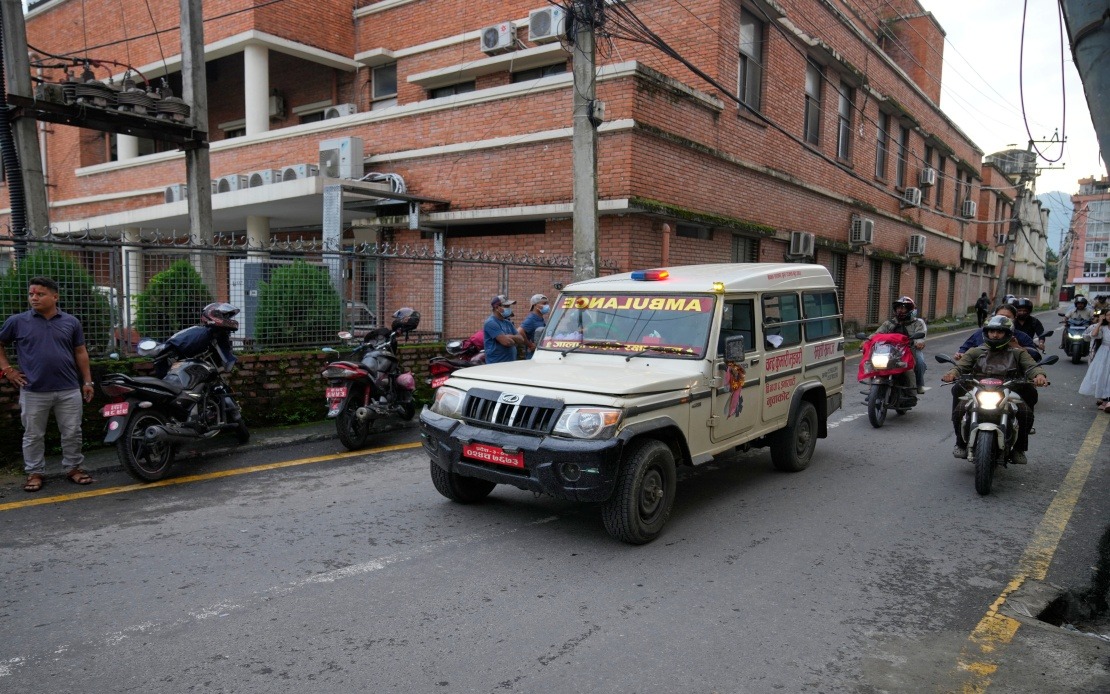
Nepal's rescue operations have successfully extracted 121 foreign nationals from flood-ravaged areas following a catastrophic natural disaster on Wednesday, though authorities continue to grapple with the scale of the humanitarian crisis unfolding across the region. The evacuations, completed by 5.30 pm local time on Friday, represent a coordinated international response to one of South Asia's most severe weather-related incidents in recent memory, yet officials acknowledge that hundreds of people remain missing and search efforts are intensifying.
The rescued foreigners hail from at least 15 nations, reflecting the region's importance as a tourist and trekking destination. Indian nationals comprise the bulk of those evacuated at 85 individuals, followed by 16 Chinese nationals and nine South Koreans. The remainder include two citizens each from the United States, Russia, and Italy, alongside single evacuees from Belgium, Bulgaria, Portugal, Spain, and Switzerland, according to tallies published by Nepal's tourism authority on Friday. This multinational composition underscores how the disaster has touched communities far beyond Nepal's borders and highlights the vulnerability of foreign visitors to sudden natural hazards in mountainous terrain.
The catastrophe originated from the collapse of a glacial mass in the Himalayas, triggering devastating floods in the Bhote Koshi and Trishuli river systems. The initial impact brought massive volumes of water and debris cascading through populated valleys, affecting both Nepal and neighbouring regions of China. Officials estimate the death toll has climbed to approximately 550 individuals, though verification remains ongoing as remote areas continue reporting new casualties. The true human cost may yet increase as recovery teams penetrate more difficult-to-access zones downstream.
Nepalese authorities face mounting logistical obstacles as they attempt to manage the disaster's aftermath. Hospitals in Chitwan and Pokhara, the primary urban centres nearest the affected regions, have exhausted their morgue facilities, forcing officials to seek alternative storage solutions for recovered bodies. The challenge of identifying victims—many swept away by floodwaters or buried under debris—has further complicated efforts to notify next of kin and compile accurate casualty records. Local media reports indicate that Nepalese officials are coordinating with regional authorities to establish emergency mortuary facilities capable of handling the unprecedented volume of deceased individuals.
Search and rescue operations remain actively deployed throughout downstream areas, where teams systematically sweep valleys and ravines for missing persons and survivors. The delayed discovery of bodies and survivors in remote canyons and villages has meant that casualty figures continue evolving as recovery proceeds. Helicopter teams have been crucial in reaching isolated communities cut off by destroyed infrastructure and impassable terrain. International rescue specialists from neighbouring countries have also been mobilized to augment Nepal's capacity, reflecting the diplomatic coordination necessary for disasters of this magnitude.
Prime Minister Balendra Shah convened an emergency Cabinet meeting on Friday to assess the situation and coordinate the national response. In a symbolic gesture of solidarity with flood victims, Shah and his Cabinet colleagues pledged to donate one month's salary to the Prime Minister's Natural Disaster Relief Fund, demonstrating governmental commitment to supporting affected populations. This commitment arrives as Nepal confronts immediate demands for emergency shelter, medical care, and food supplies across multiple districts impacted by the flooding.
India, with the largest number of missing nationals, has emerged as a key international contributor to relief efforts. The Indian government has dispatched two shipments of humanitarian supplies totalling 47.5 tonnes to Nepal, with a third cargo aircraft scheduled to depart on Friday carrying additional relief materials. India's Ministry of External Affairs confirmed that 320 Indian nationals remain unaccounted for, including 63 workers employed on the Trishuli hydropower project who have since been confirmed safe and another 21 who have already been transported to India. Additionally, Indian officials noted approximately 100 persons of Indian origin holding passports from other countries remain missing, many believed to have been participating in the Kailash Mansarovar pilgrimage when the disaster struck, though around 400 Indian nationals in China's Xizang region have been reported safe.
Regional solidarity has extended beyond traditional bilateral relationships, with Pakistan Prime Minister Shehbaz Sharif telephoning his Nepalese counterpart on Friday to express condolences and announce that Pakistan was dispatching emergency relief assistance. This cross-border cooperation reflects how natural disasters transcend geopolitical boundaries and mobilize collective action within South Asia, particularly when foreign nationals and international humanitarian concerns intersect with national tragedy.
For Malaysian readers and regional observers, the Nepal disaster carries significant implications. The incident underscores the increasingly volatile climate patterns affecting high-altitude regions throughout the Hindu Kush-Himalayan system, a phenomenon with cascading consequences for downstream countries including Malaysia's monsoon patterns and water security. Furthermore, the disaster highlights risks faced by Southeast Asian nationals travelling through mountainous regions and abroad, reinforcing the importance of travel advisories and emergency consular services. The international coordination demonstrated by various governments in responding to the crisis provides a template for regional disaster management protocols that benefit all ASEAN nations operating in shared geographic and political spaces.

