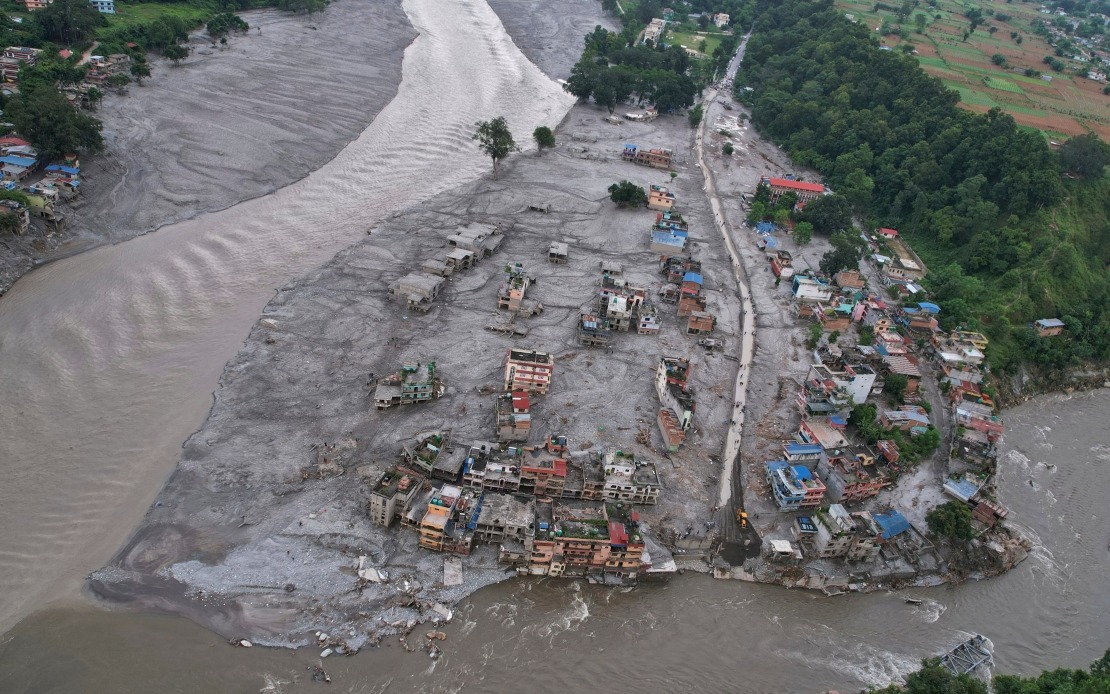
Nepal is taking a cautious approach to accepting search and rescue assistance from additional countries in the wake of devastating floods that struck its central and northern regions, officials confirmed over the weekend. The government plans to complete a thorough assessment of current conditions and rescue needs before committing to further international deployments, according to the Malaysian Embassy in Kathmandu. This measured stance comes as the country grapples with one of its worst natural disasters in recent years, following flooding in the Rasuwa district triggered by overflowing Bhote Koshi and Trishuli rivers on Wednesday.
Currently, Nepal has already accepted search and rescue assistance from four nations: Australia, China, India, and South Korea. The selection of these four countries reflects a pragmatic approach by Nepalese authorities, as all have nationals working at hydropower facilities that were directly impacted by the flooding. The presence of foreign workers at these sites meant that these four countries had a legitimate interest in mounting rescue operations for their citizens trapped in underground structures and tunnels. However, Kathmandu's cautious approach suggests officials want to avoid overwhelming the coordination mechanisms already in place with additional teams that might complicate rescue efforts.
Malaysia has placed itself among the nations offering humanitarian assistance to Nepal during this crisis. Prime Minister Datuk Seri Anwar Ibrahim previously indicated that Malaysia is actively coordinating the delivery of relief supplies to the affected country, and has flagged the possibility of deploying the Malaysian Special Search and Rescue Team (SMART) if called upon. The readiness of Malaysia's specialized rescue unit demonstrates the regional commitment to supporting Nepal during this critical period. Mohd Firdaus Azman, the charge d'affaires at the Malaysian Embassy in Kathmandu, relayed the Nepalese government's position during communications on Saturday, emphasizing that preliminary assessments must be completed before additional rescue missions are formally accepted.
The scale of the disaster is staggering, particularly affecting the hydropower sector that forms a crucial part of Nepal's energy infrastructure. More than 900 workers employed at eleven hydropower projects, many still under construction, became trapped in tunnels and underground powerhouses when the floods struck with sudden violence. These workers represent a diverse workforce drawn from multiple countries, creating complex challenges for rescue coordination. The underground infrastructure that typically protects workers during normal operations became a death trap when surging floodwaters inundated access routes and compressed air pockets within the tunnel systems.
Casualty figures paint a grim picture of the disaster's destructive power. By Saturday, media sources reported that at least 633 people had been killed across Nepal and China, while nearly 3,000 others, including several hundred foreign nationals, remained unaccounted for. For Malaysia specifically, the Foreign Ministry documented that fifty-five Malaysians in Nepal and thirty-six Malaysians in China had lost contact with their families and officials as of Saturday evening. These figures underscore the international dimensions of the tragedy and the urgent need for coordinated cross-border rescue operations.
Nepal's decision to methodically evaluate its rescue capacity and international support requirements before accepting additional SAR teams reflects recognition that rescue operations, while urgent, must be strategically managed. Overwhelming the disaster zone with uncoordinated teams from numerous countries could actually hamper rescue efforts by straining communication channels, duplicating search areas, and consuming limited accommodation and logistical resources. The four countries already deployed have established coordination mechanisms with Nepalese authorities, and their teams can begin operations immediately without the startup delays that would accompany new arrivals.
For Malaysia and other nations with personnel missing in Nepal, this waiting period carries real costs. The first hours and days following a disaster are often decisive in determining survival rates among those trapped. However, respecting Nepal's coordination preferences remains important for maintaining the diplomatic relationships that underpin humanitarian cooperation. Malaysia's willingness to stand ready while Nepal completes its assessment demonstrates maturity in crisis management, prioritizing Nepal's operational efficiency over the desire for immediate visible action by Malaysian rescue teams.
The hydropower sector context is crucial to understanding the disaster's full dimensions. Nepal has invested heavily in hydroelectric projects to meet growing energy demands and generate export revenues through electricity sales to neighbouring countries. The concentration of construction activity and the presence of large foreign workforces reflect the sector's international dimensions, with expertise and labour sourced globally. However, this internationalisation also means that flooding affecting these facilities immediately becomes an international incident requiring coordinated diplomatic and humanitarian responses.
The geographic spread of missing persons—with significant numbers in both Nepal and China—complicates the rescue picture further. The Himalayan region's challenging terrain and the shared river systems that generate the flooding mean that rescue operations may need to span borders and coordinate across multiple national jurisdictions. China's early acceptance of the offer for SAR assistance from Nepal suggests recognition that joint rescue efforts may be necessary along their shared frontier, where floodwaters crossed between countries.
For Southeast Asia more broadly, this disaster carries sobering implications about climate resilience and disaster preparedness. Nepal's experience demonstrates how rapidly weather events can cascade into mass casualty incidents, particularly when critical infrastructure and large concentrations of workers are involved. The region's own hydropower development ambitions, shared river systems, and seasonal flooding patterns mean that Malaysia, Thailand, Laos, and other nations are watching closely to understand how international rescue coordination can be improved for future incidents.

