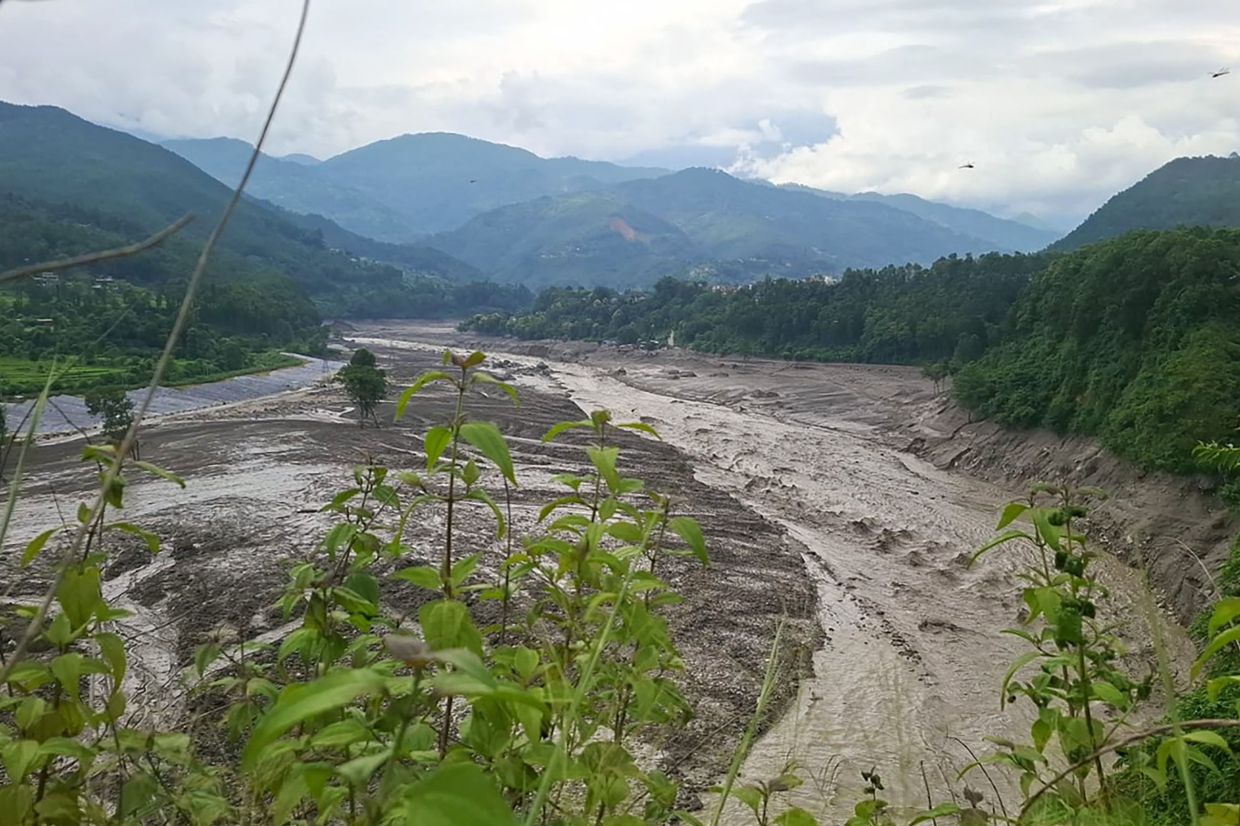
A devastating combination of natural forces struck Nepal on Wednesday, August 26, when a massive glacial avalanche high in the Himalayan mountains triggered sudden, torrential flash floods that swept through multiple river valleys, killing at least 22 people and leaving hundreds unaccounted for. The Bhotekoshi River and its tributaries swelled catastrophically around 9am local time, obliterating entire villages, critical infrastructure, and transport networks across several districts in a matter of hours. The scale of destruction has overwhelmed local authorities and triggered an urgent international rescue response, with neighbouring India and China mobilising significant resources to search for survivors amid the mountains' harsh terrain.
Among those reported missing are 384 tourists and workers from across the globe, a significant proportion of whom were pilgrims from India and the diaspora attempting to reach Mount Kailash in the Tibetan region of China, one of Hinduism's most sacred sites. The incident carries particular significance for Malaysia and Southeast Asian nations, with Malaysia's Foreign Ministry confirming through its Kathmandu embassy that travel agencies have lost contact with 11 Malaysians believed to be stranded in the Rasuwa district, which experienced some of the most severe impacts. South Korean workers constructing a hydropower facility in the region were also among the missing, underscoring how this remote Himalayan zone hosts numerous international projects and attracts travellers from across Asia and beyond.
The physical devastation presents a sobering portrait of the forces unleashed by the flooding event. In Nuwakot district, one of the worst-hit areas, entire multistorey buildings, commercial vehicles, and infrastructure lie buried beneath enormous volumes of mud and debris carried downstream by the violent waters. Officials issued urgent warnings to residents living near the Bhotekoshi, Trishuli, and Narayani rivers, advising them to evacuate from riverside areas and seek higher ground as secondary flooding risks persisted. The damage extends beyond immediate loss of life to include destruction of critical hydropower installations that provide electricity to surrounding communities, suggesting the disaster will have prolonged economic consequences for the region.
The Chinese government has deployed extensive search and rescue operations on its side of the border, particularly in the Gyirong area of Tibet where survivors and bodies might have been washed downstream. President Xi Jinping personally ordered intensified rescue efforts and called for evacuation of vulnerable populations on Chinese territory, according to state media. India's Prime Minister Narendra Modi contacted Nepal's Prime Minister Balendra Shah to coordinate relief operations, pledging comprehensive humanitarian assistance and emphasising close coordination between Indian and Nepali rescue teams. This diplomatic engagement reflects how natural disasters in the Himalayan region demand transnational responses, as rivers and glacial systems ignore political borders.
What distinguishes this particular disaster from typical monsoon flooding is its underlying trigger: climate scientists have determined that an avalanche of rock and ice from a glacier blocked the Lhende Khola River, a tributary of the Bhotekoshi, creating a temporary dam that eventually gave way catastrophically. Saswata Sanyal, a disaster risk reduction specialist at the Kathmandu-based International Centre for Integrated Mountain Development, explained that the same tributary experienced severe flooding just fourteen months earlier, suggesting an alarming acceleration in hazardous events. The Lhende Khola basin's vulnerability has shifted from occasional to recurrent, representing a pattern increasingly observed throughout the Hindu Kush Himalaya region as glacial systems destabilise under rapid warming.
The broader context of this disaster reveals uncomfortable truths about climate change impacts on Asia's mountainous regions. Research released earlier this year found that glaciers across the Hindu Kush Himalaya have begun melting at accelerating rates, with ice loss since 2000 doubling compared to previous decades, primarily driven by rising global temperatures attributable to human activities. The Himalayan region warms faster than the global average due to reduced snow and ice albedo, a self-reinforcing cycle where melting exposes darker surfaces that absorb more solar heat. This accelerated warming destabilises entire mountain systems, making avalanches more frequent, creating unstable glacial lakes prone to outburst flooding, and intensifying monsoon-driven precipitation patterns that trigger secondary landslides.
The August 2023 precedent provides uncomfortable parallels. Last year, similar flash floods in the region claimed nine lives and damaged critical infrastructure including a bridge connecting Nepal and China, suggesting these events may represent a new baseline rather than exceptional occurrences. Climate experts warn that as Himalayan glaciers continue retreating, communities downstream face escalating risks from glacial lake outburst floods, a phenomenon occurring with increasing regularity across the region's valleys. Nepal, with limited resources and infrastructure already strained by poverty and development challenges, finds itself particularly vulnerable to these cascading climate impacts.
For Malaysia and other Southeast Asian nations, this disaster carries important implications beyond immediate humanitarian concerns. The region's exposure reflects how global tourism networks concentrate visitors in climatically vulnerable zones, and how infrastructure development—including the South Korean hydropower project—increasingly occurs in high-risk areas. Malaysian nationals' involvement in this incident underscores the interconnectedness of regional travel patterns and economic participation in Himalayan development. Additionally, as millions of pilgrims and tourists continue journeying to sacred Himalayan sites, the disaster raises questions about the adequacy of early warning systems and evacuation protocols for visitors unfamiliar with mountain hazards.
Saswata Sanyal emphasised that early warning systems represent "the first line of adaptation" in a warming Himalaya, yet the Wednesday disaster revealed significant gaps in alerting tourists and workers to immediate threats. The challenge lies in predicting when avalanches will trigger specific flooding events with sufficient lead time for evacuation, particularly in remote mountain regions where communication infrastructure remains limited. Nepal faces the daunting task of installing monitoring systems across multiple glacial basins while training local communities and tourism operators to recognise danger signs and respond swiftly to warnings.
The humanitarian response will determine not only immediate survival prospects but also Nepal's capacity to rebuild critical infrastructure and restore livelihoods. International aid, particularly from India and China, will prove essential given Nepal's limited domestic resources. However, the underlying drivers of this disaster—accelerating glacier melt and atmospheric warming—will persist regardless of rescue efforts or reconstruction funding. Without aggressive global action to reduce greenhouse gas emissions and stabilise the climate system, the Himalayan region faces an inexorable trajectory toward more frequent and severe catastrophes of this nature, placing entire nations and millions of people at compounding risk in coming decades.

