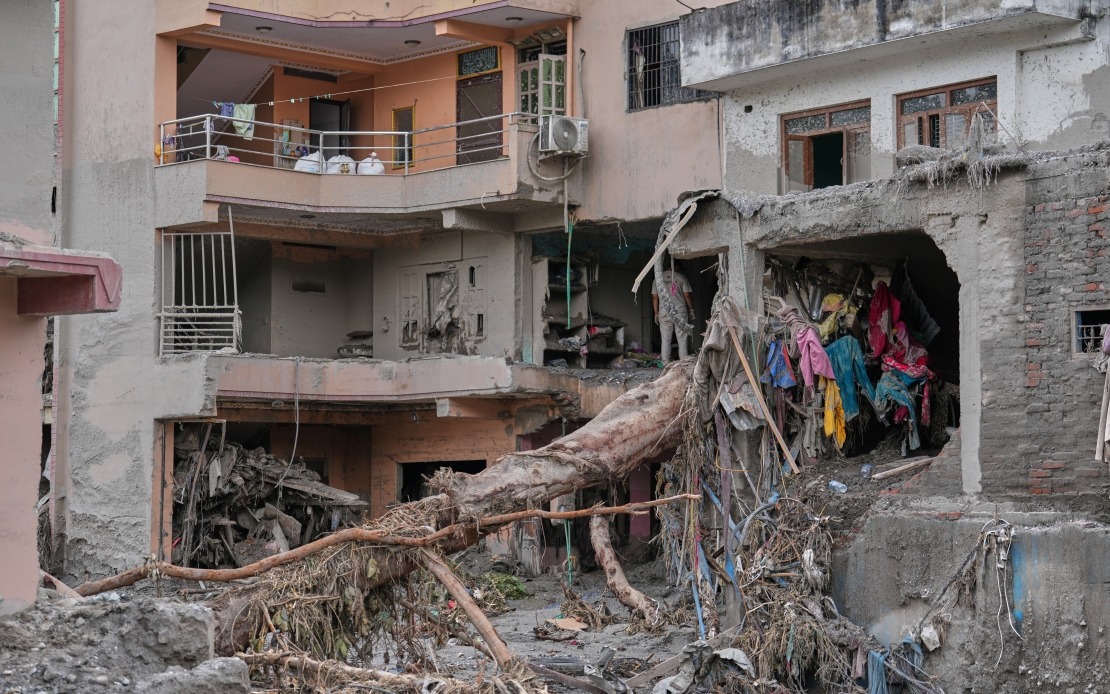
Nepal has announced a systematic approach to managing the bodies of victims from the devastating Bhotekoshi River floods of August 26, with authorities committing to preserve DNA samples and identifying evidence before proceeding with burial or other disposition of remains. The protocol reflects the scale and complexity of the disaster that swept through multiple districts, overwhelming local capacity and claiming hundreds of lives across a wide geographic area.
The Bhotekoshi River flooding, which occurred five days before the announcement, represents one of Nepal's most significant natural disasters in recent years. The torrent caused catastrophic damage along the entire river corridor, with destruction concentrated in Rasuwa, Nuwakot, and Dhading districts where the initial impact was most severe. Communities in these areas reported extensive casualties among residents caught unprepared by the sudden rise in water levels, while critical infrastructure including bridges, roads, and hydroelectric facilities sustained major damage that will likely require months or years to repair.
Prime Minister Balendra Shah's statement, posted on social media on Saturday evening, established the government's position on managing the deceased and outlined the framework that will guide recovery operations going forward. The directive specifically addresses the challenge of handling remains that cannot be immediately identified through conventional means, acknowledging that in mass casualty events, many bodies arrive at collection points without documentation or distinguishing characteristics that would allow prompt family identification.
According to official reports, recovery teams had located 675 bodies across eight different districts by the time of the announcement. The geographic distribution of recovered remains—spanning Rasuwa, Dhading, Nuwakot, Chitwan, Tanahun, Gorkha, Nawalparasi East, and Nawalparasi West—illustrates how the flooding extended far beyond the initial impact zone, with water and debris travelling significant distances downstream and affecting communities in adjacent regions. This wide dispersal of victims presented unprecedented logistical challenges for identification and documentation efforts.
The preservation of DNA evidence represents a significant shift in Nepal's disaster management protocols, demonstrating lessons learned from previous mass casualty events and adoption of international best practices in forensic identification. By collecting and storing genetic material before disposition of remains, authorities create the possibility for future identification should family members come forward with comparative samples or as genealogical databases become more comprehensive. This approach acknowledges that in the immediate aftermath of disasters, not all next of kin may be immediately available or aware of their relatives' deaths.
The policy also addresses cultural and religious considerations in Nepal, where Buddhist and Hindu traditions mandate relatively prompt cremation or burial of the deceased. Rather than requiring extended storage of bodies pending identification—a practice that may conflict with community values and available facilities—the DNA preservation approach allows authorities to honor these traditions while maintaining scientific capacity to establish identity at a later date if needed.
For the region more broadly, this disaster underscores the ongoing vulnerability of Himalayan communities to sudden-onset water-related hazards. Climate patterns and glacial melt in the high mountains create conditions for devastating floods with limited warning time, and infrastructure in remote areas often cannot withstand such events. Countries throughout South Asia and Southeast Asia with similar geographic and hydrologic characteristics face comparable risks, making Nepal's disaster response protocols relevant to regional preparedness discussions.
The scale of the Bhotekoshi disaster will likely trigger broader questions about dam safety, early warning systems, and evacuation procedures in Nepal's river valleys. The flooding affected areas with existing hydroelectric developments, raising questions about whether infrastructure modifications contributed to the severity of the event or whether additional protective measures could mitigate future impacts. These technical questions will occupy engineers and policymakers for months as investigations proceed and reconstruction planning commences.
The government's statement also implicitly acknowledges the capacity constraints facing Nepal in managing such large-scale human losses. By establishing a clear protocol for unidentified remains, authorities provide guidance to district and local officials who may lack experience with mass casualty management and help prevent the ad hoc decision-making that can complicate later identification efforts or create additional suffering for affected families.
The preservation of DNA and other identifying evidence also creates a documentation trail that will support future genealogical research and support adequate record-keeping for the disaster. Official recognition of the deceased and documentation of their identities serves not only family and community needs but also enables proper accounting in national vital statistics and supports future disaster preparedness by establishing baseline data on vulnerability and mortality patterns.
As recovery and reconstruction efforts continue in the affected districts, the preservation protocol will require coordination among health authorities, local administrators, and forensic specialists across multiple jurisdictions. The complexity of managing remains across eight districts and numerous collection points necessitates clear communication and consistent procedures to ensure that no bodies are inappropriately disposed of before evidence collection occurs and that families receive the support needed to locate and identify relatives.

