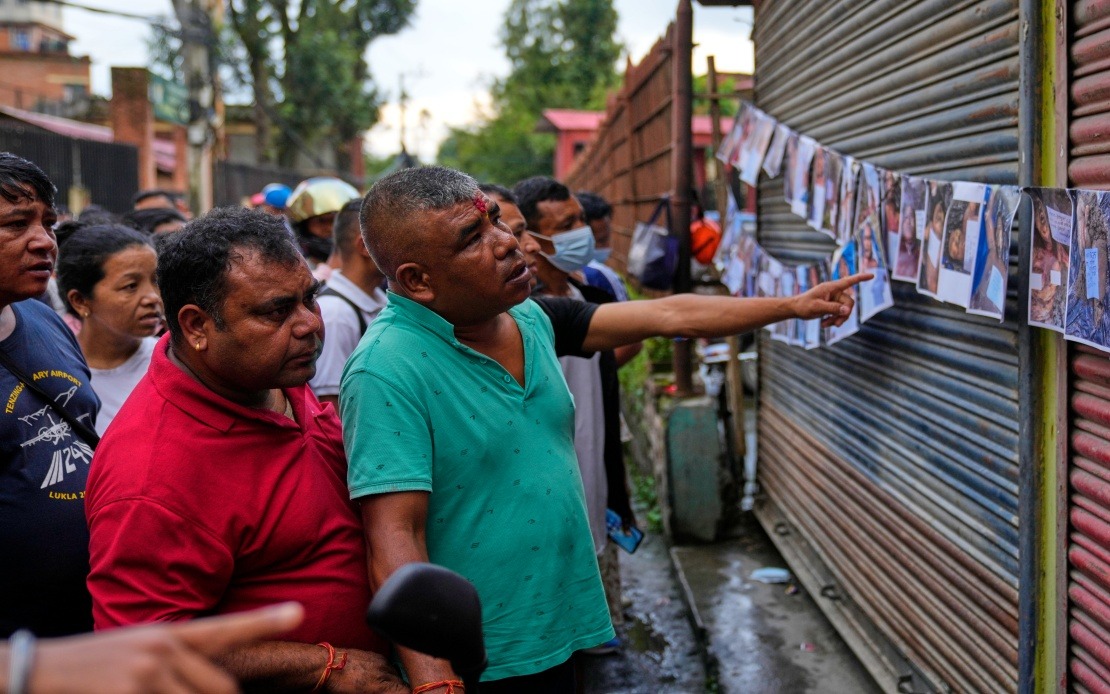
Search and rescue operations intensified across Nepal's flood-devastated regions on Friday as authorities grappled with a mounting humanitarian crisis spanning their third consecutive day of operations. The disaster, triggered by a catastrophic glacial collapse in the Himalayan mountains, has claimed more than 500 lives, with rescue teams racing against time to locate survivors and recover victims scattered across waterlogged communities. For Malaysia, the tragedy has taken on particular urgency, with dozens of nationals caught in the deluge, prompting urgent diplomatic efforts and the mobilisation of governmental resources to account for missing citizens and coordinate relief assistance.
The situation for Malaysian tourists remains precarious and fluid. As of Friday afternoon, two of 57 Malaysians initially reported missing have been traced, leaving 55 individuals still unaccounted for following the Wednesday morning disaster. The Foreign Ministry's Deputy Secretary-General for Bilateral Affairs, Datuk Syed Mohamad Hasrin Tengku Hussin, cautioned that these figures would continue to be refined as information flows in from Nepalese authorities and partner agencies involved in the recovery effort. The verification process reflects the inherent chaos and communication challenges confronting rescue operations in mountainous terrain where infrastructure has been severely compromised and entire communities cut off from outside contact.
Nepal's Department of Tourism released a comprehensive roster on Thursday evening documenting 537 foreign nationals from over 30 countries reported missing in Rasuwa district, a region that bore the initial brunt of the flooding. The document, published by the Ministry of Culture, Tourism, and Civil Aviation, provided names, ages, nationalities, and associated travel agencies for those unaccounted for. This list confirmed that at least 51 Malaysians were among the missing tourists, primarily from organised tour groups visiting Nepal's popular trekking and mountaineering destinations. The disclosure underscored the magnitude of the cross-border implications, as the disaster affected not merely local communities but international visitors drawn to Nepal's natural attractions.
The catastrophic flooding originated from the dramatic failure of a Himalayan glacial dam, unleashing torrential waters through the Bhote Koshi and Trishuli river systems. The Wednesday morning deluge moved with devastating speed through Rasuwa district, overwhelming settlements positioned along riverbanks with little warning. The wall of water, debris, and sediment demolished infrastructure indiscriminately, destroying roads and bridges that serve as lifelines for remote communities. The flood's destructive energy carried downstream, eventually merging with the broader Trishuli River system, where its impact continued to devastate populated areas and isolate entire regions from humanitarian assistance and emergency services.
The scale of destruction has created unprecedented challenges for authorities managing the response. Rescue teams have recovered bodies and human remains across districts situated far downstream from Rasuwa, indicating how the floodwaters distributed destruction across a vast geographic area. Forensic and identification processes have become severely constrained by logistical obstacles, as morgue facilities in several districts have reached saturation capacity. The difficulty in identifying victims has compounded families' anguish and complicated the verification process for missing persons, particularly international tourists whose documentation and identification records may be scattered or destroyed.
International rescue efforts are yielding modest but significant results. Nepalese tourism authorities confirmed that 121 foreign nationals have been successfully extracted from flood-ravaged areas, representing a concentrated international rescue response. However, no Malaysian nationals have yet been identified among those recovered, intensifying concerns about the whereabouts of the 55 unlocated Malaysians and suggesting that many may be among those still missing or undiscovered in remote areas. The absence of Malaysian survivors in rescue tallies has prompted Malaysian authorities to accelerate their response coordination and consider dispatching specialist personnel.
Malaysia's government has shifted into high gear to mobilise assistance, recognising both humanitarian imperative and diplomatic responsibility toward its citizens in jeopardy. The National Security Council maintains active dialogue with the Nepalese government regarding appropriate forms of support, with two primary pathways under consideration: direct financial assistance to complement Nepal's recovery efforts, or deployment of Malaysia's specialist search and rescue capability. Prime Minister Datuk Seri Anwar Ibrahim has signalled openness to either approach, with the Malaysian Special Search and Rescue Team (SMART) positioned as a potential resource if technical assistance proves beneficial to ongoing operations. This represents Malaysia's broader commitment to regional cooperation during crises affecting Southeast Asian nationals across borders.
The Foreign Ministry continues systematic efforts to verify the status of all Malaysians in affected areas, working through travel agencies, tour operators, and Nepalese authorities to compile comprehensive intelligence on who remains missing, who has been recovered, and who may have evacuated independently. This verification process necessarily unfolds gradually as communication infrastructure gradually restores and as remote areas become accessible to response teams. The information asymmetry characteristic of the immediate post-disaster period means initial figures invariably change as clarity improves, a reality that Datuk Syed Mohamad Hasrin Tengku Hussin acknowledged in his statement.
The Nepal disaster carries sobering implications for Malaysia's regional security and humanitarian frameworks. The incident exposes vulnerabilities affecting Malaysian tourists and expatriates in mountainous or climatically variable regions across South and Southeast Asia, where natural hazards pose unpredictable risks. Glacial outburst floods, triggered by climate change-accelerated melting in high-altitude regions, represent an emerging threat category that will likely feature more prominently in future disaster preparedness discussions. For Malaysia, the event reinforces the necessity of maintaining robust diplomatic channels, rapid information-sharing protocols, and pre-positioned capacity for international rescue deployment.
Looking forward, Malaysia's response strategy will likely establish precedents for future cross-border humanitarian crises. The coordination between the Foreign Ministry, National Security Council, and specialist agencies demonstrates institutional readiness, though the scale of the Nepal disaster—with over 500 deaths and hundreds still missing—tests even the most well-prepared systems. As the third day of rescue operations concluded, the window for finding survivors was narrowing, lending urgency to both international rescue efforts and the verification processes determining which of the 55 unlocated Malaysians might still be recoverable. The coming days will determine whether the outcome for Malaysian nationals ultimately involves heroic rescue stories or tragic confirmations, making rapid coordination and sustained international cooperation essential during this critical period.

