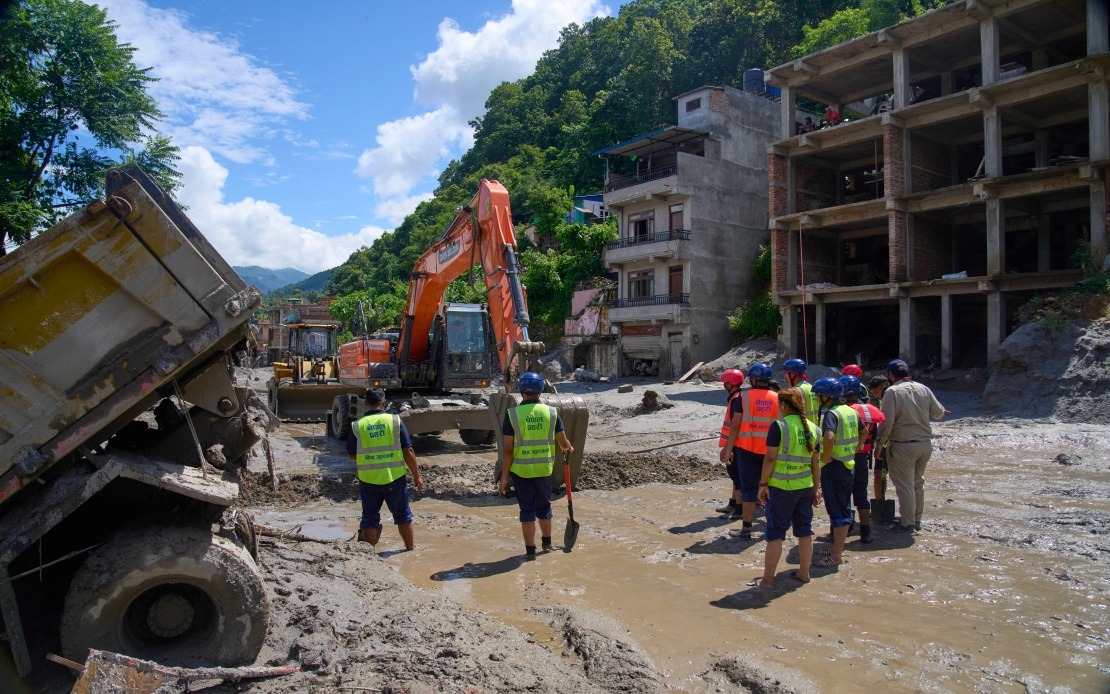
Nepal's Foreign Ministry has mobilized an Emergency Response Team specifically tasked with coordinating search operations and providing humanitarian assistance following the catastrophic flooding of the Bhotekoshi River in Rasuwa district. The institutional response marks a formal commitment to managing what has become a regional crisis affecting thousands of foreign nationals and requiring coordinated diplomatic engagement across multiple nations and international organizations.
The ERT functions as a centralized hub designed to consolidate critical information about missing and affected individuals while streamlining communication between Nepal's government agencies, international partners, and the families of those caught in the disaster. By serving as a single point of contact, the team aims to eliminate gaps in information sharing that often plague large-scale emergency operations, ensuring that verified details reach diplomatic missions, family members, and rescue coordinators without delay or duplication of effort.
Operationally, the Emergency Response Team has established multiple channels through which information can be reported and verified. Individuals possessing details about missing foreign nationals are encouraged to contact the Ministry via dedicated phone and WhatsApp lines at +977-9744441227 or +977-9744441228, or through email correspondence at [email protected]. This multi-platform approach acknowledges the urgency of rapid communication and accommodates various communication preferences among families and contacts scattered across different time zones and regions.
The scale of the disaster that prompted this institutional response remains staggering. Preliminary reports from local authorities indicate that 359 lives had been confirmed lost as of Thursday evening, though that figure continues to rise as search operations proceed and additional casualties are discovered. The floods struck with devastating force on Wednesday morning, catching residents and tourists off guard in an area that draws significant numbers of international visitors, particularly trekkers and adventure tourists.
The rescue operation has achieved some measure of success despite the overwhelming odds, with authorities confirming that 31 individuals were successfully extracted from the disaster zone. However, the human cost of the disaster weighs heavily, with more than 800 people remaining unaccounted for across the affected area. The majority of those missing are reported to be Indian nationals and Nepalese citizens, reflecting the geographic proximity of the source country and the popularity of the region among Indian tourists and pilgrims seeking spiritual and adventure experiences.
From the Malaysian perspective, Foreign Minister Datuk Seri Mohamad Hasan has indicated that the exact number of Malaysian citizens affected by the disaster remains unconfirmed through official Nepali channels. This uncertainty underscores the complexity of managing transnational disasters where communication delays, record-keeping challenges, and the geographic dispersion of affected parties can complicate immediate assessments. Malaysian diplomatic missions are working through established emergency protocols to establish contact with the Nepali authorities and obtain definitive information about any Malaysian nationals caught in the floods.
The formation of Nepal's Emergency Response Team reflects international best practices in disaster management, where specialized coordination units prove essential for managing complex multi-nation humanitarian crises. Regional disasters affecting multiple nationalities require institutional frameworks capable of handling diplomatic communication, family liaison services, and logistical coordination for rescue and recovery efforts. Without such structures, critical information gaps emerge that can delay search operations and compound the trauma experienced by affected families.
The involvement of diplomatic missions in information-sharing processes adds another layer of institutional coordination. Foreign embassies and consulates maintain registries of their nationals traveling in Nepal and can cross-reference this information against missing persons reports, expediting the identification process and enabling more targeted family notification. International organizations with humanitarian mandates also participate in this coordinated response, bringing technical expertise and additional resources to search and rescue operations.
For countries with significant numbers of citizens in Nepal, including Malaysia, the establishment of formal coordination channels represents a critical development. Malaysian authorities can now direct families with missing relatives to specific points of contact rather than navigating bureaucratic uncertainty. This institutional clarity, while tragic in the circumstances that necessitate it, provides some measure of order and predictability within an otherwise chaotic emergency situation.
The Bhotekoshi River flooding raises serious questions about disaster preparedness and early warning systems in the region. As climate patterns continue to shift and weather events grow increasingly unpredictable, countries throughout South and Southeast Asia face mounting challenges in protecting both residents and the substantial tourist populations that sustain regional economies. Nepal's response, though reactive rather than preventive, demonstrates governmental capacity to mobilize institutional resources when crises occur, offering lessons for other nations in the region.
As rescue operations continue and the full scale of the disaster becomes apparent, the Emergency Response Team will likely remain active for weeks or months, transitioning gradually from search and rescue functions toward recovery, identification of deceased persons, and supporting the longer-term needs of survivors. For Malaysian families awaiting confirmation of their loved ones' fates, the team's establishment provides hope that systematic, coordinated efforts will ultimately provide answers, even as the immediate humanitarian situation remains dire and ongoing.

