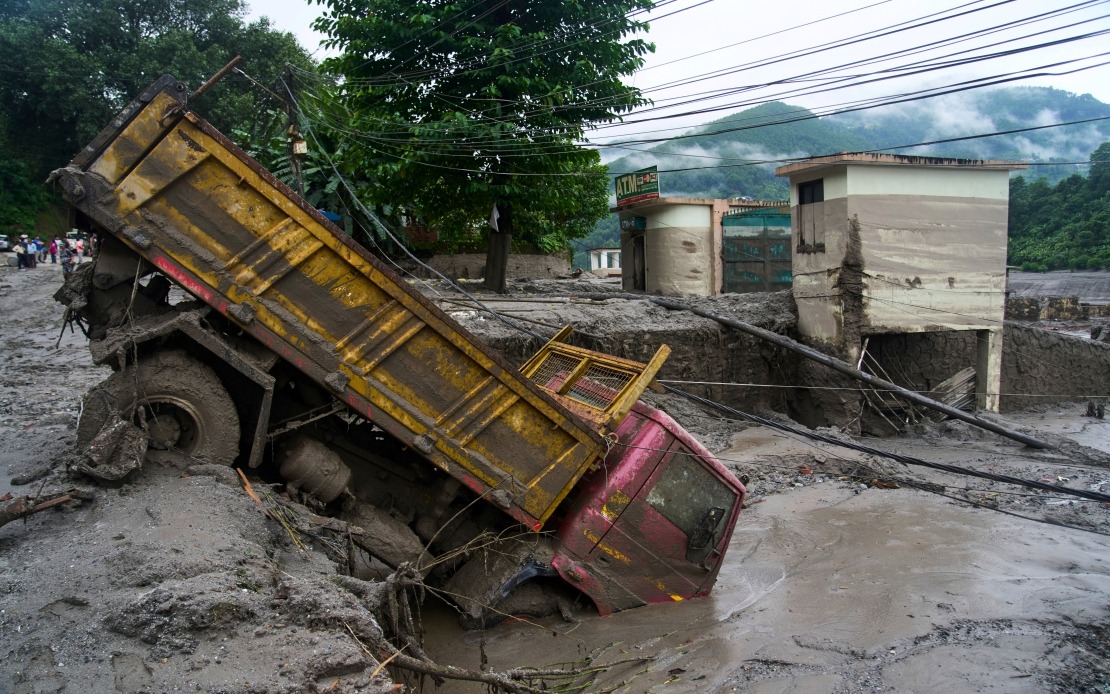
Nepal's National Disaster Risk Reduction and Management Authority has sounded the alarm over another potential deluge in the Bhote Koshi River, the same waterway that unleashed catastrophic destruction just two days earlier. Authorities detected a sharp increase in water flow carrying substantial amounts of debris and mud through the Rasuwa district on Friday, prompting the emergency alert that underscores the persistent threat hanging over the affected regions.
The renewed warning highlights the precarious situation facing communities still reeling from the initial calamity that struck on August 26. That devastating flash flood left a trail of devastation across multiple districts, with the death toll now standing at 475 people. The fact that dangerous conditions are recurring in the same location suggests the area remains extremely vulnerable to further inundation, complicating rescue and recovery efforts already stretched thin by the scale of the initial disaster.
In its official notice, the NDRRMA explicitly cautioned all personnel engaged in the ongoing rescue and relief operations along both the Bhote Koshi and Trishuli rivers to remain vigilant and prepared to act swiftly. The advisory carried an implicit recognition that the terrain itself remains unpredictable, with water patterns potentially shifting rapidly as upstream conditions change and secondary flows develop in the river system.
The authority's directive to relocate immediately from high-risk zones upon observing danger signals reflects the grim lessons learned from the August 26 flooding. In mountainous terrain where flash floods can develop with minimal warning, such precautions are not merely bureaucratic procedure but potentially life-saving measures. The speed with which these floods develop in the Himalayan foothills leaves little margin for error in evacuation decisions.
The scale of the ongoing humanitarian crisis became increasingly apparent as search operations continued through multiple districts. Hundreds of people remain unaccounted for, complicating casualty figures and adding urgency to rescue missions that must now contend with both the original disaster's aftermath and the fresh threat of additional flooding. This cascading nature of the disaster—one catastrophe followed swiftly by another—strains response systems and diverts resources away from established recovery zones.
For the broader South Asian region, Nepal's situation carries sobering implications. The Himalayan region's susceptibility to flash flooding stems from its topography, geological composition, and increasingly volatile weather patterns. Climate change has intensified precipitation events across the region, making such compound disasters more frequent rather than aberrant. Nepal's experience demonstrates how rapidly natural hazards can overwhelm even coordinated disaster response systems.
The Bhote Koshi River's position as a transboundary waterway between Nepal and Tibet also adds a layer of complexity to crisis management. Water originating from upstream sources beyond Nepal's borders can contribute to sudden surges, leaving limited time for warnings to propagate downstream. This geographic reality means that prevention and preparedness become exponentially more challenging when factors beyond national control influence flood dynamics.
For Malaysia and other Southeast Asian nations monitoring Nepal's unfolding crisis, the events carry relevance beyond expressions of sympathy. Monsoon-dependent regions throughout Southeast Asia face comparable risks during peak precipitation seasons. The institutional responses that Nepal's authorities are demonstrating—rapid alert systems, evacuation protocols, resource mobilization—offer practical case studies in managing hydrological emergencies at scale.
The dual warnings issued within days also underscore a critical challenge in disaster communication: maintaining public readiness and institutional alertness through repeated alerts without triggering alert fatigue that could undermine compliance with future directives. Communities and responders must remain engaged despite the psychological strain of extended emergency states, a balance that government agencies struggle to maintain across extended crisis periods.
As Nepal's authorities continue navigating this compounded emergency, the coming hours and days will prove critical in determining whether the fresh threat materializes into another major catastrophe or dissipates as water flows continue downstream. Either outcome, however, will leave communities in Rasuwa and surrounding districts exhausted and economically devastated, facing months of reconstruction even before their immediate survival needs are fully addressed.

