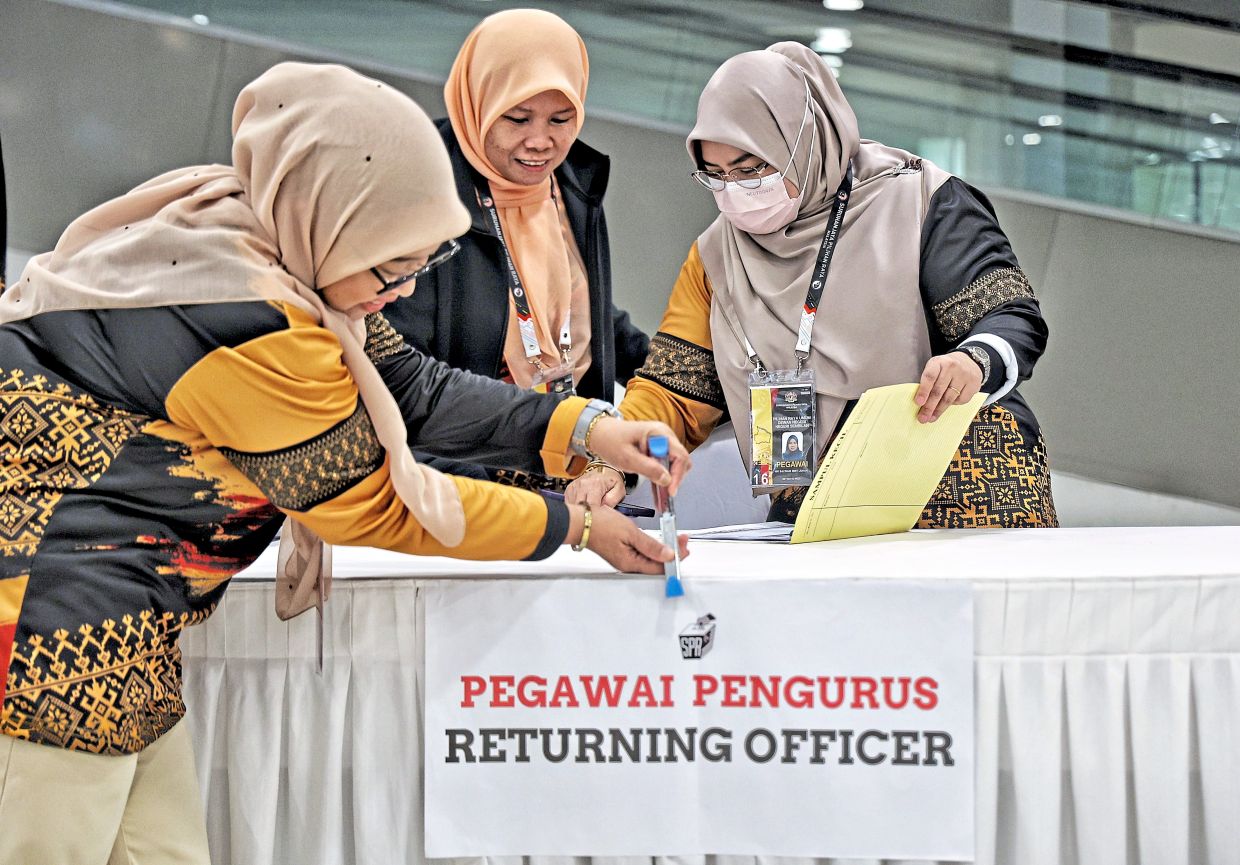
The Negri Sembilan state election scheduled for August 1 represents far more than a routine regional contest. It functions as a crucial examination of whether a fledgling political realignment involving PAS and Barisan Nasional can gain traction beyond the theoretical stage. This emerging configuration has been quietly developing for months, with clear signals surfacing even before the Johor state polls, where PAS demonstrated its capacity for strategic coordination with the Barisan despite contesting separately.
During the Johor election, PAS employed sophisticated electoral arithmetic by instructing supporters to vote for Barisan candidates in constituencies where Perikatan was not fielding contestants. Although this calculated approach yielded zero seats for Perikatan under its own banner, observers interpreted the maneuver as a deliberate sacrifice in pursuit of a larger strategic objective. The Negri Sembilan contest will reveal whether this coordination framework possesses genuine electoral muscle or merely represents wishful thinking on paper. The comparison to a dominant team that fails under match conditions is apt—theoretical dominance means nothing without effective execution.
Negri Sembilan occupies a fundamentally different political terrain compared to Johor, which has functioned as Barisan's fortress for decades and remains entirely governable by the coalition acting independently. The state's mixed political composition makes it a more representative battleground for testing whether the new alignment can overcome established voting patterns. A decisive victory for the PAS-Barisan partnership on August 1 would send shockwaves through three critical dimensions of Malaysian politics, each with profound implications for the federal government's structural stability.
The first shock would reverberate through the Democratic Action Party's strategic position within the Pakatan coalition. DAP has long anchored Pakatan's coalition by delivering consistent non-Malay electoral support, but recent results suggest this bedrock may be eroding. In Johor, the party lost four of ten seats it had won in 2022, indicating that voter sentiment can shift faster than the party anticipated. Another poor showing in Negri Sembilan would intensify internal pressure within DAP regarding the wisdom of its federal coalition choices. The party faces escalating questions about whether participating in a cabinet-level government justifies the electoral toll on its grassroots support base.
These tensions will inevitably come to a head during DAP's rescheduled National Congress on August 16, where delegates will debate the fundamental question of whether the party's federal alignment serves its electoral interests. The mathematics are unforgiving: consistently losing seats in state elections while holding Cabinet positions creates an untenable narrative for party members and voters. This debate becomes particularly acute given DAP's recent decision to withdraw from the Melaka state government, relocating its four assemblymen to the opposition benches citing objections to a constitutional amendment allowing nominated state representatives. However, observers note considerable inconsistency in this principled stance, as DAP quietly maintains its position within the Pahang state government despite similar provisions for nominated seats. Such apparent selectivity undermines the party's ideological positioning and suggests decisions may be driven more by tactical considerations than consistent principles.
Should DAP materially reduce its participation in federal governance or formally exit the Pakatan arrangement, the unity government's legitimacy would suffer severe damage. The perception would crystallize that the entire federal coalition operates with structural fragility, collapsing like a Jenga tower the moment one significant component removes itself. This vulnerability derives not from parliamentary mathematics alone but from the apparent ease with which core alliance principles can be abandoned when electoral performance deteriorates.
The second front concerns the ongoing competition for Malay voter legitimacy, where the nascent PAS-Barisan coordination poses direct structural challenges to Pakatan's federal viability. A coordinated approach transferring PAS's formidable grassroots machinery to support Umno candidates would systematically squeeze Pakatan's presence across the Malay heartland constituencies that generate electoral legitimacy. Prime Minister Datuk Seri Anwar Ibrahim's coalition cannot sustain long-term viability without commanding credible Malay voter support, regardless of how many parliamentary seats currently appear secure. Political legitimacy flows from representing meaningful portions of all major demographic groups; exclusively holding non-Malay constituencies while losing Malay-majority areas creates a government that technically rules but lacks genuine societal foundations.
The third dimension concerns the internal balance of power within the federal coalition itself. Should the PAS-Barisan alignment achieve strong results in Negri Sembilan and subsequently in the Melaka state election, Umno emerges from these contests with enormously enhanced political leverage over the prime minister. An empowered Barisan controlling 30 parliamentary seats and riding momentum from state-level victories would effectively become kingmaker of Malaysian politics. The calculus facing Umno leadership becomes straightforward: whether to continue subordinate participation in the unity government or pivot the entire 30-seat bloc to formalize the new alignment at federal level.
This pivot would fundamentally alter parliamentary mathematics in ways few Malaysians fully appreciate. The federal government currently commands 151 seats from its coalition of Pakatan Harapan (77), Barisan Nasional (30), Gabungan Parti Sarawak (23), Gabungan Rakyat Sabah (seven), ex-Bersatu rebels (six), Parti Warisan (three), Sabah independents (two), and one seat each from Sabah STAR, Parti KDM, and Parti Bangsa Malaysia. The opposition commands 69 seats comprising PAS (43), Parti Wawasan Negara (19), Bersatu (six), and Muda (one). If Barisan's 30 seats migrate to the opposition side, the government's advantage collapses from 82 seats to merely 10 seats above the 111-seat majority threshold.
Such a razor-thin margin invites immediate instability. Any handful of discontented backbenchers, wavering independents, or regional representatives could tip the balance toward a government collapse. The structural integrity that currently prevents federal realignment would evaporate instantly. Even if some opposition components like Bersatu's six MPs return to support the unity government under various pretexts, the underlying fragility persists. The tower remains precariously balanced, vulnerable to any significant movement.
For Malaysia's political class and international observers, the Negri Sembilan result carries implications extending far beyond that state's governance. A convincing victory for the PAS-Barisan alignment would validate an alternative political configuration that many Umno leaders view as more naturally aligned with Malay-Muslim interests. This perspective holds that Malay nationalist parties should coordinate with Islamist parties rather than accepting subordinate positions within coalitions dominated by non-Malay parties. The emerging jajaran baru represents this vision made concrete through electoral mechanics. Conversely, a weak showing would temporarily stabilize the unity government, allowing Anwar's coalition to consolidate its position and rebuild confidence among wavering partners.
The broader context involves Southeast Asia's evolving political trajectories, where electoral realignments have restructured several neighboring democracies' governing coalitions in recent years. Malaysia faces similar pressures as demographic changes, urban-rural political divides, and religious-nationalist sentiment reshape voter preferences. The unity government model, despite its philosophical awkwardness, has provided relative stability since 2022. Yet this stability remains conditional rather than foundational, resting ultimately on elite agreements that can be rescinded once circumstances shift. The Negri Sembilan election on August 1 functions as a referendum on whether that conditional arrangement retains sufficient political viability to persist into the medium term.

