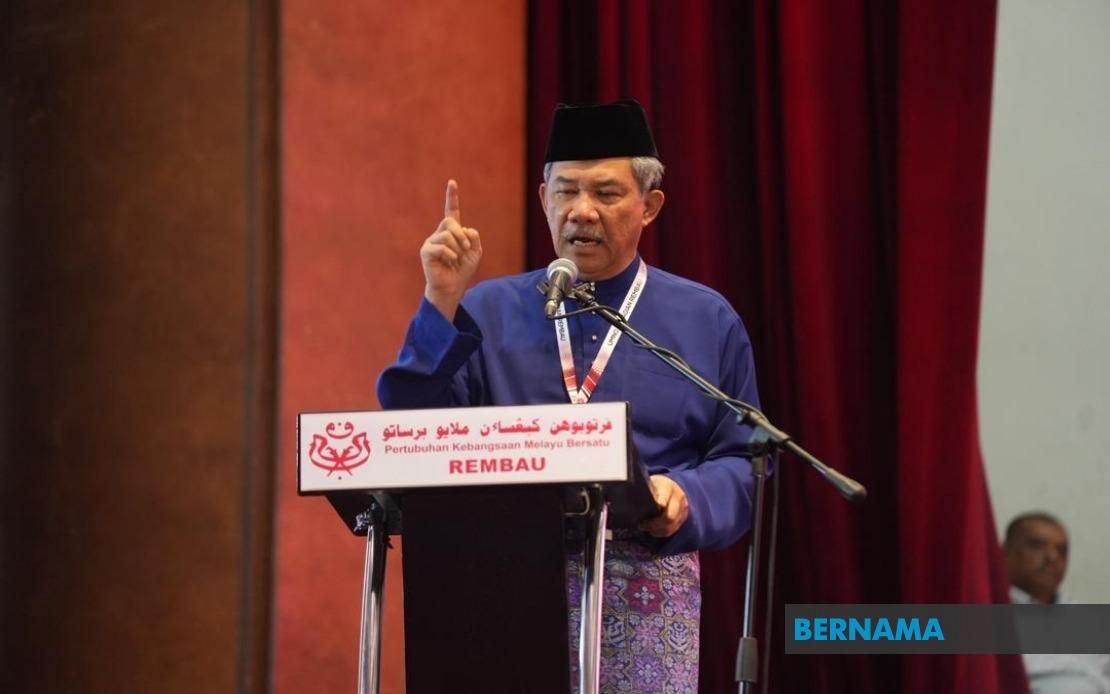
Barisan Nasional (BN) Deputy Chairman Datuk Seri Mohamad Hasan has thrown his weight behind the 10 newly appointed Negeri Sembilan State Executive Council (Exco) members, declaring they are well-positioned to work alongside the Menteri Besar and fulfil their responsibilities across their designated portfolios. The Rantau State Assemblyman made these remarks in Seremban on August 7, shortly after the freshly appointed exco members completed their oath-taking ceremony before the Yang Dipertuan Besar of Negeri Sembilan, Tuanku Muhriz Tuanku Munawir, at Istana Besar Seri Menanti.
Mohamad's confidence reflects a broader understanding of what state executive councils are expected to accomplish in Malaysia's federal structure. Beyond their administrative duties, exco members occupy a critical intermediary role that connects the state machinery with ordinary citizens. According to Mohamad, this bridging function distinguishes exco work from purely technical government service. The members must become channels through which the state communicates its policies and initiatives to the grassroots level, ensuring that new programmes are properly understood by those they affect.
Equally important, exco members function as reverse conduits, gathering concerns, suggestions, and feedback from communities back to the corridors of state power. This two-way communication function is essential for responsive governance. Mohamad emphasised that exco members must actively collect grievances and public input across their respective areas and portfolios, creating the necessary intelligence for policy refinement and administrative improvement. Without this systematic feedback loop, state governments risk implementing policies divorced from ground realities, a perennial challenge in Malaysian public administration.
For the Negeri Sembilan exco to operate effectively, Mohamad underscored the necessity of rigorous internal briefings. Each newly appointed member must receive comprehensive orientation from the government departments falling under their purview. This foundational knowledge—covering departmental functions, existing programmes, budget allocations, personnel structures, and ongoing initiatives—is indispensable for anyone stepping into an exco portfolio. Without such briefings, new exco members risk making decisions based on incomplete information or inadvertently duplicating existing efforts.
The relationship between exco members and the civil service machinery warrants particular attention. Mohamad stressed that maintaining robust working relations between the exco and state departments is non-negotiable for policy implementation to proceed smoothly. In Malaysian practice, state executives often depend heavily on permanent secretaries and senior civil servants who provide continuity and institutional memory. When politicians and bureaucrats work at cross purposes, implementation falters, deadlines slip, and public expectations go unmet. The emphasis on relationship-building suggests that Mohamad recognises these dynamics.
The timing of these appointments carries significance for Negeri Sembilan politics. State governments are constantly navigating the tension between serving their constituents and maintaining coalition discipline at the federal level. With 10 new exco members now in place, the state administration enters a new phase of governance. Whether these members prove capable will partly depend on the quality of political leadership from the Menteri Besar and the degree to which state resources are allocated effectively across portfolios.
For Malaysian observers tracking state-level politics, the Negeri Sembilan developments are part of a broader pattern of government reshuffles and portfolio reallocations occurring across several states. Each reshuffle presents both opportunities and risks—opportunities for fresh perspectives and energetic implementation, risks of instability and learning curves that delay service delivery. The confidence expressed by Mohamad in these particular appointees suggests the BN has faith in their selection, though time will ultimately be the true measure.
Modernising state administration remains an ongoing challenge in Malaysia, particularly in smaller states like Negeri Sembilan where resources are constrained compared to larger counterparts. The new exco members will inherit existing programmes and must balance continuity with innovation. Their capacity to communicate effectively both upward to political leadership and outward to the public will significantly influence their effectiveness.
Mohamad's remarks also touched on a separate matter: the possibility of Melaka holding a state election. He clarified that any such decision rests entirely with the Melaka Chief Minister, who would need to seek the Yang Dipertua Negeri's consent to dissolve the state assembly. This procedural observation underscores how state-level politics operate within constitutional frameworks that limit executive discretion, a reminder that Malaysian state governments, despite their autonomy, remain bound by federal constitutional provisions.
The formation of this new exco team reflects the ongoing reality of Malaysian coalition politics, where state governments must function as coherent units within larger political structures. The capacity of these new members to work effectively will partly depend on factors beyond Mohamad's control—including their understanding of local issues, their political acumen, and their ability to build consensus among diverse stakeholders at the state level. Success will be measured not in confident statements but in tangible improvements to service delivery and citizen satisfaction across Negeri Sembilan's communities.

