The 16th Negeri Sembilan state election has formally commenced with nomination day proceedings across eight centres statewide, marking the opening of what promises to be a closely watched political contest in one of Malaysia's traditional political battlegrounds. The nomination process, which began at 9 am on July 18, provides the critical gateway through which prospective candidates must pass to secure their place on the ballot. Returning officers across the state will process nomination papers until 10 am, after which the Election Commission will verify eligibility and release the official roster of confirmed contenders.
The election timeline reflects a compressed but intense schedule designed to maintain momentum towards the August 1 polling day. A 14-day campaign period commencing after the nomination list is finalised will give parties and candidates precisely two weeks to pitch their vision to voters, with campaigning concluding at 11.59 pm on July 31. Early voting opportunities on July 28 will accommodate those unable to vote on polling day itself, a provision increasingly important for shift workers and those with mobility constraints. The dissolution of the state assembly on June 5, undertaken with the formal consent of Tuanku Muhriz Tuanku Munawir, sets the constitutional foundation for this electoral exercise.
The scale of electoral participation underscores Negeri Sembilan's demographic significance within the Malaysian political landscape. A combined 889,490 voters—comprising 867,151 ordinary registered voters alongside 16,884 military personnel and spouses plus 5,455 police personnel and spouses—constitute the electorate. This constituency size positions Negeri Sembilan as a state capable of delivering politically decisive mandates, making its 36 seats valuable territory in Malaysia's broader coalition mathematics. Early indications suggest robust candidate interest, with the Election Commission reporting 464 nomination forms distributed and 70 prospective candidates having paid their deposits by July 17.
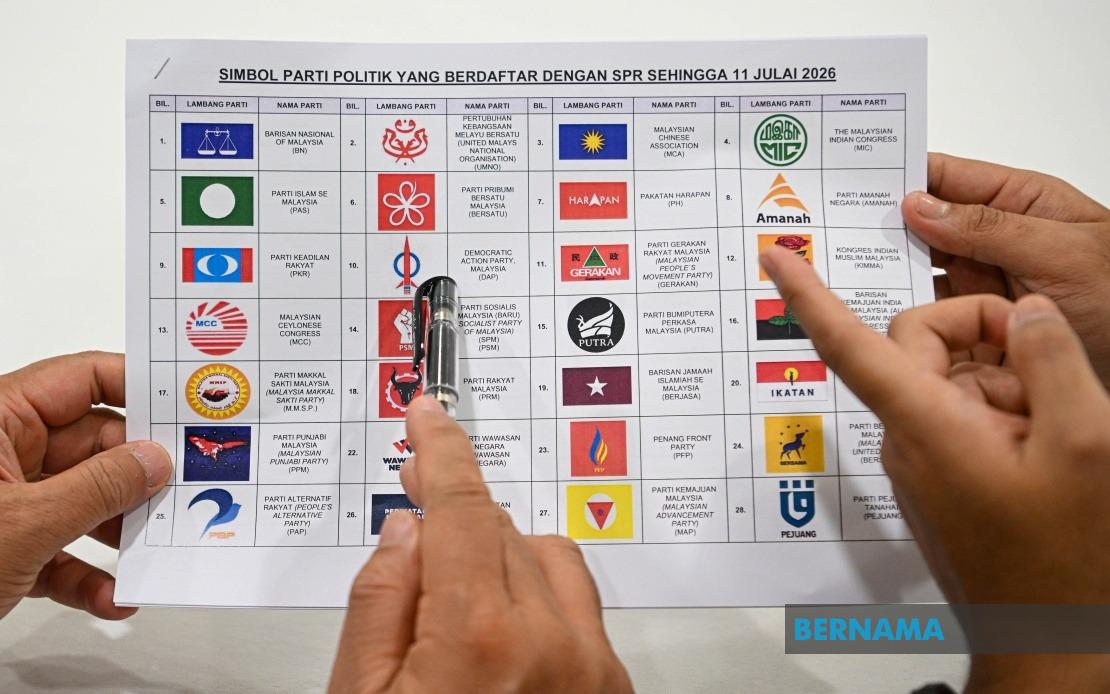
The party strategies reveal a fragmented political landscape reflecting national coalition tensions. Pakatan Harapan has committed to contesting all 36 seats, a full-slate approach signalling confidence and suggesting the coalition views Negeri Sembilan as a priority battleground. Barisan Nasional, by contrast, is fielding candidates in 25 seats, effectively ceding 11 constituencies, possibly to coalition partners or in recognition of perceived electoral headwinds in certain areas. Perikatan Nasional will contest 11 seats, while Parti Pribumi Bersatu Malaysia fields 24 candidates including two Urimai representatives running under the Bersatu banner, demonstrating the complex internal negotiations within opposition-aligned parties. Smaller parties including ASLI, PSM and Berjasa are each contesting single seats, typical of independent operators seeking either breakthrough moments or maintained presence in state politics.
The 2023 results provide crucial context for understanding current positioning and expectations. Pakatan Harapan's capture of 17 seats secured it a slim majority within the 36-seat assembly, positioning it as the incumbent state government tasked with defending its mandate. Barisan Nasional's 14-seat tally and Perikatan Nasional's five seats left both opposition blocs with significant representation but insufficient numbers for state control. The relatively even distribution of seats—compared to more lopsided outcomes in certain other states—suggests Negeri Sembilan's electoral geography and voter preferences produce genuinely competitive results where performance can shift substantially based on campaign effectiveness and voter sentiment. For Malaysian and Southeast Asian observers monitoring coalition dynamics and governance transitions, the state election serves as a barometer of contemporary political mood and coalition cohesion.
Security arrangements underscore the election authorities' commitment to maintaining order throughout the nomination and subsequent campaign phases. The Negeri Sembilan police have mobilised 4,800 officers supported by 1,373 additional personnel from Bukit Aman, creating a substantial security presence intended both to prevent disruptions and reassure candidates and voters of a safe electoral process. The Election Commission has issued formal reminders that all participants must strictly observe nomination centre protocols and refrain from provocative conduct that might compromise the orderly conduct of proceedings. This emphasis on decorum reflects both standard electoral practice and perhaps heightened sensitivity following election-related incidents elsewhere in Malaysia.
Weather patterns may influence turnout and campaign logistics across the voting period. The Malaysian Meteorological Department has forecast generally fair conditions throughout most of Negeri Sembilan on nomination day morning, though Port Dickson and Seremban face anticipated rainfall. Afternoon thunderstorms are predicted statewide, potentially affecting evening campaign preparations and candidate gatherings. Such weather variability, while relatively minor, can impact voter movement and campaign event scheduling, particularly important given the compressed two-week campaign window.
The nomination day itself will showcase the intensely personal and visible aspects of Malaysian electoral politics. Substantial crowds of party supporters, candidates, political leaders and organisational activists are expected to converge on nomination centres, transforming them into informal venues for political messaging and demonstration of party strength. These gatherings serve multiple purposes: they allow candidates to benefit from visible organisational backing, they energise party activists, and they signal to observers which parties appear genuinely competitive. The concentration of nomination centres—eight facilities distributed across the state—requires parties to deploy resources strategically and gives election observers clear indicators of which contests attract the most intensive political investment.
For Malaysian voters and regional observers, the Negeri Sembilan election represents more than a state-level contest. It functions as a crucial test of coalition stability at a moment when Pakatan Harapan governs nationally while Barisan Nasional remains a powerful regional force and Perikatan Nasional continues positioning itself as an alternative framework. The state's outcome will provide practical data about voter preferences, campaign effectiveness across different parties, and the resilience of current coalition arrangements. Equally, it offers insights into whether particular policy approaches or governance models resonate with voters, information valuable for other state governments and the federal administration as they navigate Malaysia's complex political terrain.
The immediate pathway forward is clear: nomination processing concludes by mid-morning on July 18, followed by the official candidate list release. That triggers the campaign period proper, during which parties will deploy their established machinery and messaging strategies. Early voting on July 28 will provide preliminary indicators of turnout and enthusiasm. Ultimately, the August 1 polling day will determine whether Pakatan Harapan consolidates its slim majority, whether Barisan Nasional can mount an effective comeback, or whether the distribution of seats shifts in unexpected directions. For a state of nearly 900,000 voters and 36 contested seats, the next fortnight promises to clarify where Negeri Sembilan voters stand and what direction they wish their state government to pursue.

