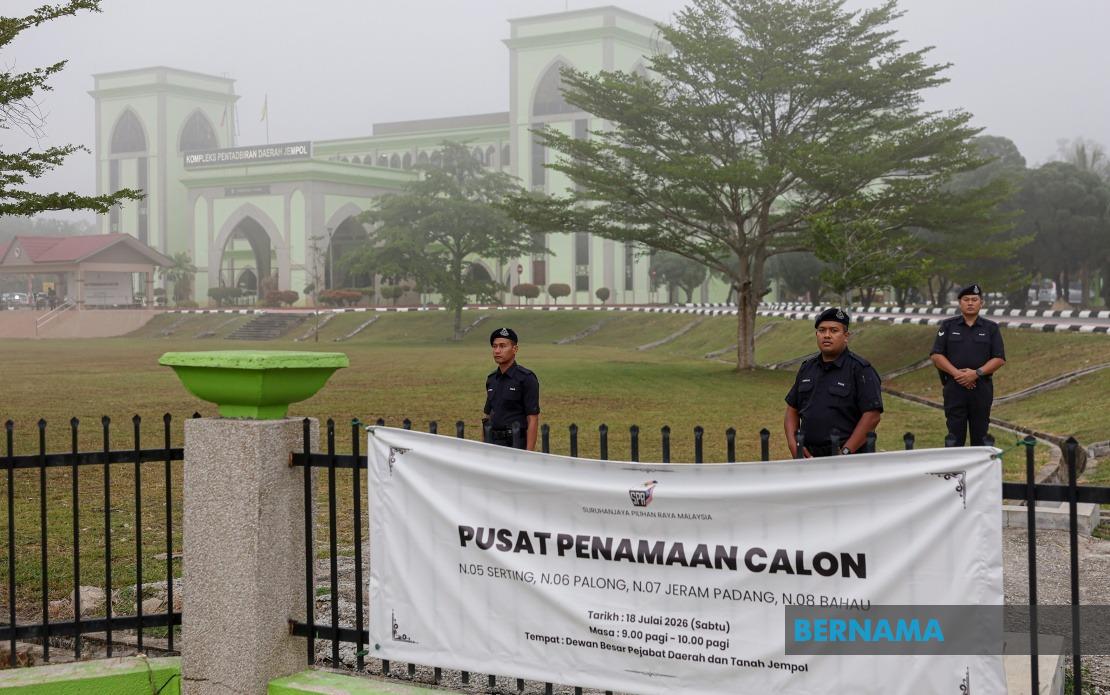
Negeri Sembilan's electoral machinery moved into high gear on July 18 as all eight nomination centres across the state opened simultaneously at 9 am for candidate registration in the 16th state election. The nomination process, lasting precisely one hour until 10 am, represents the formal commencement of the state's political campaign season, with returning officers subsequently releasing the official roster of eligible candidates vying for seats in the state assembly.
The Election Commission has structured the electoral calendar with considerable brevity, establishing a 14-day campaign period that begins immediately following the official announcement of candidates and concludes at 11.59 pm on July 31. This compressed timeframe reflects Malaysia's approach to state-level elections, compressing what would traditionally be a longer political season into a focused, intensive period of public engagement and party positioning. Polling day itself has been set for August 1, with early voting scheduled for July 28, allowing military and police personnel to exercise their franchise ahead of the general election date.
Weather observations across Negeri Sembilan's seven districts indicated favourable conditions throughout the nomination period, a factor that typically facilitates smooth logistical operations for electoral officials and candidates traversing nomination centres to register their candidacy. Such practical considerations, whilst seemingly minor, can significantly impact turnout and the overall conduct of the nomination process, particularly across a geographically dispersed state where nomination centres are distributed across multiple districts.
State police leadership mobilised substantial security resources to oversee the nomination proceedings. Datuk Alzafny Ahmad, the Negeri Sembilan police chief, confirmed deployment of 2,393 personnel across all nomination centres, tasked with maintaining public order and security throughout the registration process. This significant police presence underscores the importance authorities attach to ensuring orderly electoral administration and preventing any disruption to what represents a critical juncture in the democratic process.
The election itself stems from the dissolution of the Negeri Sembilan State Legislative Assembly on June 5, following receipt of consent from the Yang Dipertuan Besar of Negeri Sembilan, Tuanku Muhriz Tuanku Munawir. This constitutional procedure followed standard protocols governing state-level dissolutions in Malaysia's constitutional monarchy framework, where the state's paramount ruler's approval is a prerequisite for formal dissolution of the legislative body.
The 2023 election results provide a baseline for understanding the competitive landscape confronting candidates and parties in this election cycle. Pakatan Harapan dominated that contest by securing 17 of the 36 state seats, establishing a clear majority government. Barisan Nasional captured 14 seats, whilst Perikatan Nasional won five seats, reflecting the tripartite competition that characterises contemporary Malaysian electoral politics at the state level. These outcomes established expectations and coalition dynamics that will inevitably shape candidate selection, campaign strategies, and voter sentiment heading into this latest election.
The electoral roll's magnitude demonstrates Negeri Sembilan's size as a voting jurisdiction within Malaysia's electoral architecture. The Election Commission's updated roll, current as of June 4, 2026, identified 889,490 registered voters eligible to participate in the state election. This electorate comprises 867,151 ordinary voters who will cast ballots on August 1, augmented by 16,884 military personnel and their spouses, and 5,455 police officers designated as early voters. These figures encompass military and law enforcement personnel typically accorded voting arrangements that acknowledge their service obligations.
For Malaysian political observers, the Negeri Sembilan election holds particular significance given the state's historical importance as a bellwether of broader national political trends. Positioned centrally within Peninsular Malaysia and home to a politically engaged population spanning urban and rural communities, Negeri Sembilan elections frequently signal shifting voter sentiment affecting national political calculations. The concentration of the nomination and campaign periods into just over two weeks reflects the Election Commission's operational efficiency, though such compression limits candidates' opportunity for extensive grassroots campaigning compared to longer election cycles in other democracies.
The simultaneous opening of all eight nomination centres at precisely 9 am represents logistical coordination across multiple venues and administrations, a procedural dimension that typically receives limited public attention despite its importance to electoral integrity. This synchronisation ensures equitable timing for all prospective candidates regardless of their constituency's location, preventing any possibility of strategic advantage derived from staggered nomination timings.
As Negeri Sembilan enters its electoral campaign phase, political parties and independent candidates must navigate the compressed 14-day period to articulate their policy platforms, mobilise supporters, and respond to emerging campaign dynamics. The nomination period's brevity will immediately give way to intensive political activity, with parties leveraging whatever advantage the 2023 results and current political positioning provide in their efforts to secure or expand legislative representation.

