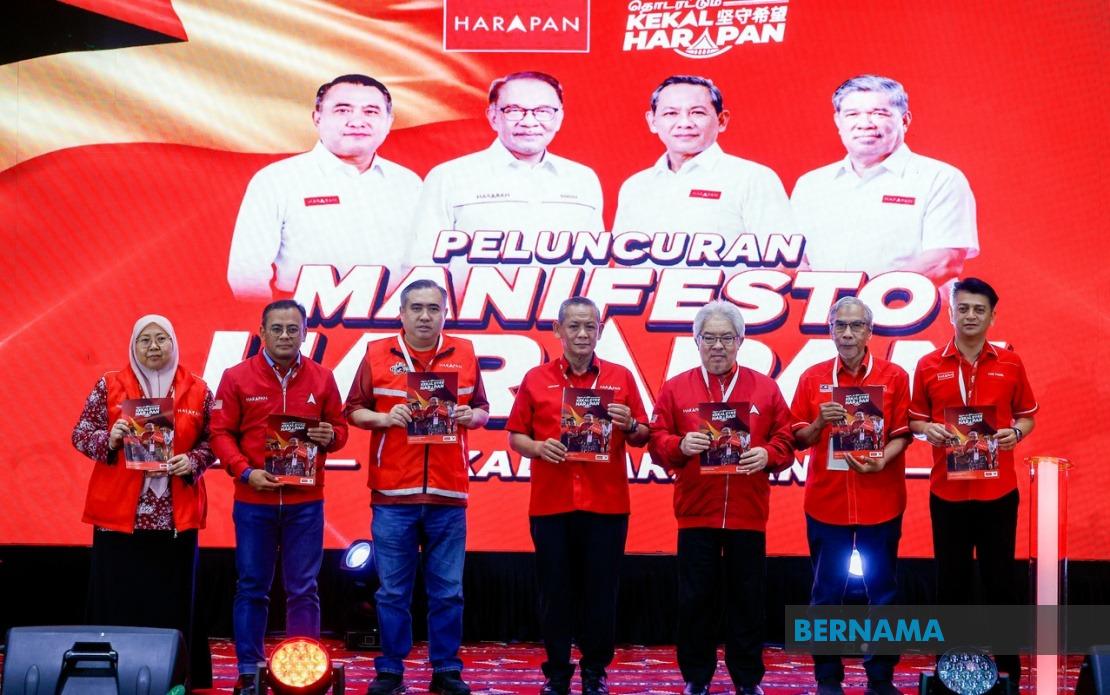
Pakatan Harapan is positioning itself as a coalition grounded in tangible results rather than aspirational rhetoric as it contests the upcoming Negeri Sembilan state election. The coalition's manifesto, launched in Seremban, reflects a strategic pivot toward consolidating and expanding upon initiatives already implemented during its eight-year tenure governing the state, according to state coalition chairman Datuk Seri Aminuddin Harun, who also serves as Menteri Besar.
The framing of PH's electoral promise represents a notable approach in contemporary Malaysian politics. Rather than presenting wholesale new agendas, the coalition emphasizes continuity paired with incremental enhancement—a messaging strategy that seeks to capitalize on institutional memory and proven administrative competence. This contrasts with traditional opposition tactics of sweeping reform pledges and distinguishes PH from competitors who may rely more heavily on aspirational commitments without demonstrated implementation pathways.
During the manifesto launch on July 20, Aminuddin articulated a clear distinction between the coalition's current positioning and its earlier electoral cycle. When PH initially assumed power at the state level, the emphasis centered on introducing new programs and reshaping governance structures. The upcoming five-year mandate, by contrast, is framed as a period dedicated to deepening existing frameworks and ensuring their sustainability and effectiveness across the state.
This strategic articulation carries particular significance for Negeri Sembilan voters evaluating competing claims. The manifesto, officially titled 'Negeri Sembilan Kekal Harapan' (Negeri Sembilan Stays With Harapan), encapsulates ten key commitments that the coalition contends form the architecture of long-term development for the state. The emphasis on foundational strengthening suggests PH's assessment that voters are increasingly evaluating political parties on demonstrated governance capacity rather than inspirational rhetoric alone.
The Menteri Besar's own electoral participation underscores the coalition's confidence in its record. Aminuddin is contesting the Linggi state seat, positioning himself directly before constituents who can assess his administration's tangible impact on local conditions. This personal stake in electoral outcomes reflects a broader PH strategy of tying individual candidates' fates to collective governance performance rather than party brand messaging alone.
For Malaysian voters beyond Negeri Sembilan, the manifesto's design offers insight into how the coalition approaches re-election after extended tenure. The emphasis on consolidation and enhancement rather than radical transformation suggests a recognition that governing coalitions face distinct electoral mathematics when seeking renewal. Voters who were skeptical during initial transitions may become more receptive to evidence-based claims of competent administration, while supporters initially drawn to transformative promises may need reassurance that earlier commitments have genuinely materialized.
The structure of PH's campaign narrative also reflects broader Southeast Asian political trends. As competing electoral cycles across the region demonstrate, voters increasingly differentiate between proven delivery and political theater. Governments seeking re-election in Indonesia, Thailand, the Philippines, and other regional contexts have similarly attempted to ground campaign messaging in documented achievements, particularly when facing fresh competition or voter fatigue.
The Negeri Sembilan context presents specific advantages for this approach. The state's relative stability and compact geography make it feasible to document programmatic outcomes and claim measurable progress. State-level elections also permit more localized, concrete campaign messaging than national contests, where abstract promises often dominate discourse. PH's decision to emphasize specific initiatives grounded in state administration reflects this electoral advantage.
However, the manifesto's emphasis on building foundational capacity for future generations introduces an implicit acknowledgment of unfinished business. The language suggests that eight years of governance, while productive, has not conclusively resolved systemic challenges. This framing invites the counter-narrative that promises remain outstanding and that additional time is required to complete work that could plausibly have advanced further under more dynamic or efficient administration.
The ten-point commitment structure, while unelaborated in available reporting, likely addresses core state concerns spanning infrastructure, economic development, social welfare, education, and governance transparency. For Malaysian constituencies examining PH's viability as a governing coalition nationally, Negeri Sembilan results will provide data on whether coalitional governance can sustain voter support through multiple electoral cycles when power has already been exercised. This holds particular relevance given ongoing federal political volatility and recurrent questions about PH's capacity to maintain cohesion under electoral pressure.
Among Southeast Asian observers, the Negeri Sembilan election offers a case study in how regional political coalitions navigate the transition from insurgent forces to entrenched incumbents. The balance PH strikes between celebrating its record and committing to further improvement will shape perceptions of the coalition's maturity as a governing entity. Depending on electoral outcomes and subsequent governance performance, this model may influence opposition-to-incumbent transitions across the region's political landscape in coming years.

