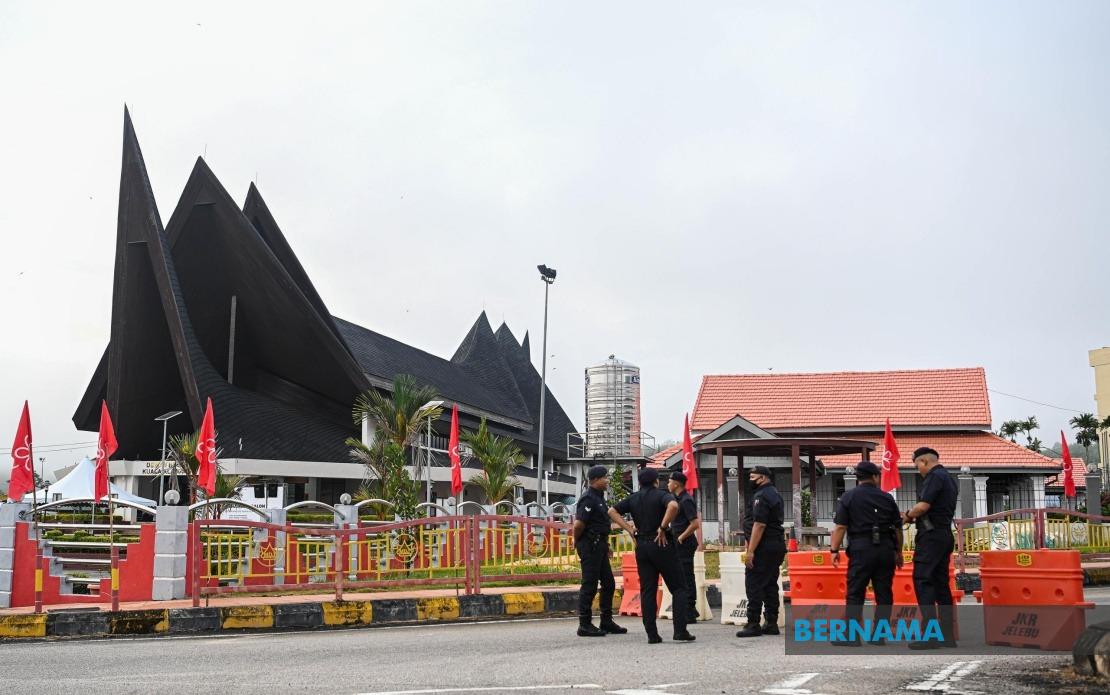
The nomination process for Negeri Sembilan's 16th state election proceeded without disruption on July 18, as clear skies and fair weather conditions provided an ideal backdrop for the pivotal day when political parties formally registered their candidates. Election Commission officials worked methodically across eight nomination centres positioned throughout the state, starting their morning preparations well before the 9 am commencement time. The streamlined nomination window—compressed into a single hour—reflected the EC's efforts to maintain efficiency in the state's electoral calendar, which had been accelerated following the dissolution of the 36-seat assembly in early June.
The smooth administrative execution masked considerable strategic manoeuvring among the state's political camps. Supporters and party representatives arrived progressively at nomination compounds from the pre-dawn hours, with media contingents establishing themselves by 7 am to document the candidate registrations and campaign atmospherics. The presence of party workers and activists signalled the intensifying competition as various coalitions moved from internal deliberation into public campaigning mode, a critical transition in state electoral contests where ground-level momentum can prove decisive in closely contested districts.
Pakatan Harapan emerged as the most ambitious contestant, declaring intentions to field candidates across all 36 state seats—a comprehensive approach that reflects the coalition's confidence in its organisational reach and electoral appeal within Negeri Sembilan. The decision to contest every seat represents a significant commitment of resources and reflects PH's positioning ahead of the August 1 polling day. Barisan Nasional, by contrast, adopted a more selective strategy by contesting 25 seats, suggesting either consolidation around perceived strongholds or coalition arrangements with other political entities. Perikatan Nasional registered for 11 seats, maintaining its presence in the state while acknowledging likely limitations in expansion.
The nomination process also revealed the fragmented nature of Malaysia's political landscape beyond the three main coalitions. Parti Orang Asli Malaysia, Parti Sosialis Malaysia, and Parti Barisan Jemaah Islamiah Se-Malaysia each nominated candidates for individual seats, demonstrating how specialist and niche political movements continue to contest in state elections despite electoral headwinds. These smaller formations, while unlikely to significantly alter the overall composition of the assembly, maintain their institutional presence and provide voters with ideological alternatives.
Perbagai Bersatu's decision to contest 24 seats as an independent entity represented a notable development, particularly given its complicated history within Malaysian coalition politics. The arrangement whereby Parti Bersepakat Hak Rakyat Malaysia would contest two seats under the Bersatu symbol illustrated the creative alliances that frequently emerge during nomination windows, allowing smaller entities to leverage larger parties' electoral machinery and branding.
The electoral context has shifted considerably since the 15th state election in 2023, when Pakatan Harapan secured 17 seats, Barisan Nasional captured 14, and Perikatan Nasional won five. The intervening period has witnessed evolving voter sentiment, leadership transitions, and shifts in coalition dynamics that typically influence state-level electoral outcomes. For Malaysian observers, Negeri Sembilan elections carry particular significance as a bellwether for broader national political trends, given the state's diverse demographic composition and its status as a closely watched battleground where coalition shifts often presage national developments.
The eligible voter register numbered approximately 889,490 individuals, comprising 867,151 ordinary voters alongside significant contingents of military personnel and their families (16,884) and police officers (5,455). The inclusion of security force personnel in state elections reflects Malaysia's electoral framework and can influence outcomes in states where these communities concentrate. The voting eligibility base provided a substantial democratic franchise, though not uniformly distributed across all 36 constituencies, with some districts commanding significantly larger electorates than others.
The compressed timeline for nominations—merely one hour—underscored the Election Commission's efforts to maintain momentum in the electoral cycle. This tight schedule contrasted with the extended campaign period stretching from July 18 to August 1, allowing parties approximately two weeks for grassroots mobilisation, public events, and candidate positioning before voting commenced. Early voting on July 28 would provide the first measurable indication of electoral sentiment, offering campaigns a crucial mid-point barometer for strategy adjustments during the final campaign stretch.
For Negeri Sembilan voters, the nomination day marked the crystallisation of electoral choices that would determine the state's governmental direction for the next term. The composition of nominated candidates revealed which parties prioritised geographic expansion versus consolidation, which coalitions retained cohesion versus fracturing, and which emerging political forces sought to carve out electoral space. These nominations represented not merely administrative registration but the physical embodiment of political competition's formal commencement, transforming weeks of internal party deliberation into public electoral contest.
The state election assumed additional importance within Malaysia's broader political economy, as Negeri Sembilan's resources, strategic position in the central region, and economic development policies would shape regional trajectories. The outcome would influence not only state-level governance but potentially signal voter preferences regarding coalition politics at the national level, making the August 1 polling day consequential for political observers well beyond the state's boundaries.

