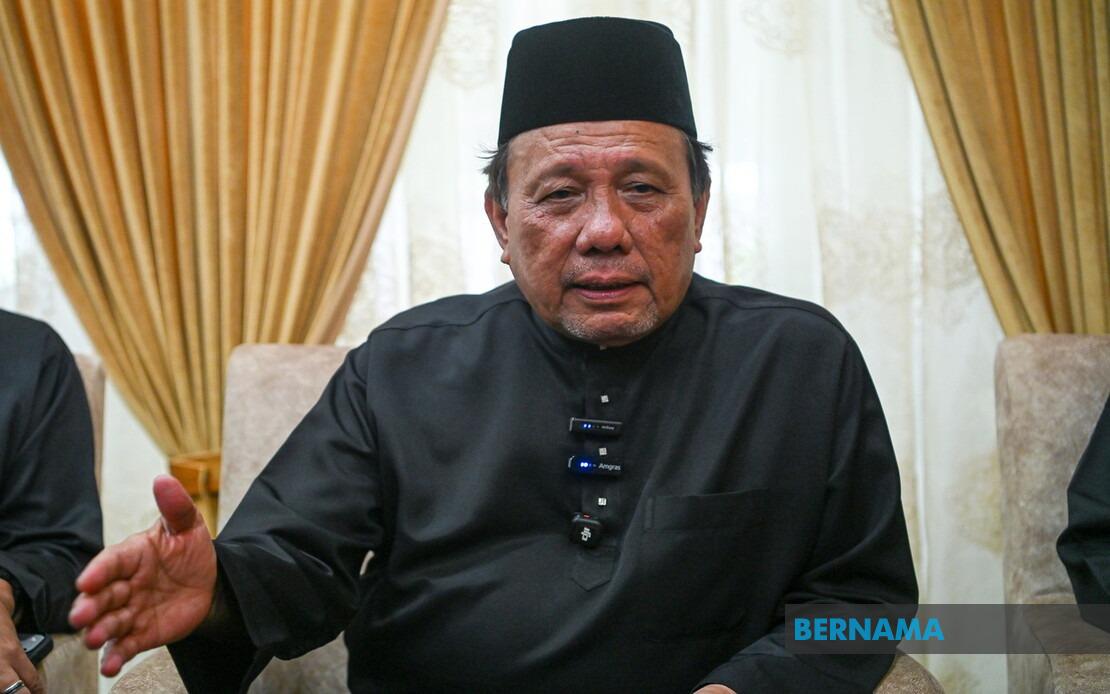
Negeri Sembilan's political leadership has extended into the sporting arena with the appointment of Menteri Besar Datuk Ismail Lasim as chairman of Negeri Sembilan Football Club, a position he assumed on August 14. The move comes after the resignation of his predecessor, Datuk Seri Aminuddin Harun, and represents a shift in the club's governance structure as the organisation seeks to strengthen its institutional framework.
Tunku Besar Tampin Tunku Syed Razman Tunku Syed Idrus Al-Qadri, president of the Negeri Sembilan Football Association, characterised the appointment as a natural fit given Ismail's longstanding connection to state football. His familiarity with the local footballing community extends back decades, providing a foundation of understanding about the challenges and aspirations that shape the sport in Negeri Sembilan. This insider perspective, according to Tunku Syed Razman, positions Ismail favourably to guide the club through what the association sees as a critical development phase.
Ismail's track record in football administration spans more than two decades. During the 1990s and early 2000s, he served as manager of the state team, a position that immersed him in the practical operations and strategic thinking required to maintain a competitive squad. That hands-on experience provided him with direct insight into player management, tactical considerations, and the infrastructure needed to sustain athletic performance. His subsequent role as vice-president of the Negeri Sembilan Football Association in 2010 further demonstrated his commitment to the sport's governance and his willingness to take on responsibilities at the administrative level.
The transition from operational management to executive chairmanship reflects a broader trend in Malaysian football where political figures increasingly assume formal leadership of state-based clubs. This development carries both promise and scrutiny. On one hand, such appointments can inject political capital and governmental resources into sporting institutions. On the other, they raise questions about whether football governance remains sufficiently insulated from political considerations to make decisions purely on sporting merit. In Ismail's case, his earlier roles suggest a genuine grounding in football rather than a purely ceremonial appointment.
Tunku Syed Razman outlined an ambitious vision for the club under its new leadership. The focus encompasses multiple dimensions: professional standards in club operations, sustainable financial management, competitive performance on the pitch, structured talent development pathways for young players, organisational efficiency across departments, commercial viability, and meaningful engagement with supporters and local communities. This multi-faceted approach acknowledges that modern football clubs operate as complex enterprises requiring competence across diverse functional areas.
The relationship between the football club, the state football association, state government, and wider stakeholders forms a critical ecosystem for the organisation's success. Tunku Syed Razman specifically identified this coordination as something Ismail, in his dual capacity as Menteri Besar and club chairman, can facilitate more readily than others. The overlap between his political role and sporting responsibilities creates potential synergies—access to state infrastructure, alignment with government priorities, coordination with state institutions—though it also demands careful management to prevent conflicts of interest or perception of favouritism.
Player development represents a cornerstone of the association's strategy moving forward. Malaysian football has long grappled with questions about youth training systems, talent identification, and pathways from grassroots to professional football. For Negeri Sembilan, establishing robust development structures offers a pathway to sustained competitiveness rather than reliance on temporary talent acquisitions. Ismail's appointment therefore arrives at a moment when the club is explicitly prioritising institutional capacity-building over short-term results.
The commercial dimension of modern football receives particular emphasis in the association's statement. Malaysian football clubs have historically struggled with financial stability and sustainability. Without diversified revenue streams—commercial partnerships, sponsorship, merchandise, facility rentals—clubs depend heavily on government support or wealthy individual patrons. Strengthening the commercial aspects of NSFC's operations would reduce such dependency and create financial predictability necessary for medium-term planning.
Community and supporter relations acknowledge that football clubs function as cultural institutions within their states. Negeri Sembilan's football club carries symbolic weight as a representation of state identity and pride. Building stronger connections with supporters creates emotional investment that translates into attendance, merchandise sales, and advocacy. It also grounds the club in local culture rather than presenting it as a distant, elite institution disconnected from ordinary residents.
The appointment occurs within Malaysia's broader football landscape, where state clubs operate under the Football Association of Malaysia's oversight and compete in national competitions. Negeri Sembilan's performance and development therefore have implications extending beyond the state itself. A well-managed, professionally-run state club contributes to the overall competitiveness and quality of Malaysian football at the national level. Conversely, administrative instability or poor governance in state clubs creates ripple effects throughout the system.
For Malaysian football stakeholders observing this appointment, the coming months will reveal whether Ismail's appointment represents a genuine reform effort or merely a leadership change. The acid test will be visible progress across the dimensions outlined by Tunku Syed Razman: whether player development programmes become more structured, whether the club achieves greater financial stability, whether supporter engagement strengthens, and whether competitive performance improves. These tangible outcomes, rather than administrative credentials alone, will ultimately determine whether this transition strengthens Negeri Sembilan Football Club for the long term.

