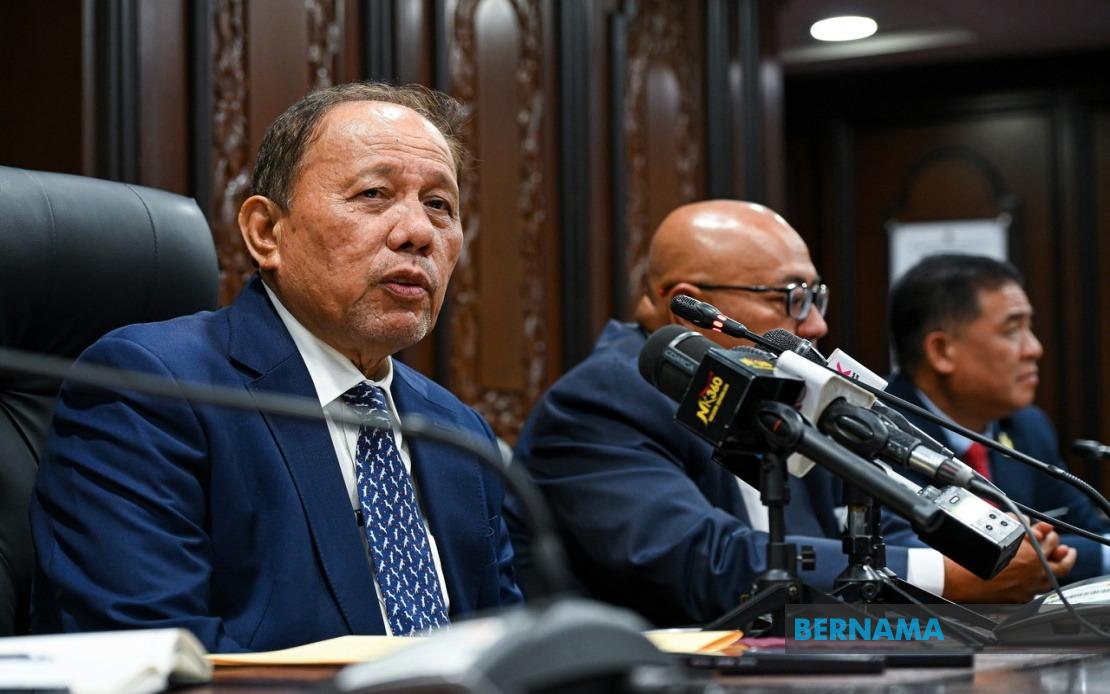
Negeri Sembilan's newly-elected state administration has announced a significant policy decision to maintain current residential assessment tax rates without any increases over the next five years, marking an early pledge to address cost-of-living pressures facing residents. Menteri Besar Datuk Ismail Lasim made the announcement following the first State Executive Council meeting of his administration, emphasizing that the freeze represents part of the Barisan Nasional election manifesto that guided the coalition's campaign during the recent 16th Negeri Sembilan State Election.
The timing of this decision carries particular importance, as local authorities across the state had been conducting preparatory studies for potential assessment tax increases scheduled to take effect in either January or July. By freezing rates at current levels, the state government has effectively halted what would have been the first upward adjustment to residential property taxes in years. The assessment tax itself will continue to be levied and collected, but residents will face no higher burden from this revenue source through at least 2029, provided the policy remains unchanged.
Assessment taxes, commonly referred to as cukai tanah in Malaysian terminology, form a crucial component of local government financing across the country. These property-based taxes fund essential municipal services including waste management, street maintenance, drainage systems, and local infrastructure development. The freeze decision therefore represents a trade-off between immediate relief for homeowners and potential constraints on local authority funding and service expansion. For Malaysian property owners, who have seen various housing-related costs escalate in recent years including electricity tariffs, water rates, and maintenance fees, the five-year reprieve on assessment tax increases provides measurable financial relief at the household level.
The announcement reflects broader political calculations across Malaysia's state governments. Several state administrations in recent years have adopted similar tax-freeze or reduction policies as electoral commitments, recognizing that residential property owners constitute a significant voting bloc. In Negeri Sembilan, where urbanization has driven substantial residential development particularly around Seremban and other growing centers, the freeze directly benefits middle-class homeowners and property investors who would otherwise face incremental cost increases. The policy also demonstrates how newly-elected governments prioritize immediate cost-of-living measures to consolidate support during their initial period in office.
Menteri Besar Ismail Lasim emphasized during the press conference that this decision reflects the administration's commitment to easing the financial burden on ordinary citizens, framing it as a core governance principle rather than merely a temporary gesture. He stressed that all state executive council members must approach their respective portfolios with full dedication, integrity, and professionalism, suggesting that cost control and efficiency improvements within government operations will help offset revenue foregone through the tax freeze. This signals an expectation that the state administration will pursue operational savings and improved service delivery without requiring increased taxation on residents.
The broader context of this announcement extends beyond simple tax policy. Negeri Sembilan, as a moderately-developed state with a mixed economy encompassing manufacturing, agriculture, and services sectors, faces competing demands for public investment. The assessment tax freeze necessarily tightens local authority budgets during a period when infrastructure needs remain substantial. Nevertheless, the political imperative to demonstrate responsiveness to voter concerns about rising living costs has evidently outweighed fiscal pressures, at least in the short term.
The state government has scheduled the First Special Session of the 16th Negeri Sembilan State Legislative Assembly for August 18, where multiple governance matters will be addressed. During this sitting, all newly-elected state assemblymen will be formally sworn in, completing the constitutional requirements for the legislative body. The session will also see the appointment of both the State Assembly Speaker and Deputy Speaker, institutional positions that carry significance for parliamentary procedure and legislative management. Notably, the Speaker position will be filled by someone from outside the State Legislative Assembly membership, while the Deputy Speaker must be drawn from among state assemblymen.
Menteri Besar Ismail indicated that the administration has already identified a candidate for the Deputy Speaker position, with an announcement expected within the following week. The Speaker candidate has likewise been identified, though Ismail noted that final confirmation remains pending. These appointments carry practical importance for legislative operations, as the Speaker presides over assembly proceedings and the Deputy Speaker assumes responsibility during the Speaker's absence or illness. In Malaysian state legislatures, these positions occasionally become sites of political negotiation between government and opposition members, particularly in states with competitive political dynamics.
The August 18 sitting will also involve tabling of an additional state budget allocation to address pressing financial requirements across various government departments and agencies. This supplementary budget represents the new administration's initial opportunity to allocate resources according to its policy priorities and campaign commitments. Such additional budgets typically address unforeseen expenditures, previously underfunded programs, or new initiatives that require immediate capital deployment. For Negeri Sembilan, the supplementary allocation will signal which areas the new government considers most urgent during this transition period.
The assessment tax freeze policy carries implications extending beyond Negeri Sembilan's boundaries. Other Malaysian states may face renewed pressure from voters to implement similar measures, potentially creating a competitive dynamic among state governments regarding property tax policies. If multiple states adopt tax freezes, the cumulative effect could impact local government financing across Malaysia, potentially limiting resources available for municipal service improvements and infrastructure maintenance. Conversely, if the Negeri Sembilan policy proves financially sustainable through improved administrative efficiency, it may provide a template that other state administrations consider replicating.
For property investors and homeowners across Southeast Asia observing Malaysian policy trends, the Negeri Sembilan announcement demonstrates how democratic electoral processes influence taxation and cost-of-living measures at the sub-national level. Malaysia's federal system grants significant fiscal and policy autonomy to state governments, allowing each state to calibrate its tax structures according to local political conditions. This creates natural policy variation across Malaysian states, with some maintaining higher assessment tax rates or implementing regular increases, while others like Negeri Sembilan now emphasize rate stability as a policy feature.
The implementation of this tax freeze will require careful fiscal management throughout the five-year period. The state government must balance the political benefits of maintaining current assessment tax rates against potential service limitations or infrastructure deferrals that budgetary constraints might necessitate. Local authorities in Negeri Sembilan will need to prioritize expenditures carefully, focusing investments on essential services while potentially deferring non-critical improvements. This managerial challenge will test whether the state administration can deliver on both its tax-freeze commitment and its responsibility to maintain and improve public services.

