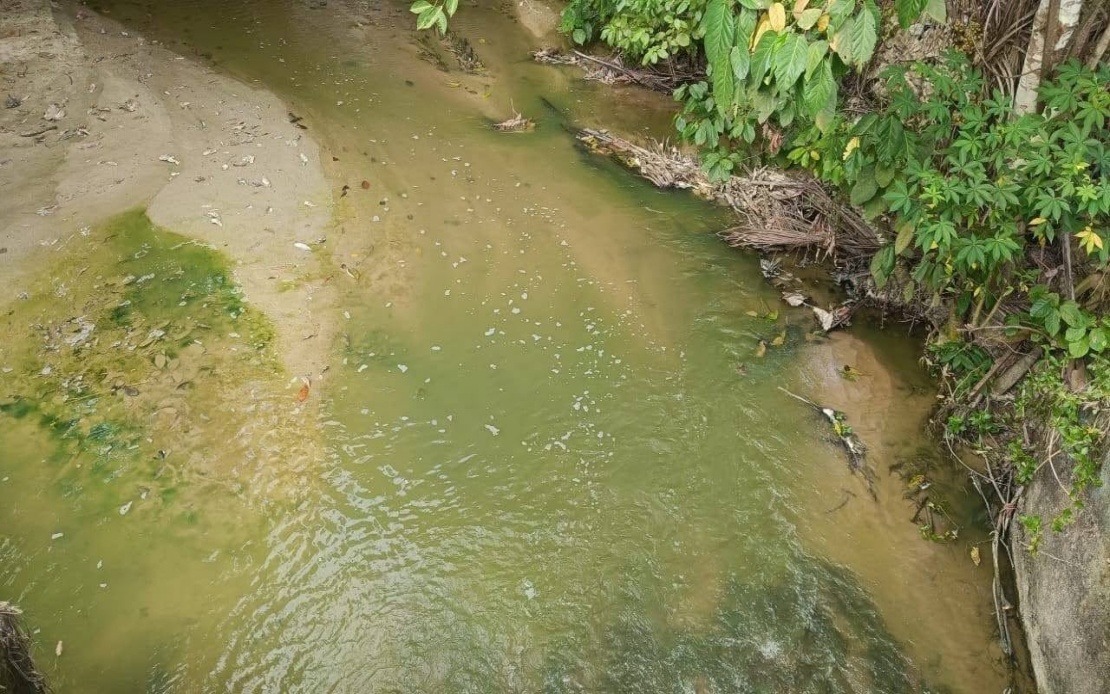
Authorities in Negeri Sembilan have moved swiftly to reassure the public about the unusually green waters of Pertang River in Jelebu, attributing the phenomenon to naturally occurring algae rather than industrial contamination. The Department of Fisheries (DOF) director, Kasim Tawe, issued the clarification after a WhatsApp screenshot documenting the river's colour change circulated widely across social media platforms, prompting public concern about potential environmental hazards.
Investigations by the department determined that the culprit is excessive algal proliferation in fish-breeding ponds situated adjacent to the river, a development directly linked to the extended period of hot, dry weather and insufficient rainfall in the region. The former mining pond has been repurposed as a commercial aquaculture facility spanning approximately 29.54 hectares, where operators raise baung, red tilapia, and Lee Koh fish—species popular in Malaysian aquaculture and domestic markets. The convergence of elevated temperatures and depleted water supplies has created ideal conditions for algal blooms, a challenge that aquaculturists throughout Southeast Asia encounter with increasing regularity as climate patterns shift.
Kasim's emphasis that the colour change does not indicate pollution marks an important distinction for public health and environmental assessments. Algal growth in aquatic systems is not inherently problematic; indeed, controlled algae populations contribute measurably to pond ecosystems by generating dissolved oxygen and furnishing natural nutrition for farmed fish. The algae additionally functions as a biological sunshade, diminishing light penetration and reducing physiological stress in confined fish stocks. Under optimal management, these dynamics support fish welfare and improve overall water chemistry metrics within the managed pond environment.
However, the department's acknowledgement that uncontrolled algae proliferation presents genuine risks underscores the delicate balance required in intensive aquaculture operations. Rapid biomass accumulation can severely deplete dissolved oxygen concentrations, particularly during nocturnal hours when photosynthetic oxygen production ceases, potentially creating anoxic conditions lethal to farmed stock. Simultaneously, excessive algae can trigger erratic pH fluctuations—sharp swings between acidic and alkaline conditions that damage fish gill tissue and impair respiration. Fish breeders operating in Mukim Pertang and comparable facilities across Malaysia face the constant challenge of maintaining algal density within a narrow optimal band.
To help operators navigate this challenge, the DOF has recommended a suite of practical management strategies grounded in aquaculture best practice. Employing mechanical aeration devices such as waterwheels—particularly during nighttime hours when oxygen depletion peaks—remains among the most effective interventions. Gradual water replacement maintains ecosystem stability while reducing algal nutrient loads; concurrently, reducing feed inputs diminishes organic matter accumulation and associated microbial oxygen consumption. Installation of shading nets limits light availability to algal colonies while providing welfare benefits for fish. Application of beneficial bacterial cultures, or probiotics, can rebalance microbial communities and suppress harmful algal dominance. In extreme cases, thinning fish populations reduces oxygen demand and waste generation, though this strategy carries economic implications for operators pursuing profitability targets.
The Jelebu District Fisheries Office has established an ongoing monitoring regime in coordination with Pertang Police Station to track conditions in the river and associated ponds. This collaborative approach reflects recognition that aquaculture operations, while economically valuable and increasingly important to Malaysia's protein security, require careful oversight to prevent environmental spillover into public waterways. The surveillance effort aims to detect early warning signs of ecosystem deterioration before complications cascade into broader ecological or public health concerns.
The incident illuminates broader patterns in Malaysian agriculture and aquaculture management. As climate variability intensifies and temperatures climb across the region, thermal stress events will likely trigger more frequent algal blooms in both managed and natural water bodies. Fish farmers in Negeri Sembilan, Perak, Johor, and other aquaculture-intensive states will face mounting pressure to adopt proactive management practices and invest in adaptive infrastructure. The viral social media response—citizens photographing and publicising anomalies in their environment—also demonstrates heightened public environmental consciousness, creating demand for transparent official communication and rapid regulatory response from government agencies.
For Malaysia's growing aquaculture sector, balancing production expansion with environmental stewardship remains paramount. The Pertang incident, resolved without documented harm to fish stocks or public water supplies, nonetheless serves as a timely reminder that intensive farming operations demand vigilant management and community engagement. As Malaysia targets increased self-sufficiency in protein production to support a rising population and changing dietary preferences, ensuring that aquaculture development proceeds sustainably—with proper oversight of water quality and ecological health—will distinguish successful regional operators and attract international investment in the sector.
The department's rapid response and transparent communication regarding the Pertang situation represent constructive crisis management, potentially preventing unnecessary alarm while demonstrating governmental capacity to distinguish genuine environmental hazards from routine agricultural phenomena. Moving forward, similar incidents may serve as opportunities for the DOF and industry stakeholders to strengthen extension services, improve farmer knowledge of algae management, and refine monitoring infrastructure across Negeri Sembilan's aquaculture zones.

