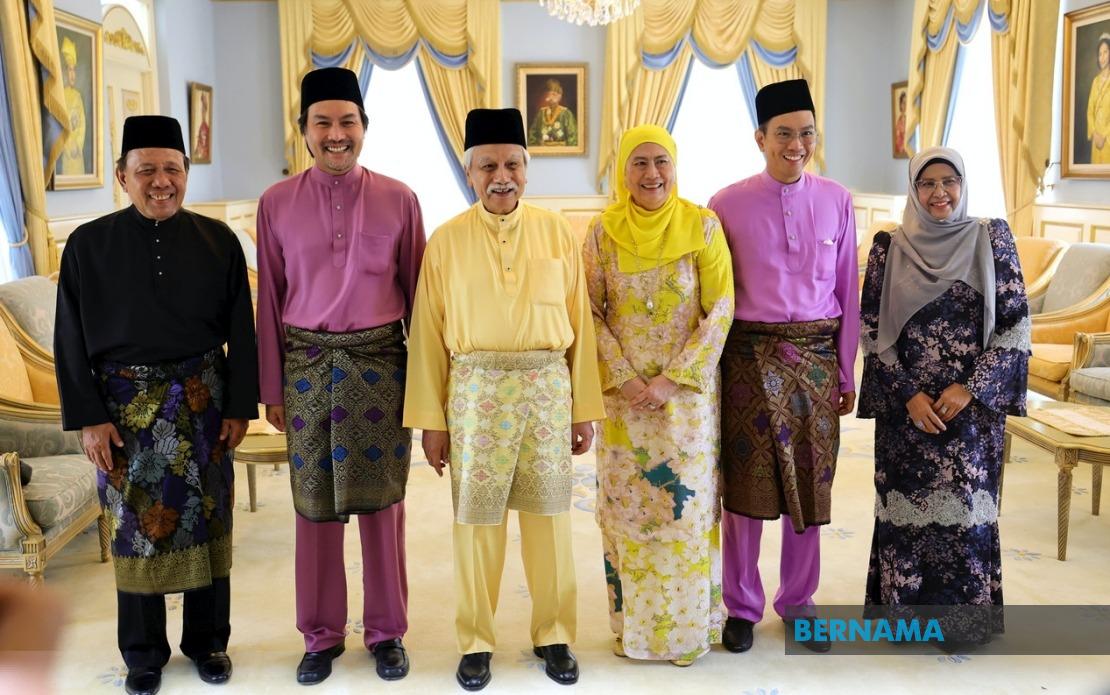
Datuk Ismail Lasim, freshly appointed as Menteri Besar of Negeri Sembilan, has signalled that the composition of his state cabinet should be settled within the week, with Friday serving as the target deadline. Speaking to media following his formal swearing-in ceremony at Istana Besar Seri Menanti, Ismail outlined a structured consultative process that will see discussions with Barisan Nasional leadership precede any formal submission to the Yang Dipertuan Besar, Tuanku Muhriz Tuanku Munawir, for royal consent.
The newly minted chief minister represents the Juasseh state assembly seat and assumes control of a government formed through an unexpected coalition arrangement between Barisan Nasional and Perikatan Nasional. This unusual partnership emerged from yesterday's election results, which delivered 18 state assembly seats to Barisan Nasional and seven to Perikatan Nasional out of the 36 total constituencies contested. The two-thirds majority achieved through this alliance marks a significant shift in state politics and reflects the evolving coalition dynamics that have characterised Malaysian electoral politics over recent years.
Ismail's immediate priority involves securing input from UMNO president Datuk Seri Dr Ahmad Zahid Hamidi regarding the proposed executive council composition. The consultation agenda explicitly includes evaluating whether state assembly members from Perikatan Nasional should secure positions within the cabinet structure, a question that addresses the practical challenges of managing coalition governance across two politically distinct blocs. This deliberation process underscores the delicate political balance required to maintain stability when combining partners with different ideological foundations and voter bases.
Regarding the structural framework of his administration, Ismail has tentatively favoured maintaining the existing ten-member executive council arrangement that has served the state previously. He acknowledged that finalising this matter remains pending but suggested that preserving this traditional size would best suit Negeri Sembilan's administrative needs. The decision to retain a familiar structure may reflect strategic thinking aimed at minimising disruption and maintaining institutional continuity during what could otherwise be a period of significant political uncertainty.
The allocation of cabinet portfolios and formal designation of executive councillors will commence only after the party leadership consultations conclude. This sequencing represents standard political practice, ensuring that coalition partners have adequate opportunity to advocate for specific ministerial assignments and that the distribution reflects the balance of power and interests between Barisan Nasional component parties, which include not only UMNO but also the Malaysian Chinese Association and Malaysian Indian Congress. Each component party typically expects representation proportional to its electoral contribution and historical standing within the coalition structure.
The formation of this cabinet takes place against the backdrop of Negeri Sembilan's specific political context and demographic composition. The state's relatively smaller size compared to major peninsular counterparts means that state-level administration decisions carry heightened significance for residents and that factional disagreements within the executive council can more readily destabilise government operations. The challenge of managing competing interests across multiple coalition partners therefore assumes particular weight in this setting.
Tuanku Muhriz's preference for expedited resolution of the executive council matter, as noted by Ismail, reflects the conventional constitutional position that the state ruler prefers governmental arrangements to be settled swiftly to enable the administration to function effectively. Royal protocols and constitutional conventions surrounding the appointment of state cabinet members remain crucial elements of Malaysian federalism, and the Menteri Besar's deference to the ruler's preferences demonstrates respect for these established institutional frameworks.
The broader implications of this cabinet-formation process extend beyond immediate Negeri Sembilan politics. The unprecedented arrangement whereby Barisan Nasional and Perikatan Nasional govern together at the state level offers a case study in coalition management that could influence thinking among political strategists across Malaysia. The success or failure of this partnership in delivering effective governance and satisfying the expectations of both component parties and the electorate will likely shape attitudes toward similar coalitions in other states or at the federal level.
Ismail's articulation of people-centric governance as his administration's foundational principle, emphasising welfare and well-being as primary concerns, represents standard political discourse but carries weight given the coalition's vulnerability to fragmentation. Delivering tangible improvements in public services, infrastructure, and economic opportunities becomes essential for consolidating political support and demonstrating that the unusual alignment serves constituent interests effectively. In this sense, cabinet formation is not merely an exercise in power-sharing mathematics but a prerequisite for translating electoral victory into sustained governing legitimacy.
The consultation schedule now underway, culminating in a Friday deadline, suggests that Ismail has set realistic timelines while maintaining sufficient flexibility to accommodate negotiations. The iterative process of seeking perspectives from Barisan Nasional bodies, the UMNO president specifically, and ultimately the state ruler creates multiple checkpoints where proposed arrangements can be modified to address concerns or unforeseen complications. This measured approach may prove essential for preventing the kind of last-minute disputes that could undermine cabinet stability from its inception.

