The upcoming 16th Negeri Sembilan State Election on August 1 promises to be markedly different from its predecessor, with a fundamental shift in how electoral contests are shaping up across the state's 36 legislative assembly seats. The fracturing of Malaysia's political landscape is now graphically illustrated in the southern state, where the comfortable two-horse races that once characterized state polls have given way to a significantly more fragmented contest. This transformation signals broader changes in voter preferences and coalition dynamics that extend well beyond Negeri Sembilan's borders, suggesting deeper shifts within Malaysia's political system as a whole.
The most striking development is the dramatic rise of three-cornered contests, which will now feature in 21 of the 36 constituencies—a threefold increase from the seven such contests recorded in the 2023 state election. Conversely, straight fights between two candidates have plummeted from 27 seats to just 11, indicating that voters are increasingly willing to entertain alternatives beyond the Pakatan Harapan and Barisan Nasional duopoly that has dominated recent elections. This trend reflects the growing influence of Bersatu, which has positioned itself as a consequential third force across numerous seats, and represents a potential realignment of the Malaysian electorate away from binary political choices.
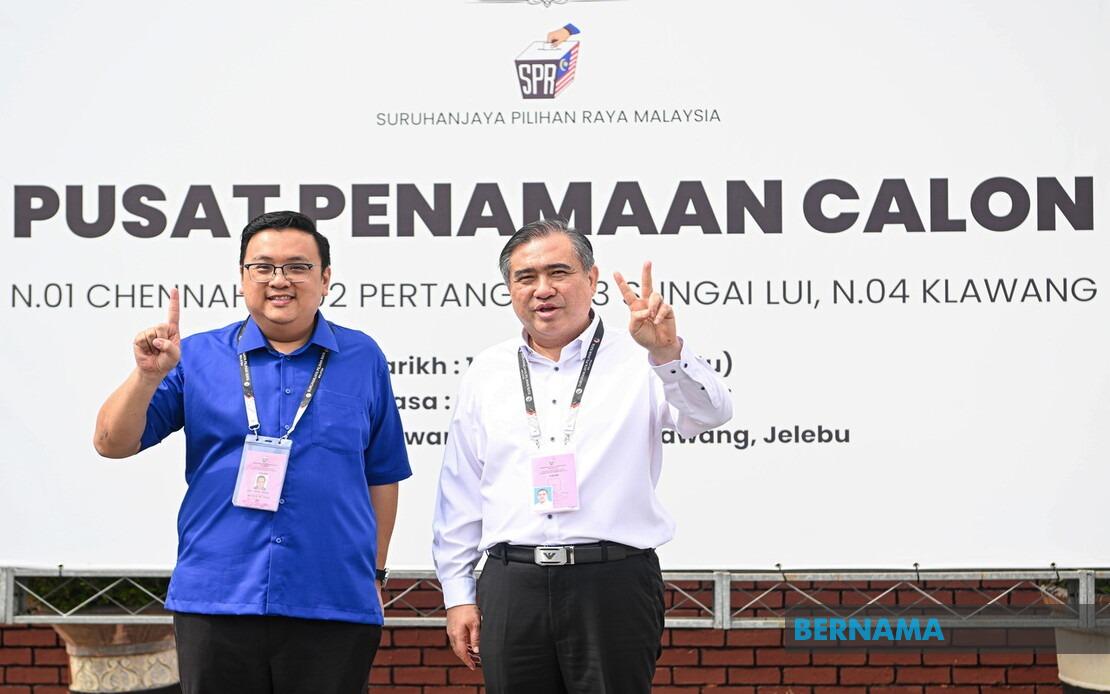
Among the high-profile straight fight contests, Transport Minister Anthony Loke, who holds the position of DAP secretary-general, will defend his Chennah seat against BN's Siow Kong Choon. The Rantau seat will witness another significant ministerial contest, with UMNO deputy president and Foreign Minister Datuk Seri Mohamad Hasan facing off against PH's Dr Azizul Hakim Mahdi. These contests pit senior federal ministers directly against each other, underscoring how state elections have become platforms for showcasing the country's top political talent and resolving internal rivalries within the broader national political framework.
The complexities intensify in three-cornered contests, where tactical voting and vote splitting assume far greater significance. Negeri Sembilan Menteri Besar Datuk Seri Aminuddin Harun of PKR will contest the Linggi seat not only against BN's Datuk Mohd Faizal Ramli but also against Bersatu's Zamri Md Said, creating a situation where PH's incumbent must navigate competing narratives from both the right-wing establishment and the Malay-Muslim-centric challenge from its former coalition partner. Similarly, the Pertang constituency will see UMNO's Datuk Seri Jalaluddin Alias battling Mohd Umry Abdul Khois of PH and Bersatu's Mohd Faizal Fadli Mohd Idrus, representing the kind of multi-sided competition that could reward either disciplined campaign execution or split opposition bases depending on ground dynamics.
Notable among these three-way contests is Klawang, where Perikatan Nasional candidate Danni Rais—son of veteran figure Tan Sri Rais Yatim—will challenge incumbent PH representative Datuk Bakri Sawir and Bersatu's Muhammad Adib Musa. This race exemplifies how family political legacies continue to shape Malaysian politics while simultaneously illustrating how new coalitions are providing platforms for political newcomers to make their mark at the state level.
Two constituencies will witness four-cornered contests, adding another layer of complexity to the electoral calculus. In Jeram Padang, incumbent BN's Datuk Mohd Zaidy Abdul Kadir faces challengers from PH's G. Manivannan, Bersatu's R. Sri Sanjeevan, and Parti Orang Asli Malaysia's Dayana Dal, reflecting how indigenous representation has emerged as a distinct political concern within certain constituencies. The Rahang seat presents a similarly crowded field with incumbent PH's Siaw Meow Keong competing against BN's Yap Siok Moy, Parti Sosialis Malaysia's S. Thinagaran, and Bersatu's Tang Jay San—a particularly unusual configuration given the presence of a socialist challenger on the ballot.
Most remarkably, two constituencies—Nilai and Sri Tanjung—will host five-cornered contests, a phenomenon entirely absent in the 2023 state election. The Nilai seat places incumbent PH's J. Arul Kumar against BN's Lai Chien Kong, Bersatu's Datuk V. Saravana Kumar, Berjasa's Zamani Ibrahim, and independent candidate Omar Mohd Isa. This unprecedented fragmentation creates a scenario where the victor might secure office with a plurality rather than majority support, fundamentally challenging traditional notions of electoral mandate. Similarly, Sri Tanjung's five-way race between incumbent PH's Datuk Dr G. Rajasekaran, BN's A. Achuthan, Bersatu's M. Leevineshwaraan, and independent candidates Datuk A. Saravanan and Islah Wahyudi Zainudin suggests that independent political aspirants are increasingly willing to contest state elections outside established party structures.
The rise of five-way contests carries significant implications for Malaysian democracy and governance. When voters are presented with five distinct options, the winning candidate's claim to represent constituent preferences becomes substantially weaker, potentially undermining the legitimacy of state assembly members and complicating coalition-building in the state legislature. This fragmentation could prove particularly consequential in Negeri Sembilan given that the state assembly's 36 seats provide a relatively slender margin for forming government, meaning even a handful of marginal seats decided by fractured opposition could determine which coalition controls the state.
Bersatu's emergence as a significant player across numerous constituencies reflects its strategic positioning as an alternative to both established coalitions. By contesting independently rather than as part of Perikatan Nasional in multiple seats, Bersatu is testing whether it can establish itself as a credible third force capable of competing effectively at the state level without formal coalition partnerships. The party's presence across the state creates genuine three-way and multi-way contests that would not exist if Bersatu were simply absorbed within PN's framework.
The electoral timeline provides a relatively compressed campaign period, with early voting scheduled for July 28 and polling day on August 1. Approximately 889,490 electors are eligible to vote, including 867,151 ordinary voters alongside 16,884 military personnel and their spouses, and 5,455 police officers. These numbers suggest that military and security force voting, while numerically modest, could potentially prove decisive in closely contested races, particularly in constituencies with significant military or police installations.
For Malaysia's broader political development, the Negeri Sembilan election serves as a barometer for voter sentiment regarding coalition politics and third-force alternatives. The dramatic shift from 27 straight fights to only 11 suggests that Malaysian voters have become increasingly willing to consider options beyond the dominant PH-BN binary, whether through supporting Bersatu, regional parties, socialist alternatives, indigenous representatives, or independent candidates. This evolution could reshape how political coalitions approach future elections, potentially forcing more ideological coherence or policy differentiation among competing blocs rather than relying simply on brand recognition and incumbent advantage.
The presence of multiple senior federal ministers contesting state seats underscores how state elections remain important proving grounds for national political figures and how state-level contests frequently function as referenda on national governments. When Transport Minister Loke, Foreign Minister Mohamad Hasan, and various state leaders participate directly in these races, they bring national politics into local constituencies while simultaneously subjecting their federal roles to grassroots electoral scrutiny. This intertwining of state and national politics makes Negeri Sembilan's August 1 contest particularly significant for understanding the current state of Malaysian electoral politics and the evolving preferences of the Malaysian electorate.

