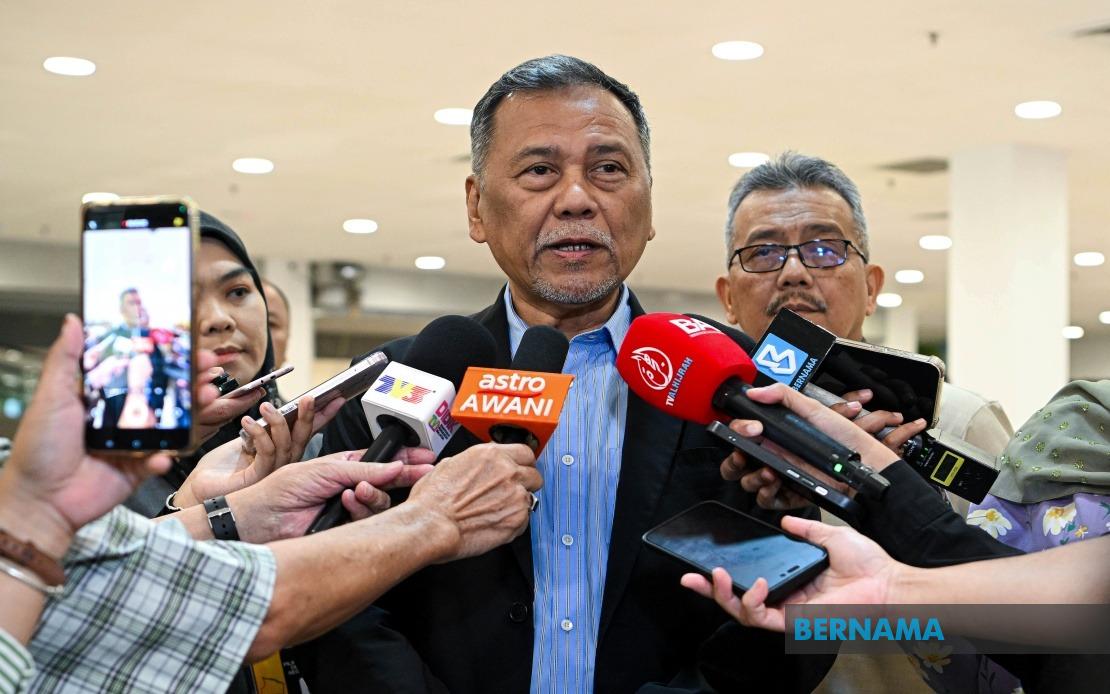
The Negeri Sembilan state election is moving toward its nomination phase with mixed early interest, as the Election Commission reported that 464 nomination forms have been distributed but only 70 candidates have formally committed by paying their required deposits. Election Commission chairman Datuk Seri Ramlan Harun made the disclosure in Seremban on July 17, emphasising that candidates wishing to contest should complete their deposit payments without delay to avoid last-minute complications during the formal nomination process scheduled for the following day.
The relatively low deposit confirmations—representing roughly 15% of forms sold—suggest either cautious participation or ongoing deliberation among potential candidates across Negeri Sembilan's 36 state constituencies. This pattern contrasts with previous elections in the region, where candidate interest often surges close to deadlines, creating administrative pressure on electoral authorities. Ramlan's appeal for early payments reflects practical concerns about managing the nomination logistics efficiently across multiple polling stations.
The Election Commission has substantially restructured its approach to managing nominations for this election compared to the recent Johor state polls. Rather than establishing nomination centres at each of the 36 state constituencies, Negeri Sembilan's process will operate through eight centralised nomination hubs aligned with parliamentary boundaries. This consolidated arrangement aims to reduce duplicative infrastructure and streamline coordination while maintaining accessibility across the state. The decision reflects lessons learned from previous electoral exercises and considerations of local geography and administrative efficiency.
Preparation efforts have been comprehensive, with full-scale rehearsals conducted across all nomination centres to identify potential operational issues before the actual process. A total of 761 Election Commission officers have been assigned to oversee proceedings at the eight centres, representing a substantial deployment intended to ensure smooth candidate registration and form processing. These preparations underscore the commission's commitment to delivering a well-organised electoral event despite the complexity of managing 36 constituencies simultaneously.
Security and decorum will be paramount during nomination day, with Ramlan explicitly cautioning political parties and their supporters to refrain from provocative behaviour that could compromise the process. Instructions to candidates emphasised arriving early to prevent congestion around nomination venues, while party representatives have been reminded of their obligations to observe electoral regulations and avoid common violations throughout the campaign period. These warnings signal the commission's determination to maintain professional standards throughout the election cycle.
The electoral environment encompasses 889,490 eligible voters based on rolls updated through June 4, 2026, distributing across ordinary voters, military personnel and their spouses, and police officers entitled to early voting. This voter base presents a substantial administrative challenge requiring meticulous voter registration management and appropriate polling infrastructure. Early voting has been scheduled for July 28, allowing defence and security personnel to participate before the general polling day on August 1.
Negeri Sembilan's political landscape underwent significant change following the dissolution of the State Legislative Assembly on June 5 after receiving consent from Tuanku Muhriz Tuanku Munawir. The 2023 election produced a coalition-dominated parliament where Pakatan Harapan secured 17 seats, providing clear majority control, while Barisan Nasional captured 14 seats and Perikatan Nasional won five. This configuration shapes expectations for the upcoming contest, as parties reassess their competitive positioning and campaign strategies.
For Malaysian observers and analysts, the Negeri Sembilan election serves as a significant mid-term assessment of coalition performance and federal-state political alignment. The state's relatively balanced demographic composition and competitive party presence make it a bellwether for broader national political trends. Strong showings by any coalition could signal momentum heading toward potential future federal contests or reflect shifting voter preferences across demographic and geographic divides within Peninsular Malaysia.
The nomination window represents the critical juncture where electoral competition becomes formally visible, with candidate selections reflecting party strategies and internal deliberations completed during the dissolution period. The pace of deposit confirmations may accelerate substantially as nomination day approaches, particularly once candidates finalise decisions after consultation with party leadership. Some constituencies may attract multiple candidates representing competing party factions or independent challengers, while others might see uncontested nominations depending on party coordination and candidate availability.
As nomination processes proceed, the Election Commission faces the responsibility of validating candidate qualifications, ensuring proper documentation, and managing the formal announcement of eligible contenders. These technical functions, while routine, carry significant implications for electoral legitimacy and public confidence. Any procedural irregularities or disputed nominations could generate controversy, making the commission's preparation investments and officer training particularly consequential for maintaining institutional credibility.

