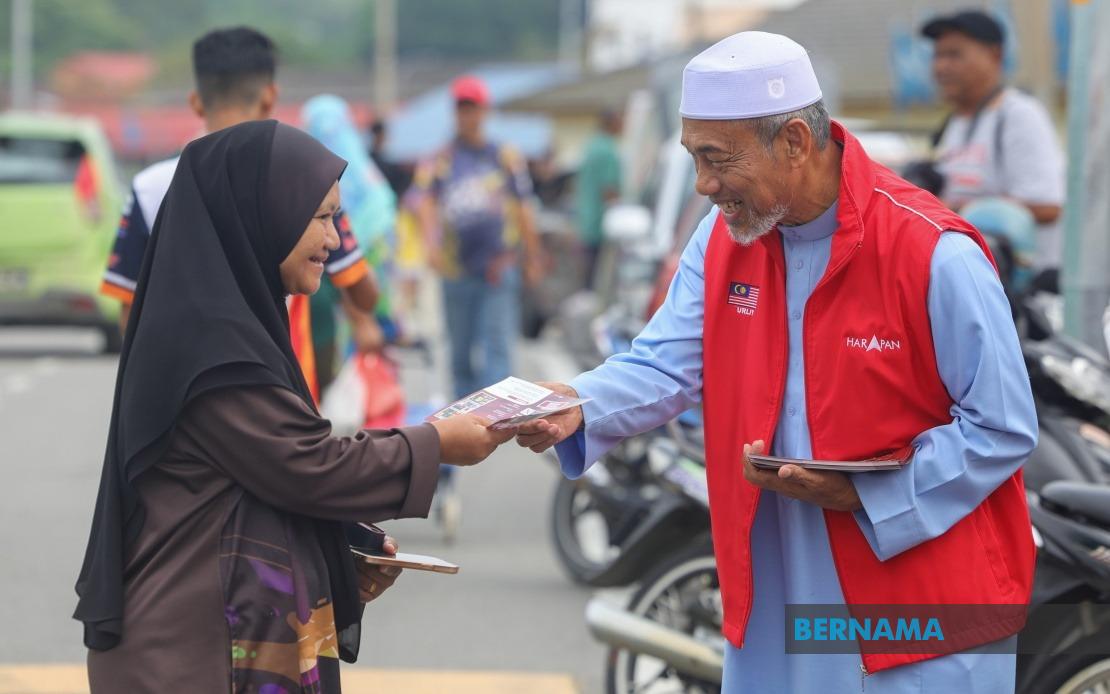
The 16th Negeri Sembilan State Election campaign entered its decisive phase on July 19 as contesting candidates substantially increased their voter outreach efforts, signalling the intensity of competition for the 36 state seats. Across constituencies, candidates are executing ambitious schedules featuring early morning community engagements, market walkabouts, and evening networking sessions designed to maximise personal contact with the electorate during the remaining twelve days before polling on August 1.
Menteri Besar Datuk Seri Aminuddin Harun, defending his Linggi state seat, exemplified the operational tempo now defining the campaign. Beginning his day with dawn prayers at Masjid Jamek Pasir Panjang, Aminuddin progressed through a series of residential areas including Pasir Panjang town, Taman Setia, and Taman Kekatong, conducting informal walkabouts and attending community sessions. The Pakatan Harapan incumbent also scheduled a dedicated outreach programme with members of the Indian community, reflecting deliberate efforts to engage diverse demographic groups within his constituency. This multi-location approach, repeated by numerous candidates across the state, reflects a strategic recognition that grassroots presence generates political capital in Malaysian state elections.
The scale of campaign intensity has become remarkable. Several contenders have organised up to nine separate programmes within a single day, fragmenting their schedules across morning market visits, midday community breakfasts, afternoon neighbourhood walkabouts, and evening dinner functions. This granular approach differs markedly from traditional campaigning and suggests candidates believe personal visibility and direct voter interaction remain decisive factors in competitive state races. For Aminuddin, a PKR vice-president and Negeri Sembilan Pakatan Harapan chairman, these engagements serve dual purposes: demonstrating incumbent performance while reinforcing party unity ahead of what polling analysts anticipate will be a closely contested election.
The opposition Barisan Nasional coalition has mounted similarly comprehensive ground operations. Datuk Seri Mohamad Hasan, the incumbent Rantau assemblyman and BN deputy chairman, spent campaign hours at the BN Polling District Centre in Mambau, underscoring efforts to consolidate support in traditionally favourable constituencies. UMNO representatives, including Negeri Sembilan UMNO Liaison Committee chairman Datuk Seri Jalaluddin Alias, have incorporated youth engagement through sports activities such as the Pertang constituency sepak takraw tournament, while simultaneously maintaining contact with indigenous communities through visits to Orang Asli settlements. This bifurcated strategy reflects BN's recognition that state elections require both energising core party supporters and broadening appeal among peripheral constituencies.
DAP's participation demonstrates the multiparty character of the Negeri Sembilan contest. Anthony Loke, the party's secretary-general defending the Chennah state seat, commenced his campaign phase with a morning market walkabout at Seremban Central Market before transitioning to evening engagement programmes. Market venues, which concentrate significant voter populations within accessible spaces, have become prioritised stops across candidates' schedules. These informal settings permit extended conversations about local grievances, service delivery failures, and community aspirations in ways that formal political rallies cannot accommodate.
Pakatan Harapan candidates have particularly emphasised grassroots accessibility. Kamarul Ariffin Wafa, contesting the Seri Menanti seat, structured his campaign around eight separate programmes including market interactions and residential area visitations around Tanjong Ipoh. Similarly, Yaacob Mahmood, the PH candidate for Serting, adopted informal engagement methodologies involving breakfast sessions with Felda Raja Alias 3 residents and business district walkarounds in Bandar Seri Jempol. Such candidates explicitly framed these activities as deliberate strategies to facilitate direct community dialogue in relaxed environments where residents feel comfortable discussing local concerns without the formality of structured political events.
The electoral context underlying this campaign intensity remains significant for Malaysian politics. The Negeri Sembilan State Legislative Assembly's dissolution on June 5 triggered this competition for 36 seats, with the Election Commission designating August 1 as polling day and July 28 for early voting. The electorate comprises 889,490 registered voters, including 867,151 ordinary voters alongside 16,884 military personnel and their spouses, and 5,455 police officers eligible for early ballot casting. This substantial voter population requires proportionate campaign resources and personal candidate engagement to influence voting behaviour effectively.
The intensification of ground-level campaign activity reflects evolving Malaysian electoral dynamics whereby state contests have assumed greater political significance. Negeri Sembilan's election will provide important indicators regarding voter sentiment toward both Pakatan Harapan's governance record and Barisan Nasional's efforts to rebuild electoral credibility following consecutive federal election losses. The state has become a proving ground for coalition strategies, with each party testing messaging and organisational approaches that will inform future campaigns at federal and other state levels. Candidates' emphasis on direct voter engagement suggests political operatives believe that traditional grassroots methods remain effective despite digital campaign innovations.
Candidates across competing coalitions have recognised that the compressed twelve-day campaign timeline necessitates exceptional operational efficiency and resource deployment. Morning market visits capture voters during shopping hours when engagement receptivity peaks, while evening programmes accommodate working-class residents unable to attend daytime events. This temporal strategy maximises coverage across different voter schedules and occupational categories. The proliferation of nine-programme campaign days, while potentially exhausting for candidates, demonstrates commitment to saturation-style presence within constituencies that contemporary political competition increasingly demands.

