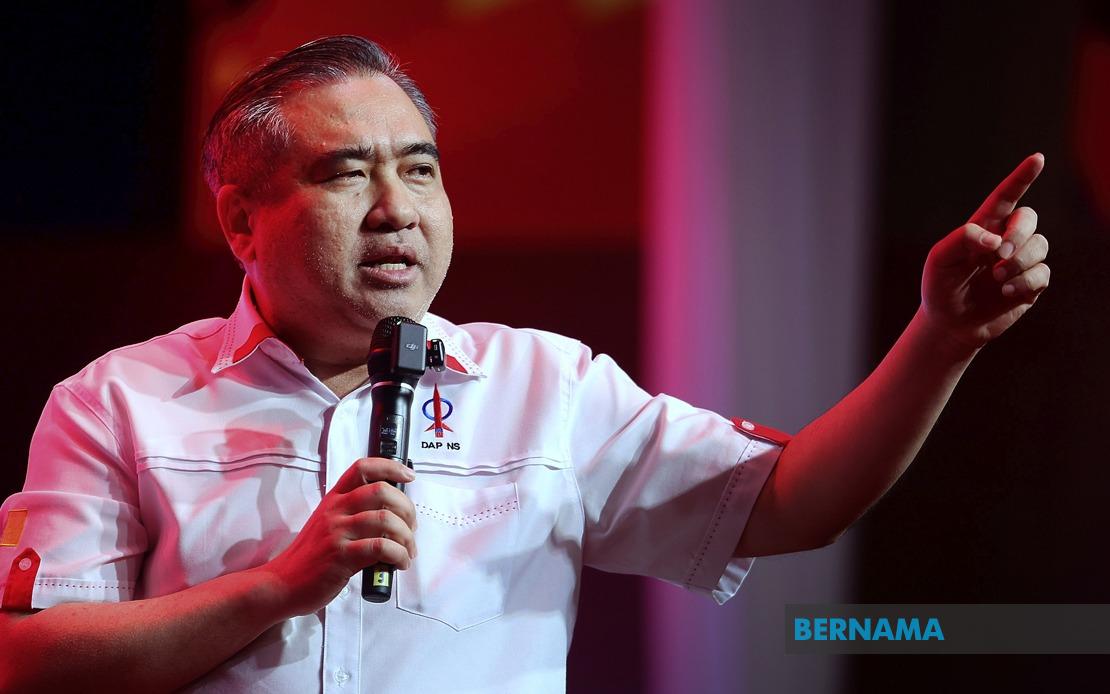
Democratic Action Party secretary-general Anthony Loke has called for the 16th Negeri Sembilan state election campaign to prioritise substantive policy discussions over personal attacks, signalling a commitment to maintaining civility in the lead-up to voting. Speaking in Seremban after a Pakatan Harapan dinner event, the Transport Minister explained that constructive campaigning focused on what parties can deliver to constituents serves voters better than adversarial rhetoric targeting individual politicians.
Loke's position reflects a broader discipline he has imposed on his own campaign strategy, which deliberately steers clear of attacking any Cabinet colleague or federal government representative. This self-imposed restraint stems partly from his weekly interactions with other ministers in Cabinet meetings, where collaborative governance demands a baseline of professional respect despite partisan differences. The approach underscores the delicate balance required within Malaysia's Unity Government, where coalition partners representing different political traditions must work together on national governance whilst competing at the state level.
The Transport Minister's stance aligns closely with guidance issued by Prime Minister Datuk Seri Anwar Ibrahim, who has explicitly advised government office-holders to maintain discipline and refrain from attacking the Federal Government during state election campaigns. This directive reflects concerns about the potential destabilisation that could occur if coalition partners weaponise government functions against one another, particularly when multiple levels of administration are simultaneously in campaign mode. Loke's endorsement of this principle publicly reinforces the PM's message and signals DAP's commitment to preserving the coalition's cohesion.
Notably, Loke has extended this restraint to his handling of the Rantau state constituency, where Foreign Minister and Barisan Nasional deputy chairman Datuk Seri Mohamad Hasan is standing. Despite Rantau falling within Loke's parliamentary base of Port Klang and being a seat of strategic importance, he has deliberately chosen not to campaign there. This decision prioritises inter-coalition harmony over potential electoral gains, demonstrating the practical constraints that the Unity Government framework imposes on individual politicians and their parties.
Instead, Loke's campaign efforts are concentrated on Chennah, the seat he is contesting personally, and other constituencies where DAP candidates are running. He has also committed campaign resources to supporting Menteri Besar Datuk Seri Aminuddin Harun's re-election bid in the Linggi seat, further anchoring his efforts within collaborative structures. This focused deployment of campaign energy reflects both strategic choice and the political logic of coalition warfare, where demonstrating loyalty to alliance partners can yield medium-term dividends beyond any single election cycle.
Regarding perceptions that his ministerial responsibilities have distracted him from constituency work, Loke has pushed back against suggestions that Chennah residents have been neglected. Instead, he has reframed his Cabinet position as an asset to his constituency, arguing that ministerial status provides him with additional leverage to secure federal resources and development allocations. He highlighted Kampung MADANI project funding channelled to Chennah as a tangible example of how his portfolio translates into localised benefits.
Beyond such resource allocation arguments, Loke has emphasised his infrastructure of constituency service, noting that a dedicated full-time team operates independently of his ministerial schedule. This separation of duties—between his Cabinet work and on-the-ground constituency management—attempts to address a common criticism levelled at senior politicians who hold both ministerial and elected representative positions simultaneously. The existence of a capable support structure potentially mitigates concerns about accessibility or responsiveness during periods when the minister is absorbed by federal business.
For Malaysian voters and political observers, this election illustrates how the Unity Government's internal mechanics function at the state level. The Negeri Sembilan contest provides a case study in negotiated competition, where coalition partners must simultaneously campaign against external opponents whilst maintaining sufficient internal harmony to govern together at the federal level. This dynamic constrains the tactics available to politicians and creates incentive structures favouring policy-focused rather than personality-driven campaigning.
The timing of the election also carries implications for the broader political landscape. Early voting is scheduled for July 28, with the main polling day set for August 1, giving voters a fortnight to assess the competing visions presented by Pakatan Harapan, Barisan Nasional, and other contesting parties. The emphasis on policy offerings rather than personal attacks may provide Negeri Sembilan voters with a comparatively substantive campaign focused on development priorities, governance performance, and future resource allocation.
Loke's approach reflects a maturing phase in Malaysian coalition politics, where the practical necessity of multi-party governance imposes real costs on combative campaigning. As the largest political alliance Malaysia has assembled in recent years, the Unity Government faces ongoing pressure to demonstrate that competitive electoral politics and collaborative governance can coexist. Elections like Negeri Sembilan's test whether parties can mount serious campaigns whilst respecting the institutional constraints that coalition participation entails, setting precedents for how Malaysian politics might function in an era of coalition-based rather than single-party dominance.

