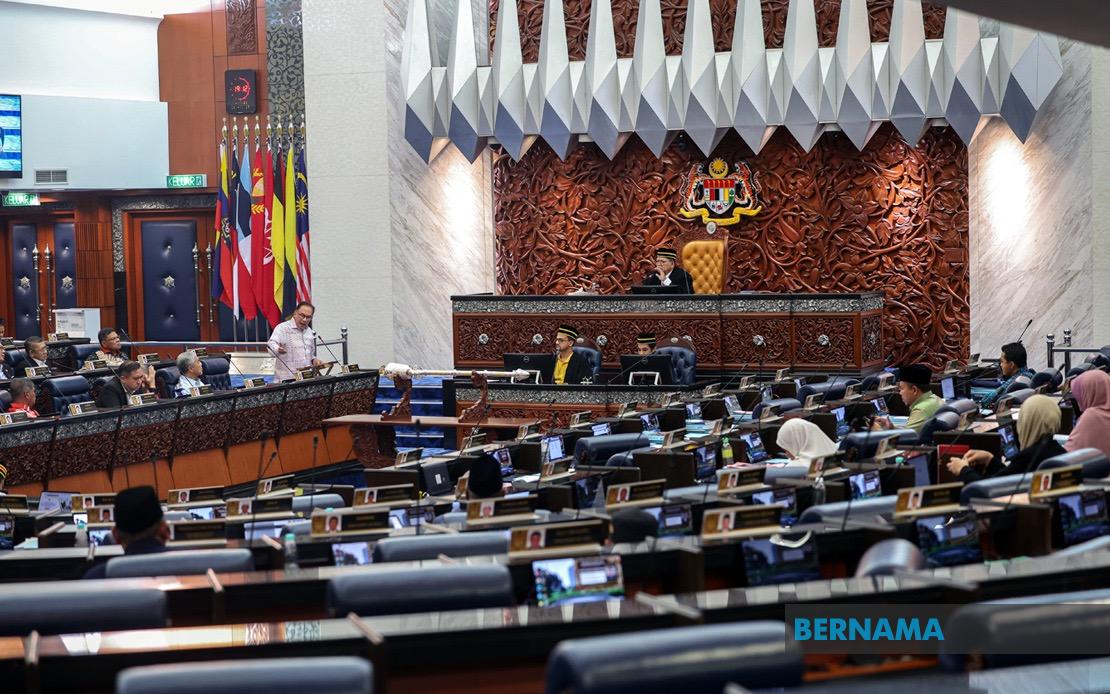
Malaysia's People's Income Initiative (IPR) has extended support to 7,787 households since its launch nearly three years ago, marking a significant milestone in the government's ongoing effort to combat poverty and improve living standards across the nation. The Economy Ministry's latest figures, revealed in parliament this week, indicate the programme is delivering measurable results in addressing food insecurity and reducing the financial strain on vulnerable families.
The IPR was conceived as a complementary measure working alongside existing poverty alleviation schemes, with a three-pronged approach targeting the most pressing challenges facing low-income Malaysians. Beyond simply transferring income, the initiative seeks to strengthen food security by ensuring households have reliable access to nutrition, generate sustainable employment opportunities that build long-term economic resilience, and provide immediate relief from the mounting cost-of-living pressures that continue to strain household budgets. This comprehensive framework reflects recognition that poverty cannot be tackled through income transfers alone—sustainable improvement requires addressing the underlying structural factors that perpetuate economic vulnerability.
One of the most encouraging outcomes documented by the ministry is that several programme participants have successfully crossed the threshold into higher income brackets, with earnings now exceeding RM2,000 monthly. This figure is particularly significant given Malaysia's cost-of-living context, as households at this income level can typically cover basic necessities whilst building modest savings. The achievement suggests the IPR is not merely providing temporary relief but enabling genuine economic mobility for beneficiaries, though the exact mechanisms enabling this income growth—whether through business assistance, skills training, or employment placement—remain unclear from the ministry's statement.
The parliamentary response, delivered to Wan Ahmad Fayhsal Wan Ahmad Kamal from Machang, characterised the three-year track record as yielding "highly encouraging response and impressive results." This positive assessment aligns with broader government rhetoric around poverty reduction, though independent verification of these claims and more granular data on programme outcomes would help establish a clearer picture of actual impact. Questions remain about retention rates, whether beneficiaries maintain improved income levels after exiting the programme, and how the 7,787 households compare to the total eligible population.
Beyond the IPR itself, the ministry's response touched on a complementary governmental infrastructure—the Main Data Base (PADU)—which is reshaping how Malaysia targets and delivers social assistance. PADU serves as a centralised repository of citizen information, enabling coordinated policy implementation across government agencies. As of June 2026, the system has achieved significant integration depth, with 204 agencies actively participating in continuous data sharing arrangements. This represents substantial progress in breaking down traditional information silos that have historically hampered the efficiency of poverty-targeted programmes.
The data integration framework has already yielded concrete policy applications. The ministry confirmed that 27 separate data-sharing initiatives from government agencies have received formal approval for operational implementation. These approved applications span multiple objectives: delivering programmes and policies with enhanced precision, advancing citizens' overall wellbeing through better service coordination, modernising service delivery through digital innovation, and supporting academic and research institutions in understanding poverty dynamics. The breadth of these applications suggests PADU is becoming fundamental infrastructure for Malaysian governance.
The integration of PADU with the IPR programme exemplifies how data infrastructure and direct assistance mechanisms can operate in tandem. Rather than relying on self-reporting or outdated administrative records, the system can theoretically identify eligible households with greater accuracy and reduce administrative overhead. This technological approach to poverty reduction represents a shift from traditional bureaucratic processes, though questions persist about data privacy, algorithmic bias, and whether digital systems adequately capture the complex, multidimensional nature of poverty in Malaysian society.
For Malaysian policymakers, the three-year IPR results offer both validation and challenge. The validation comes from demonstrating that a structured, targeted initiative can reach thousands of households and facilitate income improvements. The challenge lies in scaling this success. With approximately 5.2 per cent of Malaysia's population living below the official poverty line—roughly 1.7 million people—the current 7,787 households represent only a fraction of the eligible beneficiary pool. Significant expansion would require substantially increased budgetary allocation and operational capacity.
Regionally, Malaysia's experience with the IPR and PADU merits attention from neighbouring Southeast Asian nations grappling with similar poverty challenges. The programme demonstrates that technology-enabled targeting, combined with direct income support and employment facilitation, can produce measurable results. However, the Malaysian experience also highlights the critical importance of ongoing programme evaluation and transparent reporting to maintain public confidence and inform necessary refinements.
Looking forward, the ministry's emphasis on "nearly three years" of implementation suggests that formal programme evaluation may be imminent. Such evaluation should examine not only the number of beneficiaries but also the sustainability of income improvements, the cost-effectiveness of different programme components, and whether the initiative is reaching the most vulnerable segments of society or primarily those closest to escaping poverty. Enhanced transparency regarding detailed programme outcomes would strengthen public discourse around poverty reduction strategy and help identify best practices worthy of replication across other assistance programmes.

