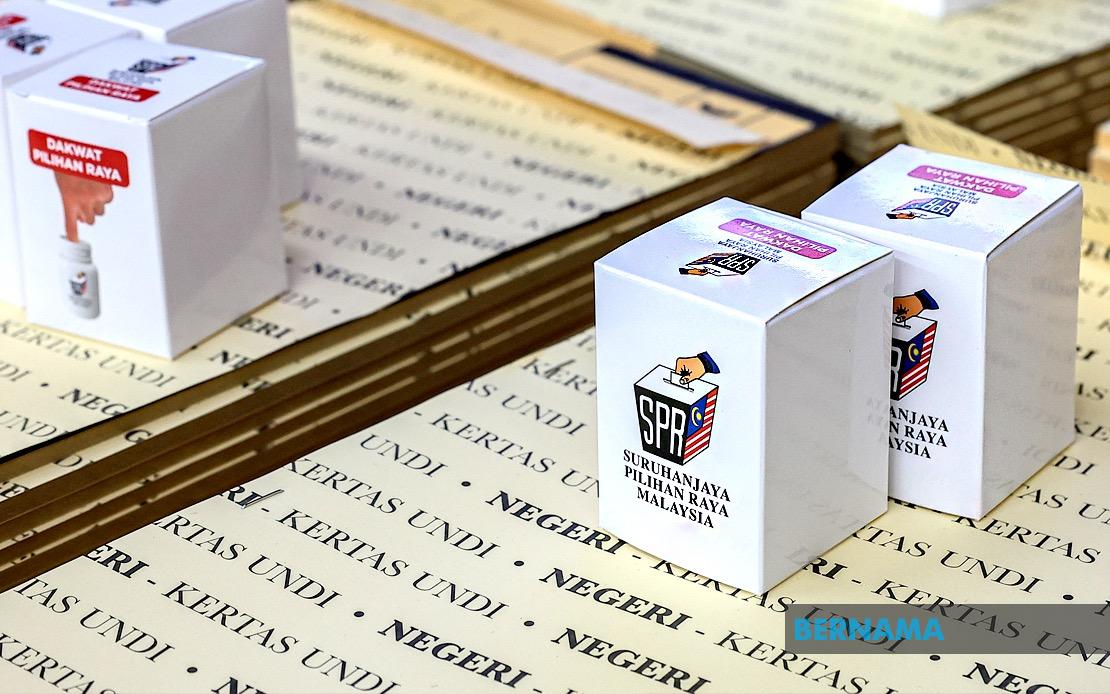
The 16th Johor State Election is moving into its final stage with preparations underway for early voting, as authorities prepare to accommodate 24,751 eligible voters casting ballots at designated centres across the state. This substantial contingent comprises uniformed personnel and their immediate family members, reflecting a structured approach to ensuring comprehensive participation from the security forces ahead of the main election scheduled for Saturday, July 11.
The early voting arrangement reflects established practice in Malaysian elections where military and police personnel, often deployed across dispersed locations or bound by operational duties, receive dedicated polling opportunities prior to the general voting day. The 24,751 early voters are split between military and civilian security personnel: 12,041 from the armed forces including spouses, and 12,710 from the police service alongside their partners. This division underscores the systematic categorization employed by election authorities to manage logistics and maintain security during the voting process.
The polling infrastructure for this early voting phase is substantial, with 64 centres distributed throughout Johor. The spatial arrangement comprises 53 dedicated centres for police personnel and their spouses, alongside 11 facilities designated for military voters. All these centres will open concurrently at 8 in the morning, a synchronized start designed to minimize coordination challenges and ensure consistent procedural application across all locations. This staggered early voting mechanism serves multiple administrative objectives: it reduces congestion at main polling stations, provides dedicated security for sensitive voting processes, and acknowledges the operational constraints facing uniformed services.
Within the police voting contingent, the breakdown between in-person and postal voting reveals operational considerations. Of the 12,067 police personnel and spouses expected to participate, 12,067 will vote directly at their respective polling centres, demonstrating a strong preference for direct participation. However, 643 individuals will exercise the postal voting option, likely reflecting postings or operational demands that create geographical distance from designated voting locations. This dual mechanism ensures that even personnel unable to physically attend their assigned centre can still exercise their franchise.
Securing the early voting process requires substantial deployment of uniformed personnel. The police have allocated 3,565 officers and civilian staff to oversee operations at these 64 centres. This workforce comprises 647 commissioned officers, 2,806 rank-and-file personnel, and 112 civilian support staff. Their responsibilities extend well beyond simple ballot supervision, encompassing multiple layers of security and operational management. Duties include controlling access to polling centres, escorting ballot boxes during transport, managing traffic flow around voting facilities, conducting crime-prevention patrols in surrounding areas, staffing centralized operations rooms coordinated with headquarters, and maintaining law enforcement presence across all affected zones.
The operational tempo varies significantly across the 64 centres, reflected in their staggered closing times. Rather than a uniform closing schedule, authorities have calibrated shutdown times between noon and 6 in the evening, reflecting the actual voter numbers registered at each facility. Smaller centres with minimal voter rolls—between six and 28 registered early voters—will close at midday. Examples include Buloh Kasap Police Station in Segamat, Tenang Police Station in Labis, and Bandar Penawar Police Station. This graduated approach optimizes resource allocation by not requiring staff to remain stationed at centres with minimal remaining voters.
Conversely, larger urban centres anticipate substantially heavier voter turnout. The Federal Reserve Unit Hall Number 2 located at Johor Police Headquarters, serving the Stulang state constituency, represents the largest police early voting centre with 1,338 registered voters. This venue will naturally require extended staffing and operational readiness given the volume of ballots it must process. The second-largest facility is the KEMAS Preschool at the 6th General Operations Force Battalion in Bakri, designated for the Bukit Naning state constituency, accommodating 927 voters. These high-capacity centres illustrate how election authorities concentrate infrastructure where demand is concentrated, ensuring efficiency while maintaining security protocols.
Weather considerations add another layer of contingency planning for these early voting arrangements. The Malaysian Meteorological Department has issued forecasts indicating morning rainfall expected across the Batu Pahat, Muar, Pontian, and Tangkak districts. The remainder of Johor state is forecast to experience fair weather. These weather predictions carry practical implications for voter accessibility, particularly in rural areas where road conditions may deteriorate with precipitation, and for the movement of polling staff and security personnel between centres and their bases.
The broader electoral context encompasses 56 state constituency seats with 172 candidates in total contention. This represents a competitive field with an average of approximately 3.1 candidates per seat, indicating vigorous three-way or multi-candidate contests in most constituencies. The early voting mechanism is therefore a critical component of a larger electoral exercise involving the entire Johor electorate, with these 24,751 early voters representing a significant but ultimately minority portion of total eligible participants. The state election assumes particular importance within Malaysian politics given Johor's economic significance, established political traditions, and its role as a bellwether state in understanding evolving voter sentiment within the peninsula.
The coordination required for this early voting exercise demonstrates the substantial administrative machinery mobilized for contemporary Malaysian elections. From accommodation of constitutional provisions regarding security force participation, through logistics coordination across 64 geographically dispersed facilities, to real-time security management and weather contingency planning, the mechanisms reflect institutional experience accumulated across multiple electoral cycles. The emphasis on security protocols—reflecting both the sensitive nature of military and police voting and broader election integrity imperatives—underscores the seriousness with which Malaysian authorities approach electoral administration despite occasional controversies.

