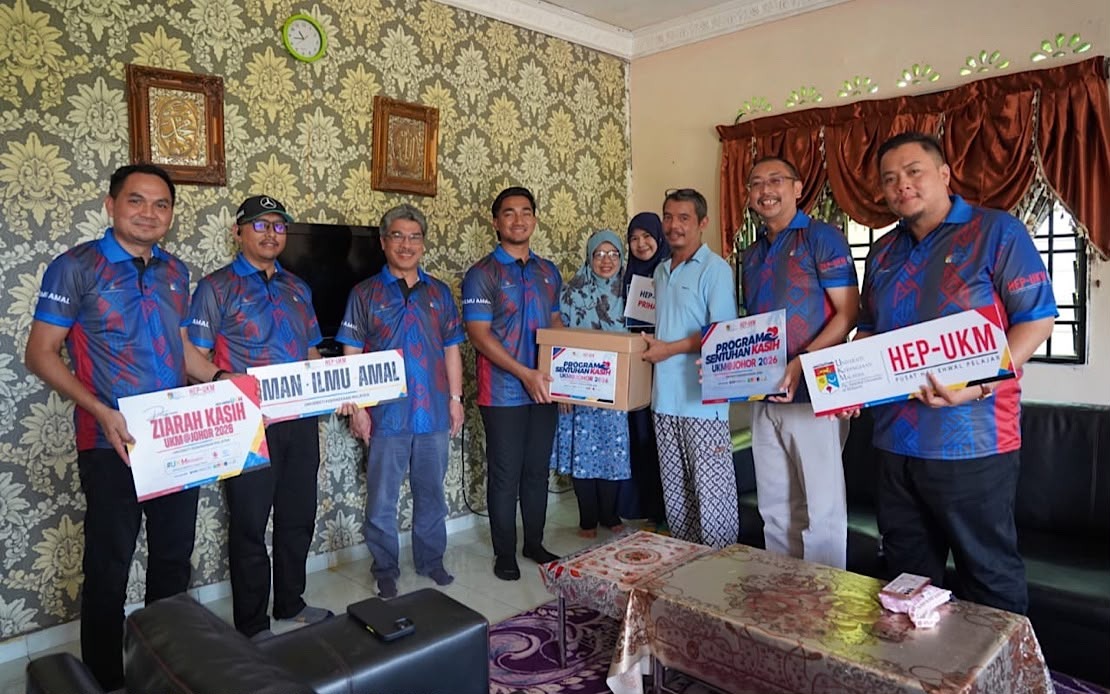
Universiti Kebangsaan Malaysia (UKM) has deepened its connection with the Johor community through an ambitious outreach initiative that mobilised nearly 1,000 local residents across multiple districts. The Sentuhan Kasih UKM@Johor programme, executed over a weekend in late June, demonstrated how higher education institutions can extend their social responsibility mandate beyond academic walls. Working through its Student Affairs Centre, UKM deployed 78 student volunteers across Kota Masai in Pasir Gudang, Kampung Baru Sri Aman, and Taman Jaringan in Skudai, transforming the university's engagement model into tangible community benefit. The scale of participation underscores growing awareness among Johor residents of UKM's presence and commitment to regional development.
The programme operated under the banner "Dari Kampus ke Komuniti, Menyebar Kasih dan Bakti," a philosophy that repositions universities as active participants in society rather than isolated intellectual enclaves. This framing resonates particularly in Malaysia, where government institutions increasingly face expectations to justify their public funding through direct community impact. The activities encompassed multiple dimensions of social welfare: residents engaged in organised gotong-royong cleanup initiatives, received mental health screening—an often-neglected service in rural and industrial areas—and participated in recreational sports. These varied interventions reflect a holistic understanding of community needs that extends beyond traditional charity models. The inclusion of "ziarah kasih" courtesy visits, rooted in Malaysian cultural values of respect and familial connection, suggests careful adaptation of the programme to local sensibilities rather than importing generic international models.
Associate Professor Dr Darfizzi Derawi, who directs both the Student Affairs Centre and chairs the Sentuhan Kasih initiative, articulated a vision of universities as incubators of social consciousness. His argument that classroom learning alone cannot develop the adaptability, communication skills, and cultural competence required in contemporary workplaces reflects growing discourse about the inadequacy of purely technical education. For Malaysian employers increasingly concerned with workforce soft skills, this institutional focus on experiential learning carries significant implications. Students gain exposure to real-world complexity—understanding how to communicate across socioeconomic divides, manage group dynamics in unfamiliar settings, and respond to community concerns with genuine empathy. This embedded learning complements formal curriculum and produces graduates with practical experience in navigating diverse Malaysian society, an advantage in a multicultural employment landscape.
The decision to expand Sentuhan Kasih periodically to other states signals UKM's strategic ambition to establish itself as a national institution with tangible regional footprints. Rather than concentrating resources in its Bangi campus vicinity, this dispersed model allows the university to build relationships and institutional awareness across Malaysia. For Johor specifically, an economically significant state hosting major industrial zones and investment corridors, UKM's presence carries symbolic weight in demonstrating that premier research universities invest in non-metropolitan communities. Such initiatives can influence student recruitment patterns, strengthen alumni networks in underserved regions, and position UKM as responsive to national development priorities that extend beyond Klang Valley concentration.
Herman Ismadi Ismail, a community leader in Kota Delima Zone, acknowledged the programme's value in introducing residents to UKM's institutional ecosystem and available opportunities. His observation that approximately 80 per cent of local workers are employed in industrial sectors, often rendering weekend availability constrained, adds important context. The strong participation despite these scheduling challenges suggests that residents perceived genuine value in the engagement rather than viewing it as perfunctory. This distinction matters: community programmes that feel authentic generate social capital and goodwill, whereas those perceived as performative often breed cynicism. The fact that industrial workers—often younger, upwardly mobile families—attended indicates that UKM successfully communicated relevance to their aspirations, whether through scholarship information, student mentoring opportunities, or simply the experience of institutional recognition.
Beyond the primary outreach activities, UKM's conduct of direct welfare visits to seven families of enrolled students across Tiram and Puteri Wangsa areas reveals another layer of institutional responsibility. This dimension transforms the programme from purely community-directed service into integrated student support. By visiting family homes, university representatives gain insights into domestic circumstances affecting student performance and well-being. For students from lower-income backgrounds, such institutional attention signals that the university values them as whole persons rather than merely academic inputs. In the Malaysian context, where family circumstances heavily influence educational outcomes and student retention, this pastoral dimension carries practical weight beyond symbolic gestures.
Vice-Chancellor Prof Datuk Dr Sufian Jusoh's framing of such initiatives as investments in holistic human capital development reflects contemporary understanding of university missions. His explicit commitment to student welfare alongside academic excellence acknowledges that high-performing graduates emerging from financial or personal crisis contexts often struggle to translate credentials into sustained professional achievement. By providing comprehensive support—extending beyond tuition subsidies into emotional, mental health, and family welfare domains—UKM positions itself as genuinely concerned with student trajectory rather than merely degree conferment. This approach aligns with employer feedback suggesting that emotional stability, resilience, and support networks significantly influence workplace performance and retention. Universities investing in these dimensions effectively improve employability outcomes for their graduates.
The programme's emphasis on mental health screening addresses a critical gap in Malaysian health infrastructure, particularly in industrial and working-class communities where stigma around mental health remains substantial. University-led screening, conducted by trained students under professional supervision, lowers barriers to initial assessment and creates pathways to proper care. Given Malaysia's documented challenges with mental health service accessibility and awareness, particularly outside urban centres, such preventive outreach contributes to broader public health objectives. For Johor specifically, where rapid industrialisation creates workplace stress and family displacement, such screening programmes serve regional health security functions that extend well beyond institutional promotional benefits.
The timing and visibility of Higher Education Minister Datuk Seri Dr Zambry Abd Kadir's attendance signifies governmental endorsement of UKM's community engagement model. Ministerial presence at such events typically indicates alignment with national higher education policy priorities. Malaysia's educational leadership has increasingly emphasised university responsibility for social outcomes, nation-building, and inclusive development. UKM's Sentuhan Kasih programme exemplifies this expectation, demonstrating how major institutions translate policy directives into operational reality. The minister's participation also provides official legitimacy to student volunteers, reinforcing the notion that community service constitutes honourable national contribution rather than peripheral activity.
The programme's cultural framing through Malay terminology and values—gotong-royong, ziarah kasih, and the emphasis on spreading "love and service"—grounds the initiative in Malaysian ethical frameworks rather than importing Western volunteerism models wholesale. This localisation matters for authentic community reception and for developing among student participants a sense that serving Malaysian society reflects indigenous values rather than imported social work theory. Such grounding strengthens the educational impact for student volunteers, who learn that social responsibility emerges from Malaysian cultural traditions rather than external pressure or international standards compliance.
As Malaysia navigates post-pandemic recovery and regional competition for talent and investment, the visibility of major universities engaging substantively with communities carries strategic significance. Johor's position as Malaysia's southern economic corridor, hosting critical infrastructure and attracting international investment, makes UKM's regional presence increasingly relevant. Community programmes that build institutional legitimacy and understanding across socioeconomic strata contribute to the social stability and workforce quality that foreign investors evaluate when assessing state attractiveness. In this context, Sentuhan Kasih functions simultaneously as genuine community service, student development initiative, institutional reputation-building, and regional economic strategy.
The expansion plans signalled by programme leadership suggest UKM views this model as replicable and scalable across Malaysia's diverse contexts. Success in Johor—demonstrated through participation numbers and community leader testimonials—provides proof of concept for similar initiatives in other states. Such scaling requires careful attention to local contexts, partnerships with state governments and community organisations, and adaptation of activities to regional circumstances. If executed thoughtfully, nationwide expansion could position UKM as the nation's most community-engaged research university, differentiating it institutionally while generating measurable social benefit. This trajectory would reflect an evolving understanding of higher education's societal obligations in a developing democracy, where elite institutions increasingly face expectations to demonstrate impact beyond graduate employment and academic research metrics.

