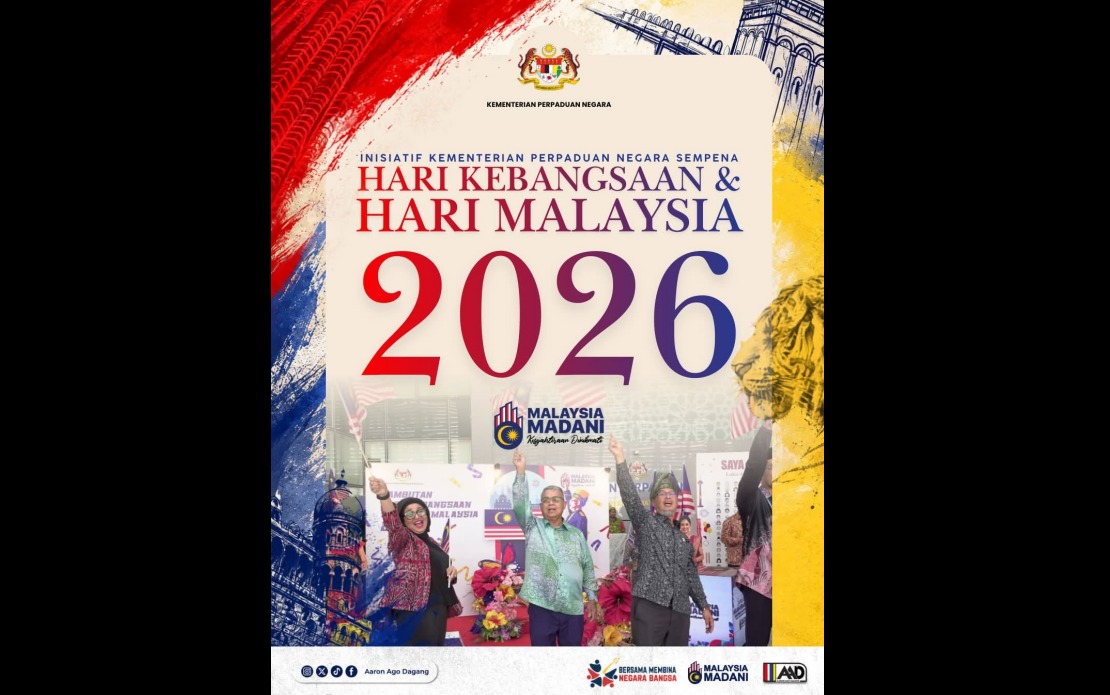
The National Unity Ministry (KPN) has unveiled an ambitious slate of 11 initiatives designed to deepen Malaysia's civic consciousness and strengthen bonds of nationhood as the country prepares for its 2026 National Day and Malaysia Day festivities. Minister Datuk Aaron Ago Dagang articulated the ministry's vision through these interconnected programmes, which collectively aim to reinvigorate patriotic sentiment while honouring the nation's multifaceted identity across ethnic, religious, cultural and regional lines.
Central to the ministry's strategy is the 2026 National Unity Integration Movement, which will serve as an overarching framework for the year's celebrations. This flagship initiative represents KPN's institutional commitment to transforming abstract concepts of nationhood into tangible community engagement. Alongside this anchor programme, the ministry will introduce Malaysia's Merdeka Children Celebration, a family-oriented event designed to instill national consciousness among younger generations who will inherit custodianship of the nation's values and social compact.
Historical remembrance constitutes another significant pillar of the ministry's approach. An Exhibition on Independence will provide Malaysians with structured opportunities to engage with the nation's foundational moment, whilst a dedicated programme honouring Tun Abdul Razak will underscore the formative role of early national leadership in establishing institutional frameworks and guiding principles. These historical dimensions serve a critical purpose: they ground contemporary unity discourse in tangible historical narrative, moving beyond abstract appeals to patriotism by demonstrating how shared history can bind disparate communities.
Cultural and sporting dimensions feature prominently in the initiative roster. The Pesta Bola Merdeka Exhibition represents recognition that sport functions as a powerful vehicle for national sentiment and cross-community participation. Malaysians have long viewed football as a unifying force transcending ethnic and class boundaries, making this exhibition a strategically astute choice for engaging diverse demographic segments. The Night at the Museum programme similarly leverages cultural institutions as spaces for collective reflection and shared understanding of national narrative.
The Rukun Negara Oratory Competition rounds out the announced initiatives, targeting youth and emphasizing rhetorical articulation of national principles. This programme acknowledges that articulating and debating the nation's foundational pillars—monarchy, Islam, the Constitution, the rule of law and parliamentary democracy—remains essential for building informed citizenship. By creating platforms for young Malaysians to engage in structured discourse about these principles, KPN positions oratory as a form of civic participation.
Datuk Aaron's statement reflects a deliberate theoretical framework underpinning the ministry's work. The emphasis on strengthening national identity whilst embracing Malaysia's diversity acknowledges a central tension in plural societies: how to build overarching national consciousness without suppressing legitimate expressions of communal identity. This approach attempts to move beyond zero-sum thinking where unity paradoxically demands uniformity, instead proposing that appreciation of the nation's ethnic, religious and cultural pluralism forms the substantive basis for patriotic commitment.
The 2026 timeline carries particular significance within Malaysia's political and social calendar. As the nation approaches its seventh decade of independence, there exists heightened opportunity to reflect on whether founding promises of inclusive governance and intercommunal harmony have been realized or require renewed commitment. These programmes effectively position 2026 as a pivotal moment for national stocktaking and recommitment to founding ideals. The selection of initiatives suggests the ministry views patriotism not as static nostalgia but as active engagement with historical learning and contemporary nation-building challenges.
For Malaysian civil society organizations, educational institutions and community groups, these ministry-initiated programmes present collaborative opportunities. The mention that further information remains available through the ministry's Facebook page indicates KPN's attempt to harness digital platforms for broader public engagement, reflecting recognition that traditional media channels alone cannot adequately reach diverse demographic segments. This digital-first approach suggests the ministry understands contemporary citizenship formation increasingly occurs through online communities and social networks.
The programmes also carry implications for Malaysia's regional positioning. As Southeast Asian nations grapple with questions of national cohesion amid globalization, migration and transnational ideological currents, Malaysia's deliberate efforts to strengthen national consciousness through structured cultural and educational initiatives offer potential models. Neighbouring countries facing similar plural-society governance challenges may observe how Malaysia approaches the delicate balance between fostering national identity and respecting ethnic and religious diversity.
Critically, the success of these initiatives will depend substantially on implementation quality and inclusive participation mechanisms. Programmes announced at ministerial level require sustained resourcing, institutional coordination across government agencies, and genuine grassroots engagement rather than top-down messaging. The degree to which diverse communities—particularly youth from various ethnic and religious backgrounds—participate authentically in these programmes will determine whether they generate meaningful collective consciousness or remain ceremonial exercises.
The ministry's framing emphasizes that patriotism grounded in historical understanding, constitutional principles and cultural appreciation provides more durable foundations for national cohesion than appeals to abstract nationalism. By creating multiple entry points for citizen participation—whether through sporting events, museum visits, historical exhibitions or oratory—KPN acknowledges that national consciousness formation operates through diverse cognitive and emotional pathways. This pluralistic approach to nation-building represents sophisticated understanding of how societies maintain coherence amid heterogeneity.

