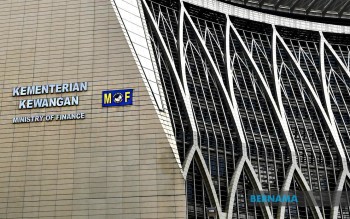
Parliament yesterday advanced Malaysia's long-term financial stewardship by passing the National Trust Fund Bill 2026, a landmark legislative reform that reshapes how the country manages intergenerational savings. The measure, which cleared the Dewan Rakyat with majority support following debates involving 14 Members of Parliament, represents the most substantial overhaul of the National Trust Fund since its creation nearly four decades ago. The legislation now moves to the Dewan Negara for further consideration, marking a critical juncture in how Malaysia approaches the preservation and deployment of national resources across generations.
The National Trust Fund (KWAN) has operated as Malaysia's principal vehicle for building financial reserves intended to benefit both present and future citizens since 1988. Under the stewardship of Bank Negara Malaysia, the fund has accumulated considerable assets, reaching RM22.43 billion by the end of 2024. However, the existing governance framework relied on a panel structure that the government determined lacked the statutory clarity and enforcement mechanisms necessary for modern fiscal prudence. The Finance Ministry's decision to pursue comprehensive legislative reform reflects a broader acknowledgement that Malaysia's resource endowment, while substantial, requires institutional safeguards to prevent depletion and ensure sustained benefits across generations.
The Bill establishes a National Trust Fund (Incorporated) as a statutory body to replace the current administrative arrangement, introducing formal accountability structures and professional governance standards. This transition will occur without disruption to existing investments, contracts, or operations, with Bank Negara Malaysia continuing its administrative role during the changeover period to ensure seamless continuity. The creation of a dedicated board responsible for administration, management, and investment decisions signals the government's intent to place KWAN within a clearer institutional framework with defined responsibilities and transparent decision-making processes. This structural evolution aligns with international best practices observed in sovereign wealth fund management across comparable developing economies.
For the first time in KWAN's history, the legislation introduces legally binding provisions that govern how money enters, leaves, and is invested within the fund. The Bill mandates that the Federal Government contribute at least 0.1 per cent of its projected annual revenue to the fund, establishing a baseline commitment that creates predictability and removes discretion from contribution decisions. Beyond this floor, the legislation requires the government to allocate 2.0 per cent of dividends received from Petronas and 2.0 per cent of depletable resource export duties—after accounting for state government allocations—directly into the fund. These prescribed contribution rates represent minimum thresholds; the Federal Government retains the flexibility to make additional contributions whenever circumstances permit, providing a mechanism for surplus revenues to be channelled into long-term wealth preservation.
The revenue-linked contribution structure carries significant implications for Malaysian fiscal sustainability. By tying KWAN contributions to both regular government revenues and resource-related income, the legislation creates an automatic savings mechanism that persists regardless of budgetary pressures in any particular fiscal year. This approach acknowledges that Malaysia's finite mineral resources and hydrocarbon reserves will eventually diminish, necessitating institutional arrangements that capture current resource wealth for conversion into diversified financial assets. The commitment to allocate 2.0 per cent of Petronas dividends and depleting resource duties ensures that non-renewable resource revenues are systematically transformed into perpetual financial assets, extending the nation's capacity to fund essential services long after petroleum and mineral deposits are exhausted.
Withdrawal discipline represents another pillar of the Bill's reforms, introducing historically unprecedented restrictions on how and when the fund's resources may be deployed. Permissible uses are narrowly defined to three areas: education, healthcare, and climate change mitigation and adaptation. These categories reflect contemporary priorities for national development and environmental stewardship, yet their very specificity constrains government flexibility in times of crisis. More significantly, annual withdrawals are capped at no more than 50 per cent of the expected long-term real rate of return, a conservative threshold designed to preserve the fund's principal and enable it to compound over decades. Any proposed withdrawal exceeding this limit must secure explicit parliamentary approval, effectively inserting an additional political check against the casual or opportunistic depletion of accumulated reserves.
This disciplinary framework responds to a recurring challenge in emerging market governance: the tendency for governments facing immediate budgetary pressures to raid long-term savings funds for current spending. Malaysia's experience with various sovereign wealth and development funds demonstrates that without rigid legal constraints and transparent decision-making requirements, accumulated reserves often prove vulnerable to fiscal raiding during periods of slower economic growth or temporary revenue shortfalls. By codifying withdrawal limits and requiring parliamentary oversight for exceptions, the Bill creates institutional friction against such impulses, effectively embedding long-term thinking into the formal legislative process. The requirement that expected long-term real rate of return guide withdrawal ceilings ensures that the fund's purchasing power does not erode in real terms, a critical consideration for maintaining intergenerational equity.
Investment governance under the Bill will be guided by a Strategic Asset Allocation framework approved by the Finance Minister, directing how fund managers deploy capital across approved asset classes. This provision balances professional discretion with political accountability, allowing for diversified global investment strategies while maintaining ministerial oversight of broad portfolio direction. The legislative specification of investment parameters reflects lessons learned from sovereign wealth fund management globally, where institutional investors have demonstrated superior long-term returns through diversified, disciplined approaches rather than concentrated domestic investments or tactical market timing. Malaysia's specification of approved asset classes implicitly recognizes that KWAN's long time horizon permits exposure to global markets, emerging equities, and other higher-returning assets that short-term political cycles would typically avoid.
Finance Minister II Datuk Seri Amir Hamzah Azizan's statement framing the legislation emphasizes a philosophical reorientation toward intergenerational responsibility. By characterizing current national resources as held in trust rather than owned outright by the present generation, the government articulates a stewardship model that subordinates immediate fiscal demands to long-term national welfare. This rhetorical positioning carries implications for how Malaysian policymakers and citizens conceptualize the relationship between current spending and future prosperity. The Minister's emphasis on consistent contributions, disciplined withdrawals, and improved governance directly addresses the three dimensions along which previous KWAN administration had been criticized as insufficiently rigorous.
The timing of this legislation reflects the MADANI government's stated commitment to economic reformation and improved public financial management. By passing comprehensive trust fund reform relatively early in its tenure, the administration signals seriousness about institutional renewal and demonstrates willingness to constrain its own future fiscal flexibility through legislation. This approach differs markedly from reforms that preserve maximum governmental discretion; instead, the Bill trades short-term flexibility for long-term credibility and sustainable wealth preservation. For Malaysian investors and regional observers, the legislative commitment to KWAN's growth and proper stewardship provides reassurance that the country is implementing institutional mechanisms to address resource depletion and demographic challenges.
The Bill's passage through the Dewan Rakyat with substantial parliamentary support suggests cross-party recognition that long-term fiscal sustainability transcends normal political divisions. With 14 Members of Parliament participating in substantive debate before the measure achieved majority approval, the legislation reflects relatively broad consensus on the need for enhanced intergenerational savings mechanisms. This parliamentary consensus will strengthen the Bill's durability once it becomes law, reducing the likelihood that future governments will attempt to weaken the statutory constraints it imposes on contributions and withdrawals. When major reform legislation achieves genuine cross-party support, it acquires political legitimacy that insulates it from casual amendment or erosion through subsequent executive action.
For Southeast Asian policymakers observing Malaysia's legislative approach, the National Trust Fund Bill 2026 offers a model for translating resource wealth into sustainable institutional arrangements. As regional economies grapple with resource depletion, demographic aging, and climate vulnerabilities, the legal frameworks Malaysia is now implementing demonstrate how statutory trust funds can be structured to resist political pressure while maintaining sufficient flexibility for genuine national emergencies. The Bill's passage represents a decision to bind the hands of future governments in service of principles that transcend electoral cycles. Whether subsequent implementation proves as rigorous as the legislation intends will determine whether KWAN evolves into a genuinely transformative vehicle for intergenerational wealth preservation or remains another well-intentioned institutional arrangement eventually circumvented by fiscal pressures.

