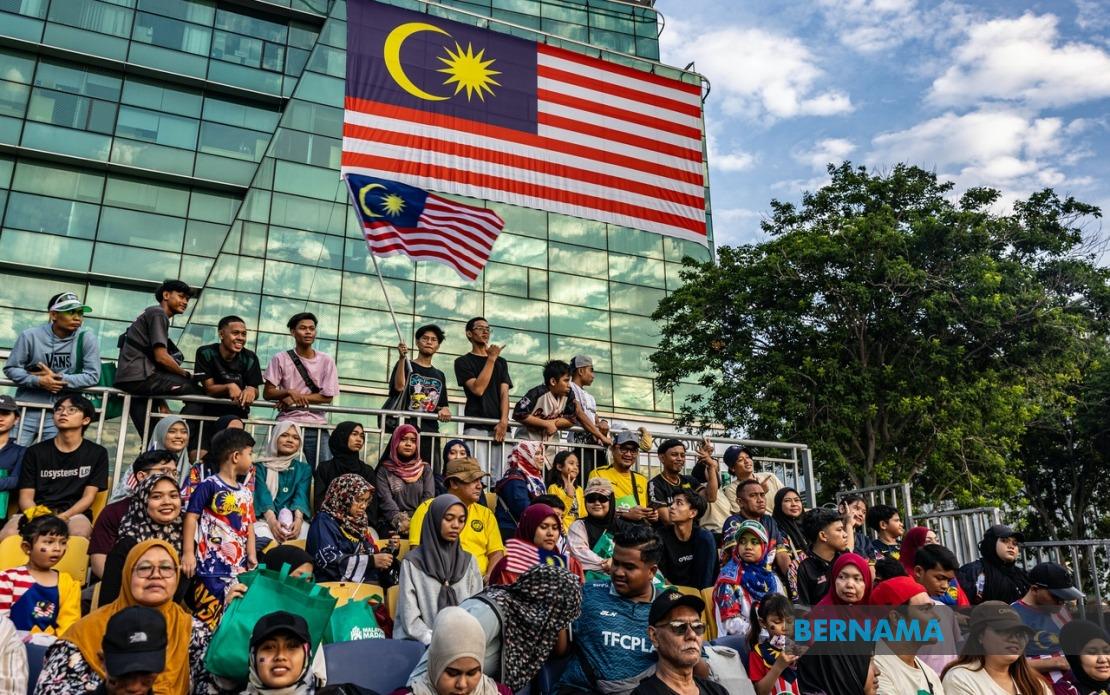
Over 100,000 Malaysians gathered in Putrajaya for the country's 69th National Day celebration, a turnout that substantially exceeded organisers' initial projection of 80,000 attendees. Communications Minister Datuk Seri Fahmi Fadzil, who chairs the 2026 National Day and Malaysia Day Main Committee, highlighted the achievement as validation of meticulous planning and seamless execution throughout the proceedings.
The successful attendance figures underscore growing public engagement with national commemorative events, particularly as Malaysia continues to emphasise its multicultural identity and development narrative. Visitors travelled from across the peninsula to participate in the festivities, with Fahmi specifically acknowledging groups from Sandakan, Johor Bahru and Jeli, reflecting the nationwide scale of participation. This geographic breadth demonstrates that National Day celebrations retain their resonance as unifying occasions that draw Malaysians from diverse regions and backgrounds.
The event's smooth operation owed substantially to coordinated efforts among multiple government agencies working in concert to manage logistics and environmental considerations. The Department of Environment, Malaysian Meteorological Department and National Disaster Management Agency collaborated to monitor atmospheric conditions and maintain preparedness for contingency measures, including cloud seeding should weather deteriorate. This interagency coordination exemplifies the sophisticated infrastructure now deployed for major national events in the country.
Fahmi emphasised that the absence of any significant incidents throughout the celebration reflected both public cooperation and comprehensive safety planning. The favourable weather conditions that persisted across the day significantly facilitated the outdoor programme, enabling visitors to remain comfortable during the extended festivities. This positive atmospheric backdrop contrasted with previous celebrations that had encountered weather-related disruptions, highlighting both the logistical importance of meteorological planning and the element of fortune that influences outdoor events of this magnitude.
The parade itself constituted a substantial coordinated performance, comprising 76 separate contingents, 22 marching bands and 11 decorated vehicles featuring approximately 10,819 total participants. These participants originated from diverse institutional categories including government departments, military and police forces, various uniformed services, government-linked corporations, educational institutions from primary to tertiary level, and numerous civil society organisations. This compositional breadth ensured the parade embodied Malaysia's structural complexity and societal pluralism.
Notably, the 2026 celebration introduced several inaugural elements that reflected contemporary national priorities and upcoming commitments. The Royal Johor Military Force appeared in National Day proceedings for the first time, potentially signalling enhanced integration of state-level institutions into federal commemorative frameworks. Additionally, contingents representing the SEA Games 2027 and the Orange Economy Sustainability sector participated, embedding forward-looking policy priorities into the nation's birthday observance. These inclusions demonstrated how National Day celebrations evolve to incorporate and promote emerging governmental focuses.
Cultural and artistic components constituted a substantial dimension of the celebration, with a notable percussion performance titled "Gema Inovasi MADANI" that synthesised traditional instrumentation including Rebana Inovasi and Kompang Inovasi with contemporary performance concepts. The production engaged 150 percussionists alongside 1,500 human graphic performers, creating large-scale visual and auditory spectacles that showcased Malaysia's diverse artistic and cultural traditions. This scale of artistic mobilisation transforms National Day from mere ceremonial commemoration into a comprehensive cultural expression.
The finale sequence featured advanced military capabilities, with the Royal Malaysian Air Force executing flyovers involving fighter jets, transport aircraft and helicopter squadrons. The closing performance, "Rentak MADANI, Paluan Tradisi," concluded the celebration with 2,350 participants engaged in a synchronized demonstration emphasising the fusion of contemporary governance themes with traditional cultural expression. This culminating sequence symbolically bridged modernity and heritage, reinforcing the government's MADANI framework that emphasises prosperity distributed across diverse populations.
Beyond the parade itself, Fahmi noted that attendees accessed an expanded ecosystem of accompanying activities and entertainment. The Anjung Floria precinct displayed national defence assets available for public viewing and interaction, demilitarising military hardware through civilian engagement. Simultaneously, the Riuh Merdeka programme at Monumen Alaf Baru offered recreational opportunities, whilst numerous food vendors provided commercial and social gathering spaces throughout the venue. This programme diversification transforms the celebration from a concentrated ceremonial moment into an extended experiential engagement with national identity and celebration.
The overarching theme, "Malaysia MADANI: Kesejahteraan Dinikmati" (Malaysia MADANI: Prosperity Enjoyed), encapsulated the government's development philosophy emphasising inclusive prosperity irrespective of demographic category. By embedding this thematic messaging throughout the celebration's various components, organisers leveraged National Day not merely as patriotic observance but as communication vehicle for governmental policy narratives. This strategic integration of political messaging with cultural celebration reflects contemporary approaches to state-sponsored commemorative events across Southeast Asia.
Fahmi concluded his remarks by articulating aspirations that the celebration would reinforce national cohesion and consolidated identity. His exhortation to "work together to preserve our unity and safeguard our beloved Malaysia" framed National Day as an occasion for recommitment to collective national project, transcending momentary celebration to emphasise ongoing collective responsibility. This rhetorical framing positions National Day within broader political discourse regarding national resilience and social harmony, particularly relevant given Malaysia's complex multicommunal composition and periodic political tensions.

