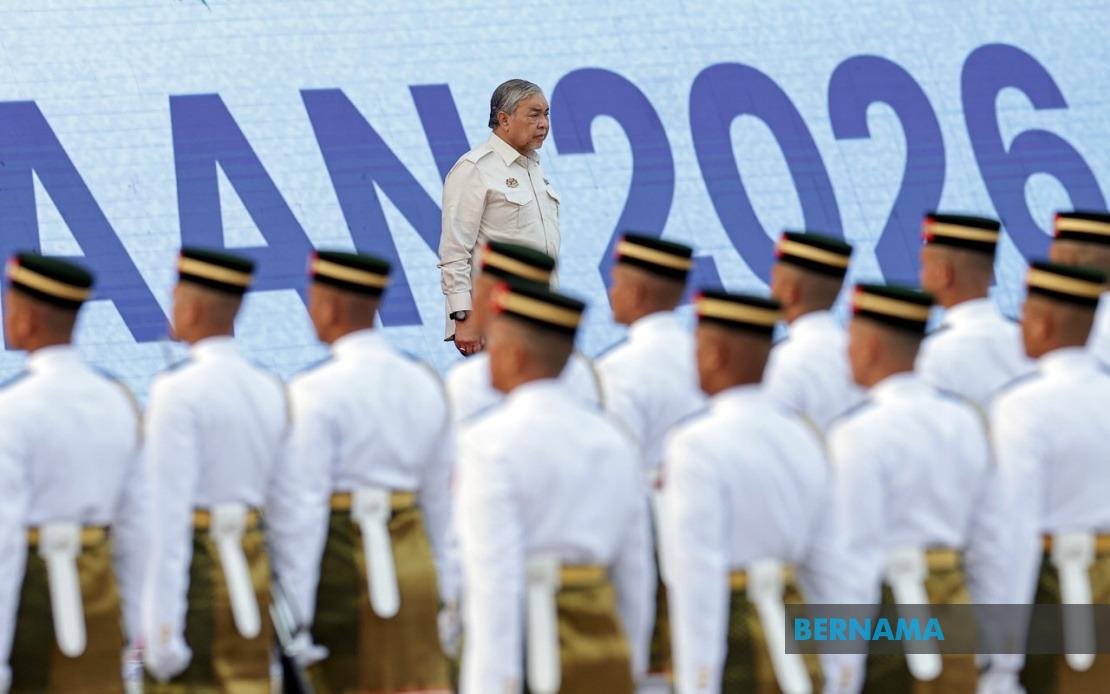
Over 100,000 Malaysians converged on Dataran Putrajaya on August 31 to commemorate National Day 2026, drawing Deputy Prime Minister Datuk Seri Dr Ahmad Zahid Hamidi to declare the occasion as the most impressive in recent memory. Speaking to media after witnessing the day's festivities firsthand, Ahmad Zahid underscored what he characterised as a noticeable upward trajectory in the nation's collective patriotic consciousness, framing the turnout and quality of celebrations as evidence of deepening national pride among citizens across the country.
The scale of this year's observance proved remarkable by most measures. The parade itself mobilised 10,819 participants distributed across 76 distinct contingents, complemented by 22 marching bands that processed through the capital's civic centre. This logistical undertaking demonstrated the considerable coordination required to stage such a major civic event, reflecting months of preparation by government agencies and community organisations working in concert to ensure smooth execution. The sheer volume of uniformed personnel, cultural groups, and civilian participants created a visual spectacle that dominated the venue throughout the day.
The presence of Malaysia's highest office holders added ceremonial weight to the proceedings. His Majesty Sultan Ibrahim and Her Majesty Raja Zarith Sofiah, the reigning King and Queen, graced the celebration with their attendance, lending constitutional authority and symbolic significance to the national commemoration. Prime Minister Datuk Seri Anwar Ibrahim alongside Cabinet ministers provided the government's senior representation, underscoring the administration's commitment to marking the nation's founding milestone with appropriate gravitas and visible leadership presence.
The celebration carried the thematic banner "Malaysia MADANI: Kesejahteraan Dinikmati," which translates to an emphasis on prosperity being enjoyed across society. This messaging reflected the current government's policy framework centred on inclusive economic development and equitable distribution of national wealth. By anchoring the National Day festivities to this broader governance narrative, organisers sought to connect the ceremonial aspects of patriotic commemoration with tangible policy objectives aimed at improving living standards and opportunities for ordinary Malaysians.
Ahmad Zahid's assessment that this year's celebration exceeded previous iterations carries political significance in Malaysia's context. National Day observances serve as important barometers of public sentiment and civic engagement, with attendance levels and enthusiasm potentially indicating broader trends in national cohesion and confidence. The Deputy Prime Minister's emphasis on rising patriotism appeared designed to convey a message of national unity and positive momentum, particularly important in a diverse, multi-ethnic society where shared national identity requires continuous reinforcement and celebration.
The early morning arrival of large crowds at Dataran Putrajaya suggested genuine public interest rather than mandated participation, a distinction worth noting given Malaysia's history of government-organised events. Citizens voluntarily gathering from dawn to witness parades and processions indicates organic interest in national commemoration, distinguishing enthusiastic public engagement from orchestrated attendance. Ahmad Zahid's observations about crowd size and enthusiasm may therefore reflect authentic popular participation in the celebration rather than artificially inflated figures.
From a Southeast Asian perspective, Malaysia's National Day celebrations carry implications beyond the nation's borders. The region has increasingly grappled with questions of national identity, social cohesion, and the capacity of diverse societies to forge shared civic purposes. Malaysia's approach to National Day—emphasising inclusivity, multicultural participation, and broad-based celebration—offers a model for how plural societies might construct meaningful national narratives. The successful staging of events drawing over 100,000 participants suggests that building and maintaining national unity through ceremonial and symbolic means remains viable even in increasingly fragmented social contexts.
The participation of marching bands and contingents representing various sectors of society—likely including military, civilian government agencies, educational institutions, and community groups—reinforced the theme of national inclusivity. Such representation sends implicit messages about who belongs within the national community and whose contributions merit recognition. By featuring diverse contingents, the celebration attempted to create a sense of collective ownership over national identity, suggesting that patriotism encompasses multiple constituencies rather than belonging exclusively to any single group.
Ahmad Zahid's characterisation of the celebration as "exceptional" warrants careful interpretation within Malaysia's political context. The Deputy Prime Minister leads significant portfolios within government and faces considerable scrutiny regarding both the administration's performance and his own political standing. Offering upbeat assessments of major government-organised events serves multiple purposes: projecting confidence in governance capacity, reinforcing narratives of national progress and unity, and potentially bolstering his own political standing by association with successful public initiatives. Understanding these political dynamics enriches interpretation of his remarks beyond their surface content.
The logistical achievement of coordinating over 10,000 parade participants across dozens of contingents should not be underestimated. Such undertakings require cooperation between multiple government agencies, military and police coordination, security planning, crowd management protocols, and detailed choreography. The apparent smoothness of execution, insofar as it emerged from Ahmad Zahid's comments, suggests competent administrative functioning at least in the specific domain of event organisation. Whether such competence extends across broader governance functions represents a separate question, but the successful execution of National Day celebrations does indicate functional capacity in at least some government operations.
Looking forward, the 2026 National Day celebration establishes a benchmark against which future commemorations will be measured. If Ahmad Zahid's assessment that this year exceeded previous events proves accurate, and if attendance continues at elevated levels in subsequent years, it could signal a genuine resurgence in public engagement with national commemoration. Conversely, declining participation in future years might suggest that this particular celebration represented a temporary peak rather than sustained elevation in patriotic expression. Monitoring these trends over time provides valuable data on whether national pride and civic participation are genuinely strengthening or whether this year represented an anomaly within longer-term patterns of declining public engagement in government-organised events.

