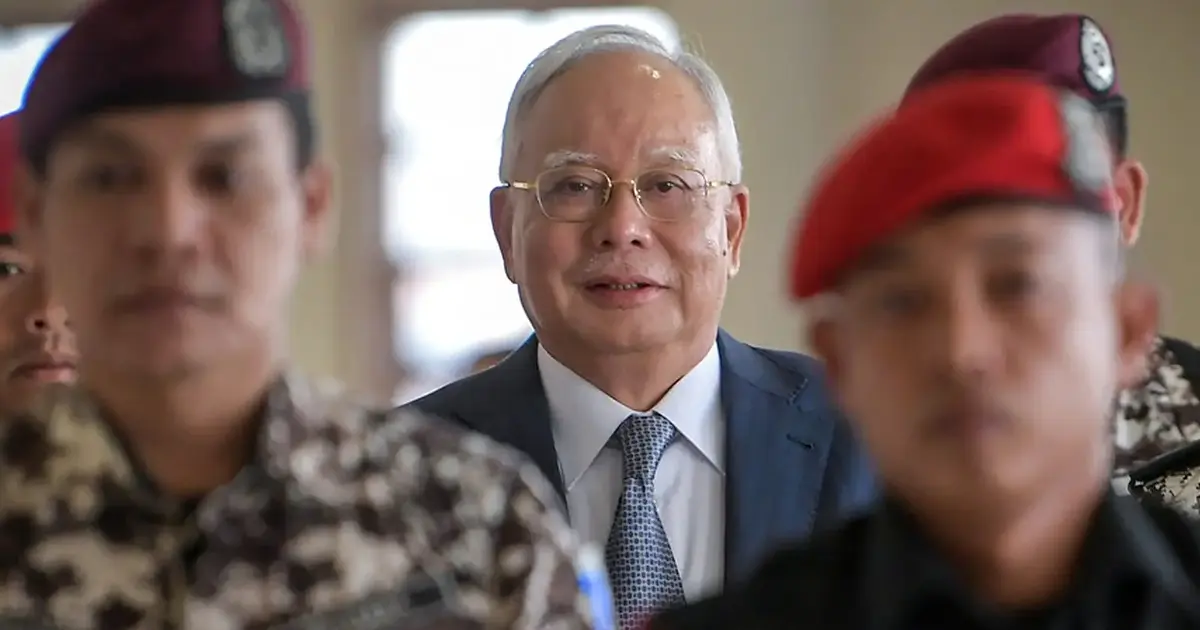
Former Prime Minister Najib Razak has secured permission from the Court of Appeal to participate in an upcoming legal hearing centred on the Malaysian Bar Council's challenge to a critical pardons board determination. The approval was granted following an ex parte application submitted by Najib's legal team, allowing him to be present as proceedings unfold over the contested decision.
The involvement of Malaysia's highest-ranking legal body in this matter underscores the significance of the pardons board's decision at the heart of the dispute. The Bar Council, which represents the nation's legal profession, has taken the step to challenge the decision through formal court proceedings, signalling substantial concerns within the legal community about the legitimacy or propriety of the board's actions. Such challenges from the Bar are relatively uncommon and typically reflect deep professional consensus on matters of constitutional or procedural importance.
An ex parte application—where one party requests court relief without the other party present—represents a preliminary procedural step that grants Najib immediate participation rights in the broader dispute. The Court of Appeal's willingness to grant this application suggests the judiciary recognised sufficient grounds for allowing the former leader's direct involvement in these proceedings. This decision carries implications for how Malaysian courts balance procedural fairness with the rights of individuals affected by administrative decisions.
Najib's attendance at the hearing will allow him to be apprised of arguments and evidence presented by both the Bar Council and the government body responsible for the pardons board's decision. His physical presence in court also signals his personal stake in the outcome, demonstrating that he intends to mount a vigorous defence against whatever challenges the legal profession has levelled. The decision grants him the opportunity to respond through his legal representatives to specific points raised during oral arguments.
For Malaysian legal circles, this hearing represents a significant moment for scrutinising the powers and boundaries of pardons boards in the country's constitutional framework. Pardons boards operate with considerable discretion, yet their decisions must remain tethered to legal principles and established procedures. The Bar Council's intervention suggests that it believes proper procedures were not followed or that the board's reasoning fell short of constitutional standards. This tension between administrative discretion and judicial oversight of executive bodies remains one of Malaysia's most actively contested constitutional questions.
The broader context matters considerably here. Pardons boards have historically wielded quiet power in Malaysia's political and criminal justice systems, yet they operate with limited transparency and face infrequent public scrutiny. The Bar Council's decision to challenge a specific determination publicly elevates the visibility of these institutional mechanisms and invites closer examination of how such boards justify their conclusions. This case could establish important precedent regarding the standard of review courts should apply when evaluating pardons board decisions.
Najib's participation in this hearing represents a continuation of his multi-front legal strategy spanning several years. The former prime minister has contested various determinations affecting him through multiple judicial channels, demonstrating persistence in defending his interests through Malaysia's court system. This latest development shows that legal battles surrounding his status remain active and contested, with significant institutional actors like the Bar Council maintaining engagement with underlying disputes.
The timing of the Court of Appeal's decision to grant the ex parte application also merits attention. Courts typically act carefully when granting such permissions, as they affect the procedural rights of absent parties. The approval suggests that the appellate bench found Najib's circumstances sufficiently compelling to justify allowing him to participate in a hearing ostensibly initiated by a third party rather than by him directly. This approach reflects judicial recognition that the outcome will meaningfully affect his legal position.
From a governance perspective, this case illuminates ongoing tensions within Malaysia's institutional framework. The Bar Council acts as an independent professional body with standing to challenge government decisions it considers problematic, while pardons boards operate as executive instruments typically insulated from intensive public accountability. When these institutions collide, courts must navigate between respecting administrative prerogatives and enforcing constitutional limits on those prerogatives. The hearing ahead will likely explore whether the Board properly exercised its mandate or overstepped legitimate boundaries.
For Southeast Asian legal observers, Malaysia's approach to judicial review of pardons decisions offers comparative insights into how different jurisdictions handle clemency and executive mercy powers. Many regional countries grant similar discretionary authority to their executives, yet face comparable questions about procedural fairness and constitutional constraint. How Malaysian courts resolve this dispute could influence how neighbouring jurisdictions reconsider their own oversight mechanisms.
Najib's secured right to attend signals that the legal proceedings will not be merely technical administrative review but rather a substantial confrontation over principles governing how Malaysia's pardons system functions. The case touches on fundamental questions about separation of powers, the proper scope of executive discretion, and the judiciary's role in policing boundaries of administrative action. As the hearing date approaches, Malaysia's legal community and broader public will be watching closely to see how these constitutional tensions are resolved.

