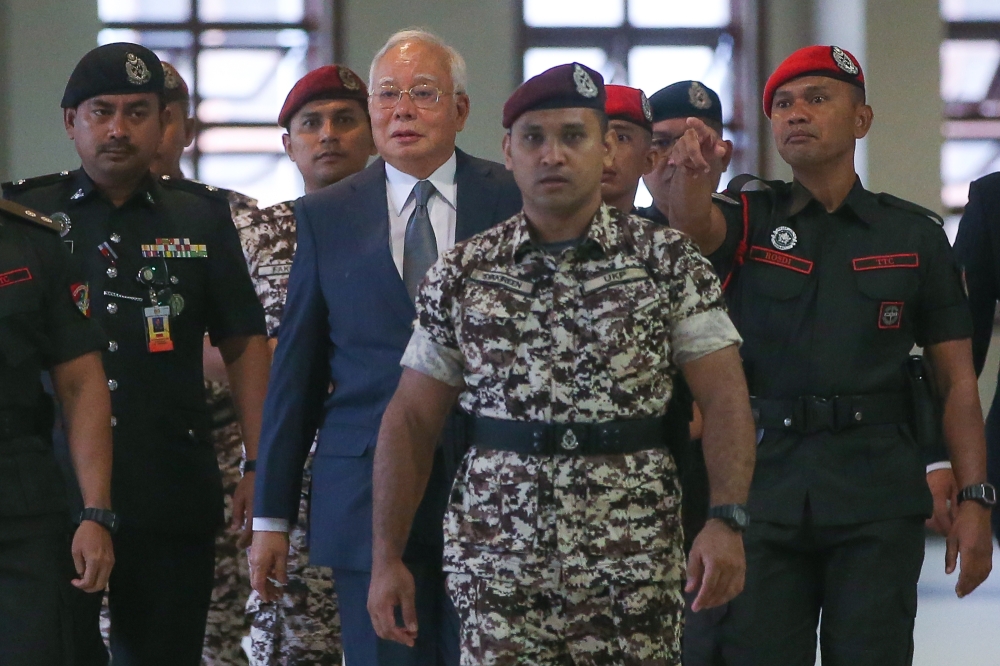
Former Prime Minister Datuk Seri Najib Tun Razak returned approximately US$620 million to its source after the 2013 general election primarily because he experienced discomfort with maintaining possession of such a substantial sum, the High Court was told during proceedings this week. This assertion represents a significant element in the defence narrative surrounding the high-profile corruption case that has dominated Malaysia's political discourse for several years, with the repatriation of funds featuring prominently in arguments about the nature and origins of money that flowed through his personal bank accounts during his decade in office.
The testimony emerged as part of an ongoing examination into the financial transactions that have formed the backbone of multiple charges levelled against the former leader. The case has captured sustained public attention not merely as a matter of individual accountability but as a crucial test of institutional independence and the rule of law in Malaysia. The sums involved—ranging across hundreds of millions of ringgit and foreign currency—have underscored the scale of financial movements that occurred during Najib's tenure as Prime Minister from 2009 to 2015, a period marked by significant developments including the Goods and Services Tax introduction and various major infrastructure projects.
The explanation offered in court regarding the US$620 million withdrawal differs markedly from prosecution narratives that have characterised these transactions as deliberate concealment or misappropriation of state assets. The defence position hinges on establishing alternative explanations for the movement of capital through accounts bearing Najib's name, suggesting that discomfort rather than culpability motivated certain financial decisions. This interpretative divergence remains fundamental to understanding how the case has unfolded, with each side presenting contrasting frameworks through which to understand the same documentary evidence.
Context matters considerably here. The 2013 general election occurred during a period of domestic political sensitivity, with Najib's coalition government securing victory amid considerable tension and opposition mobilisation. The months immediately following that electoral contest witnessed various policy adjustments and administrative changes as the administration consolidated its post-election position. Against this backdrop, the timing of the US$620 million transfer takes on additional significance in terms of understanding the political environment in which such financial decisions were supposedly made.
For Malaysian observers and Southeast Asian analysts tracking this case, the credibility of the discomfort explanation becomes crucial to evaluating the broader narrative. Courts worldwide have increasingly scrutinised financial explanations that lack corroborating documentation or consistent contemporaneous evidence. The High Court's assessment of whether such testimony withstands cross-examination and documentary scrutiny will substantially influence the trajectory of these proceedings and the eventual verdict that will reverberate through Malaysian politics for years to come.
The case carries implications extending beyond Najib's personal legal situation. It reflects ongoing questions about governmental financial accountability, the effectiveness of anti-corruption mechanisms, and public confidence in institutions tasked with investigating and prosecuting high-level officials. The complexity of international financial flows and the challenges involved in tracing capital movements across borders have featured prominently throughout the proceedings, illustrating the technical difficulties that anti-corruption authorities must overcome when pursuing cases involving substantial overseas transfers.
Several related factors merit consideration. The source and legitimate purposes of the original US$620 million remain contested in the proceedings, with prosecution arguments centring on allegations that these represented misappropriated public funds while defence submissions propose alternative explanations grounded in international diplomatic practice and donor support frameworks. The distinction between these competing narratives carries profound consequences not only for Najib but for broader public understanding of how state finances were managed during the preceding administration.
Malaysian legal observers have noted that courts evaluating corruption cases increasingly demand rigorous scrutiny of subjective emotional claims when such assertions contradict documentary evidence or established patterns of behaviour. The invocation of personal discomfort as explanation for returning such extraordinary sums represents precisely the type of testimony that typically requires substantial corroboration through independent evidence, witness accounts from relevant parties, or contemporary records that might validate the explanation offered in court.
The High Court's handling of this testimony will likely influence how subsequent similar cases are approached by prosecutors and defendants alike. Establishing clear evidentiary standards for accepting or rejecting subjective motivational claims in financial cases would contribute meaningfully to the predictability and consistency of Malaysian jurisprudence in corruption matters. As this significant case continues its deliberate progression through the courts, each day of testimony and each ruling contributes incrementally toward judicial precedent that will shape the country's anti-corruption framework for the foreseeable future.

